
What to Wear When Your Body Changed but Your Style Didn’t
This is one of those things no one really warns you about.
Around the age of 50, your body changes, slowly or suddenly, but your style preferences don’t magically update at the same pace. You still like what you’ve always liked. You still feel drawn to the same silhouettes, colors, and pieces. But when you put them on, something feels…off.
Not terrible.
Not wrong.
Just not you anymore.
And that disconnect is incredibly frustrating.
Here’s the good news: this doesn’t mean your style is outdated or that you need a whole new look. It just means your clothes haven’t caught up to your body yet.
That’s a solvable problem.
Why This Feels So Jarring
When your body changes, the mirror can start giving you mixed messages.
You might think:
“Why doesn’t this work like it used to?”
“I still like this outfit…so why do I feel uncomfortable?”
“Am I dressing wrong now?”
What’s really happening is simple: the same silhouettes don’t behave the same way anymore.
Fabric drapes differently. Waist placement matters more. Lengths that once felt neutral now feel awkward. And because nothing is technically wrong, it’s hard to know what to change.
That’s why so many women default to the same few “safe” outfits or start covering more than they need to.
The Mistake Most Women Make Here
The instinct is usually to fight the change.
To squeeze into the old shapes.
To keep buying the same styles in a bigger size.
To assume the problem is weight or age.
But the real issue is this: style is not static.
Your taste can stay the same while your execution evolves.
That’s the shift.
Keep Your Style Identity, Adjust the Fit
You do not need to abandon what you love.
If you’ve always liked:
Clean, classic pieces
Casual, comfortable outfits
Simple layers
Neutral colors
You can keep all of that.
What usually needs adjusting is:
Where things hit
How much structure they have
How outfits are balanced
For example:
If you loved long tops, try them slightly shorter or with a half-tuck.
If you lived in skinny jeans, add a straight or kick flare.
If everything used to be soft and loose, introduce one structured piece.
Tiny shifts. Big payoff.
Why “Sizing Up” Isn’t Always the Answer
Buying the same piece in a larger size often makes things worse.
Why?
Because the proportions are still wrong.
A bigger size just gives you:
More fabric in the wrong places
Longer lengths you didn’t need
Extra bulk where structure would help
Instead, look for:
Different cuts, not just sizes
Fabrics with a little body
Pieces designed to skim, not cling
This is about choosing better shapes, not hiding more.
The Role of Proportion (Without Overthinking It)
When bodies change, balance matters more.
If everything you’re wearing is:
Long
Loose
Soft
The outfit feels heavy.
Try this instead:
Balance wide with clean
Balance loose with structured
Balance long with something shorter
You’re not trying to reveal more skin. You’re trying to break up visual weight so the outfit breathes again.
Why Your Closet Might Be Making This Harder
If you’re surrounded by clothes from a different season of your life, getting dressed will always feel tense.
Pieces from:
A former job
A different routine
A body you had years ago
They create friction every time you open the door.
This isn’t about throwing everything out. It’s about letting your closet support who you are now, not who you used to be.
A Smarter Way Forward
Instead of asking, “Does this still fit me?”
Ask, “Does this work for me now?”
That question changes everything.
When you dress for your current body and life:
Outfits feel easier
You stop second-guessing
You reach for more of what you own
You start feeling like yourself again
And that’s the goal.
Want help with this?
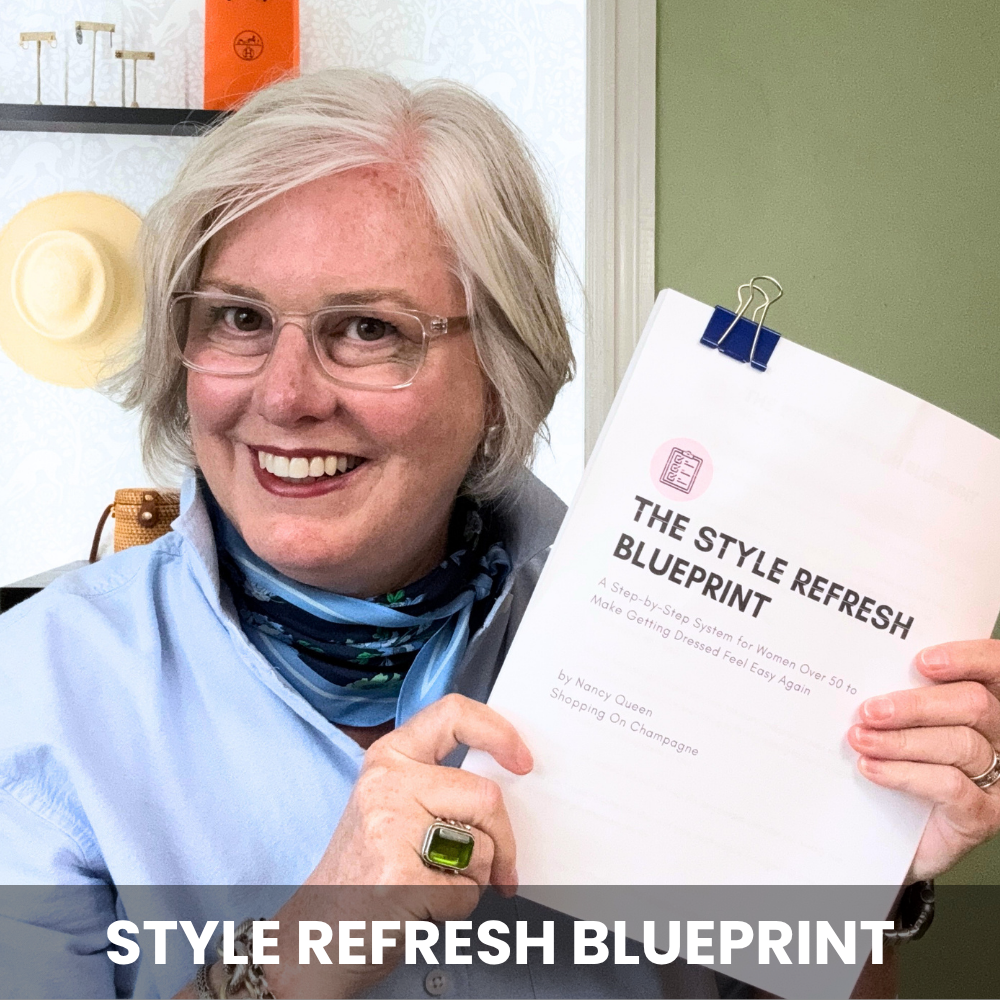
If you are ready to stop guessing and start making real progress, I have tools that will walk you through every step of this journey. Whether you are just getting started, ready to build a wardrobe that truly works for your life, or want a fully personalized experience, I have something for you at every level.
You can find all of them linked below.👇

You have a closet full of clothes and still nothing to wear.
You're holding onto pieces that don't fit, don't flatter, and honestly don't even feel like you anymore. Some still have the tags on. Some belong to a job, a body, or a chapter you've already closed.
👉🏻 You're not alone, and you don't need a total overhaul to feel better about getting dressed.
The Closet Detox is your step-by-step reset. Work through every item with 18 honest questions, a decision guide for the hard ones, and a clear action plan for what comes next.
💌 What's Inside:
✅ 18 questions to ask about every single item in your closet with honest, practical guidance on what to do with each answer
✅ A decision guide for the six hardest pieces to let go of
✅ A What Comes Next action plan - three things to do before you bring in a single new thing, so you never end up back where you started
✅ Live links to the Style Refresh Blueprint and the Champagne Edit - two ways to keep the momentum going
👗 This is for you if...
You have a full closet, but nothing to wear
You've been holding onto things out of guilt, sentiment, or "just in case."
You're done dressing for a body, a job, or a life you no longer have
You're ready to open your closet and actually feel good about what's in there
💡 Why It Works:
Every question is designed to cut through the noise and help you make a clear, confident decision about every single item without second-guessing yourself the whole way through.
Your closet should feel like you. This is where that starts.
This is a digital download. You will receive a PDF immediately after purchase.