
Midi Dresses That Don’t Emphasize the Midsection
You try on a midi dress, and something feels off.
Suddenly, you feel wider. Heavier. A little matronly. Like the dress aged you instead of elevating you.
And it’s confusing, because midi dresses are supposed to be elegant.
When that happens, it’s easy to assume the problem is your body.
But most of the time, it isn’t.
It’s proportion.
In this post, we’ll talk about what the problems are with some midis and how to choose the right ones to flatter your figure.
This post may contain affiliate links. Please see my full disclosure for more information.
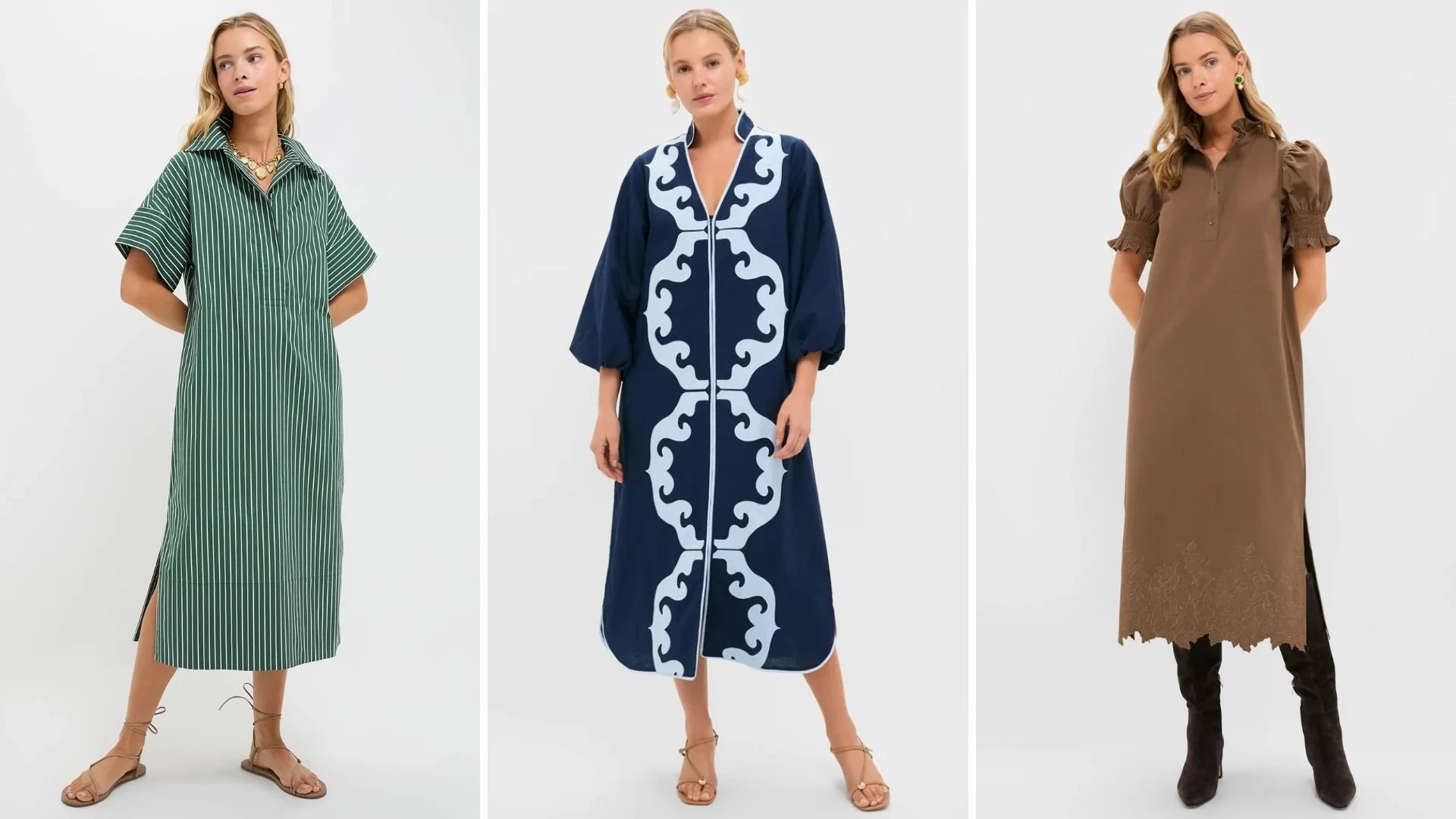
Tuckernuck Midi Dresses Featured: Green Stripe Reina Dress, Navy & Baby Blue Embroidered Caftan, Mocha Embroidery Midi Dress (more dresses featured later in this post)
The Length Isn’t the Problem
A lot of women think the word “midi” is the issue. But midi simply means somewhere between the knee and the ankle.
That’s a big range.
A true mid-calf length hits at the widest part of the lower leg. When you combine that with extra skirt volume or a misplaced waist seam, the whole silhouette can start to feel bottom-heavy.
That’s when you get the frumpy feeling.
A midi that hits closer to tea length, slightly above the narrowest part of the ankle, creates a completely different line. It elongates instead of cutting across the widest point.
The length alone doesn’t determine the outcome. Where it lands does.
Where the Waist Hits Matters More Than You Think
If the waist seam sits at the widest part of your midsection, it draws attention there.
That doesn’t mean you can’t wear a defined waist. It means placement matters.
A seam that sits slightly higher or slightly lower, depending on your proportions, can feel much more balanced. It creates shape without spotlighting the midsection.
When the seam hits wrong, and the skirt flares immediately from that point, it amplifies volume exactly where you don’t want extra emphasis.
That’s usually when the dress feels wider instantly.
Skirt Volume Can Add Weight
Not all volume is equal.
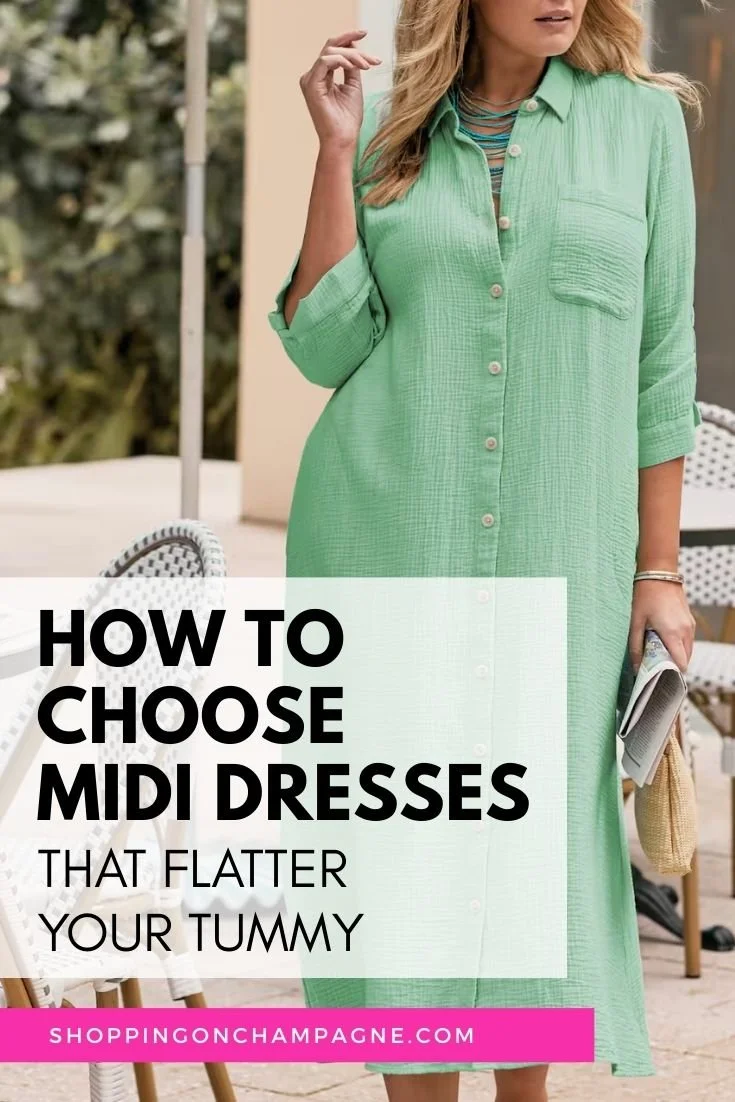
Tiered midis can work beautifully if the tiers are subtle and the fabric moves easily. Shirt dress midis often feel polished because the vertical button line creates structure through the torso.
But bulky pleats at the stomach add visual weight. Thick gathers starting at the waist create expansion right at the midsection.
When there’s too much fabric in the skirt combined with a mid-calf length, everything can start to feel heavy.
A straight column midi or a softly structured A-line often creates a cleaner line.
You don’t need tight. You need controlled volume.
Sleeves and Shoes Change the Balance
A high neckline paired with a long midi and a flat, heavy shoe can make the entire look feel grounded and compressed.
Balance comes from contrast.
A 3/4 sleeve or pushed-up long sleeve introduces shape. A slightly open neckline lightens the upper body. A shoe that shows a bit of ankle or has a cleaner silhouette helps avoid that “weighed down” effect.
The dress doesn’t exist in isolation. It works with everything else you’re wearing.
When those elements are balanced, the midsection stops feeling like the focal point.
Styles That Tend to Feel More Balanced
Midis that often work well:
Shirt dress midis with vertical structure
Soft A-line or tiered dresses with controlled fabric
Straight or column silhouettes that skim
Lengths that hit slightly above the narrowest part of the ankle
Midis that often require more thought:
True mid-calf lengths
Heavy pleating at the waist and hips
Thick, stiff cotton with lots of volume
Waist seams sit at the fullest part of the stomach
Again, this isn’t about rules. It’s about understanding why one version works and another doesn’t.
What to Look for When You Shop
Before adding a midi to your cart, check this:
Where does the hem hit on the model’s leg?
Is the skirt volume controlled or exaggerated?
Does the waist seam sit at a balanced point?
Is the fabric light enough to move but structured enough to skim?
Can you pair it with a shoe that lightens the look?
If the answers feel thoughtful and balanced, you’re likely looking at a dress that will feel more flattering.
Here are some of my favorite midi dresses that flatter your assets.
Shopping Tips
Look for midis with clean vertical lines, subtle shaping at the waist, and skirt volume that feels intentional rather than excessive.
Focus on fabric descriptions and side views. Those often tell you more than the front photo.
You’re evaluating structure, not the model’s body.
When the proportions are right, a midi dress can feel elegant and modern, not matronly.
If a midi made you feel wider before, that doesn’t mean midi dresses aren’t for you.
It usually means that one didn’t have the right balance.
Once you understand where the length should hit, how much volume to allow, and how the waist seam affects the midsection, you’ll shop differently.
And when you try again, it won’t feel heavy.
It will feel intentional.
Stay gorgeous!

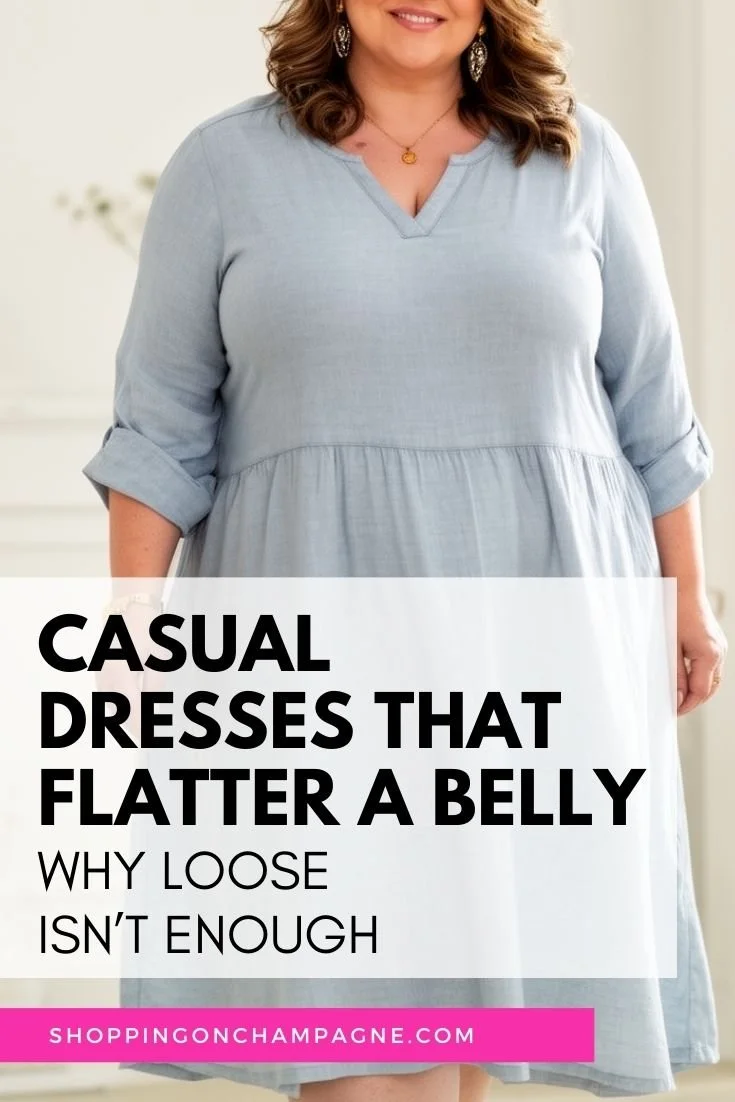


Looking for a comfortable dress that doesn’t cling? Discover the best shift dresses for women over 50, plus my favorite styles for everyday wear, travel, vacations, and dressier occasions.