
The Best Sleeve Lengths If You Carry Weight in Your Stomach
If you’ve ever tried on a top and thought, “Why do I suddenly feel bigger in this?” there’s a good chance it wasn’t your stomach at all.
It was the sleeve.
Sleeves don’t change your midsection. But they absolutely change the balance. And when the sleeve hits in the wrong place, everything can start to feel heavier, wider, or slightly off.
That’s usually the moment when your arms and stomach both start to bother you, even if they weren’t the original issue.
This is where proportion matters.
When weight is distributed thoughtfully across the upper body, the eye moves naturally. When it’s cut abruptly at the widest part of the arm or overloaded with volume, the whole silhouette can feel compressed.
It’s not about hiding anything. It’s about where the line stops.
This post may contain affiliate links. Please see my full disclosure for more information.

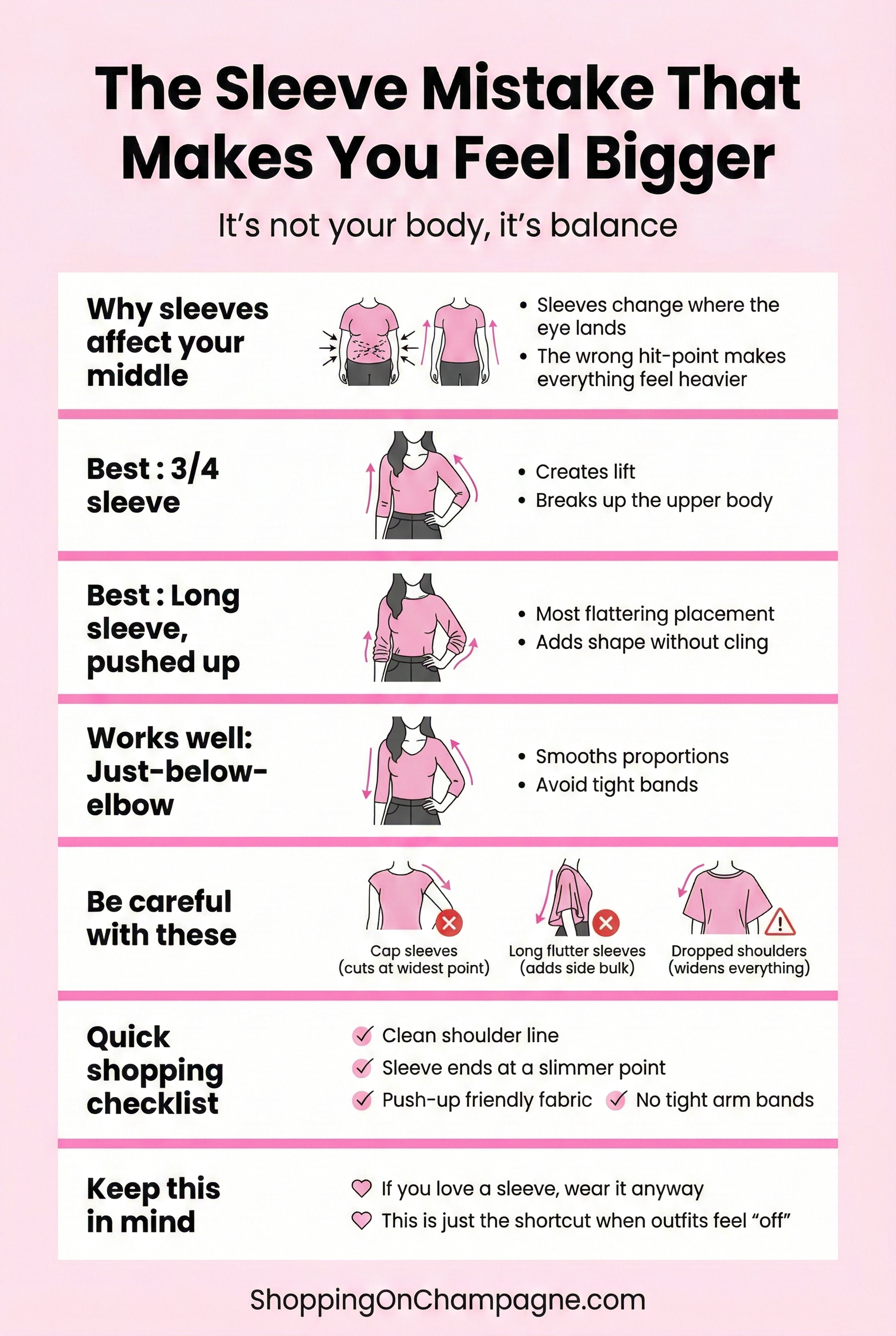
Why Sleeve Placement Changes Everything
When a sleeve ends at the widest part of your upper arm, it creates a horizontal line exactly where you don’t want extra emphasis. The eye stops there. The body can feel wider than it actually is.
When a sleeve is too short and tight, it can make the torso feel longer and heavier by comparison.
When a sleeve is overly full, especially with flutter or exaggerated volume, that bulk doesn’t just sit at the arm. It visually blends into the torso, which can make the entire upper body feel amplified.
None of this has anything to do with your size. It has everything to do with where the sleeve draws attention.
Once you understand that, shopping becomes much easier.
Sleeve Lengths That Create Better Balance
3/4 Sleeves
A 3/4 sleeve is one of the easiest ways to create balance.
It extends past the widest part of the arm and stops at a narrower point, usually just below the elbow. That slight narrowing helps create visual definition without squeezing anything.
It also breaks up the upper body in a way that feels intentional. There’s structure without heaviness.
If you don’t love full-length sleeves, this is often the sweet spot.
Long Sleeves (Rolled or Pushed Up)
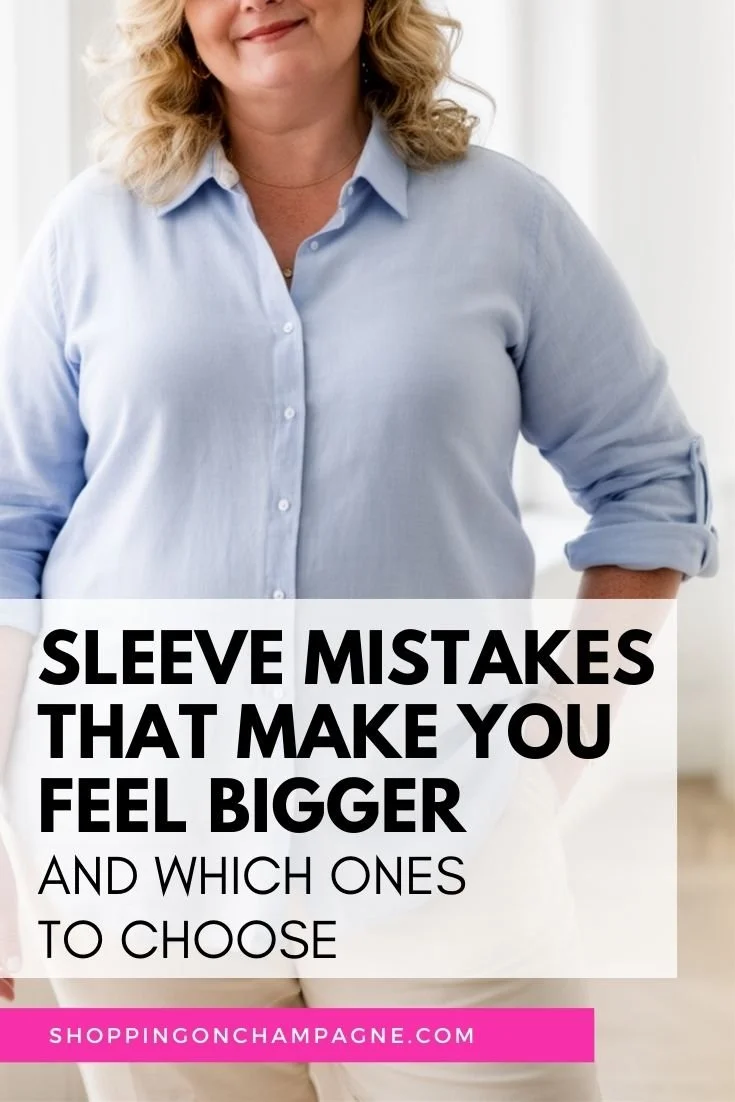
A full-length sleeve can also work beautifully, especially if you push or roll it slightly below the elbow.
That small adjustment changes everything.
Rolling the sleeve introduces a natural break and creates shape through the forearm. It also subtly shifts the focus upward toward the shoulder and neckline, rather than letting the eye settle at the midsection.
This is why so many polished outfits feature sleeves that aren’t worn fully down. The slight push adds ease and proportion simultaneously.
Elbow-Length Sleeves
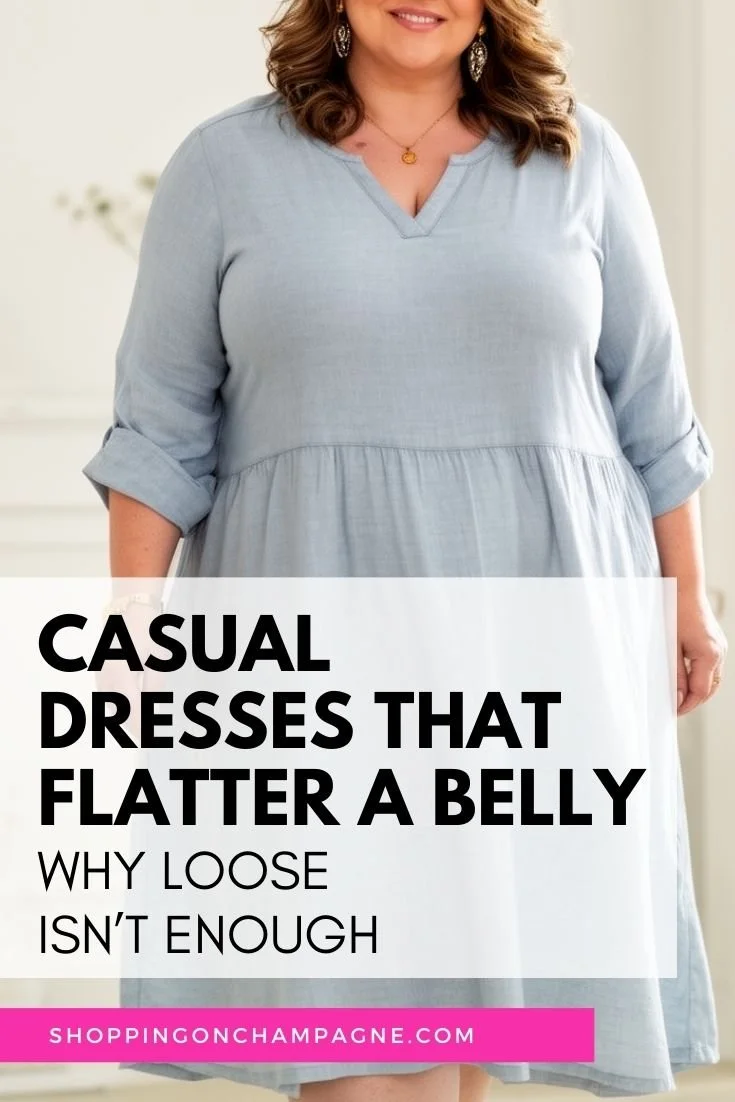
An elbow-length sleeve can work very well if it ends just below the elbow rather than directly across the fullest part of the arm.
When it’s placed correctly, it gives coverage and balance without adding bulk.
The key is fabric. If it’s structured or lightly tailored, it holds shape. If it’s thin and clingy, it can feel restrictive.
Sleeves to Approach Carefully
This doesn’t mean you can’t wear these. It just means you should evaluate them thoughtfully.
Tight Short Sleeves
When a short sleeve cuts across the widest part of the arm and fits snugly, it can create a strong horizontal line. That’s often when the upper body starts to feel wider overall.
If you love short sleeves, look for a slightly relaxed cut that skims rather than grips.
Flutter Sleeves
Flutter sleeves can add softness, but when they’re overly full or layered, they add width at the side of the body. That extra fabric can visually blend into the torso, which makes the whole silhouette feel larger.
If you choose flutter, keep it subtle and lightweight.
Excessive Volume or Dropped Shoulders
Dropped shoulder seams and very full sleeves can widen the upper body. When that extra width meets a midsection you’re already sensitive about, everything can start to feel amplified.
A more defined shoulder line creates structure and balance without tightness.
Jackets, Blazers, and Cardigans
The same principles apply to layering pieces.
Blazers with clean shoulders and sleeves that can be pushed up create shape instantly.
Cardigans that aren’t overly bulky through the sleeve help avoid that “everything feels heavier” sensation.
Even a lightweight jacket can add definition if the sleeve structure is intentional.
You don’t need tight tailoring. You need clarity in the line.
What to Look for When You Shop
Here are some of my favorite sleeve lengths shown above.
Before you buy, check this:
Where does the sleeve end on the arm?
Is it cutting at the widest part?
Does the fabric skim or cling?
Is the shoulder defined or dropped?
Can you roll or adjust the sleeve easily?
If the sleeve placement creates a clean, intentional line, the rest of the garment usually falls into place.
A Few Tips when Shopping
When browsing an online retailer, don’t focus on the model’s body. Focus on where the sleeve ends and how it’s constructed.
That’s what will determine how it feels on you.
If you love a particular sleeve, wear it anyway. None of this is a rule you must follow. But if you’ve ever wondered why a top felt heavier than it should have, the sleeve length is often the quiet culprit.
Once you start paying attention to that line, you’ll shop differently.
And that’s when everything starts to feel more intentional.
Stay gorgeous!

Looking for a comfortable dress that doesn’t cling? Discover the best shift dresses for women over 50, plus my favorite styles for everyday wear, travel, vacations, and dressier occasions.