
Wrap Dresses for Women with a Tummy (What Actually Works)
Wrap dresses are constantly recommended as the easy, go-to dress for women.
They’re flattering. They define the waist. They work on everyone.
Until they don’t.
If you’ve ever tried one on and immediately started adjusting the neckline, checking the bust, smoothing the midsection, and wondering why it suddenly feels uncomfortable, you’re not imagining it.
Wrap dresses can be beautiful. I used to wear them all the time before my body changed. But once I developed a tummy, I noticed something: the same dress that once felt effortless suddenly felt fussy.
The neckline shifted. The wrap pulled. The tie sat right at the part of my stomach I was already sensitive about.
And I found myself constantly fixing it.
That’s usually the turning point.
This post may contain affiliate links. Please see my full disclosure for more information.
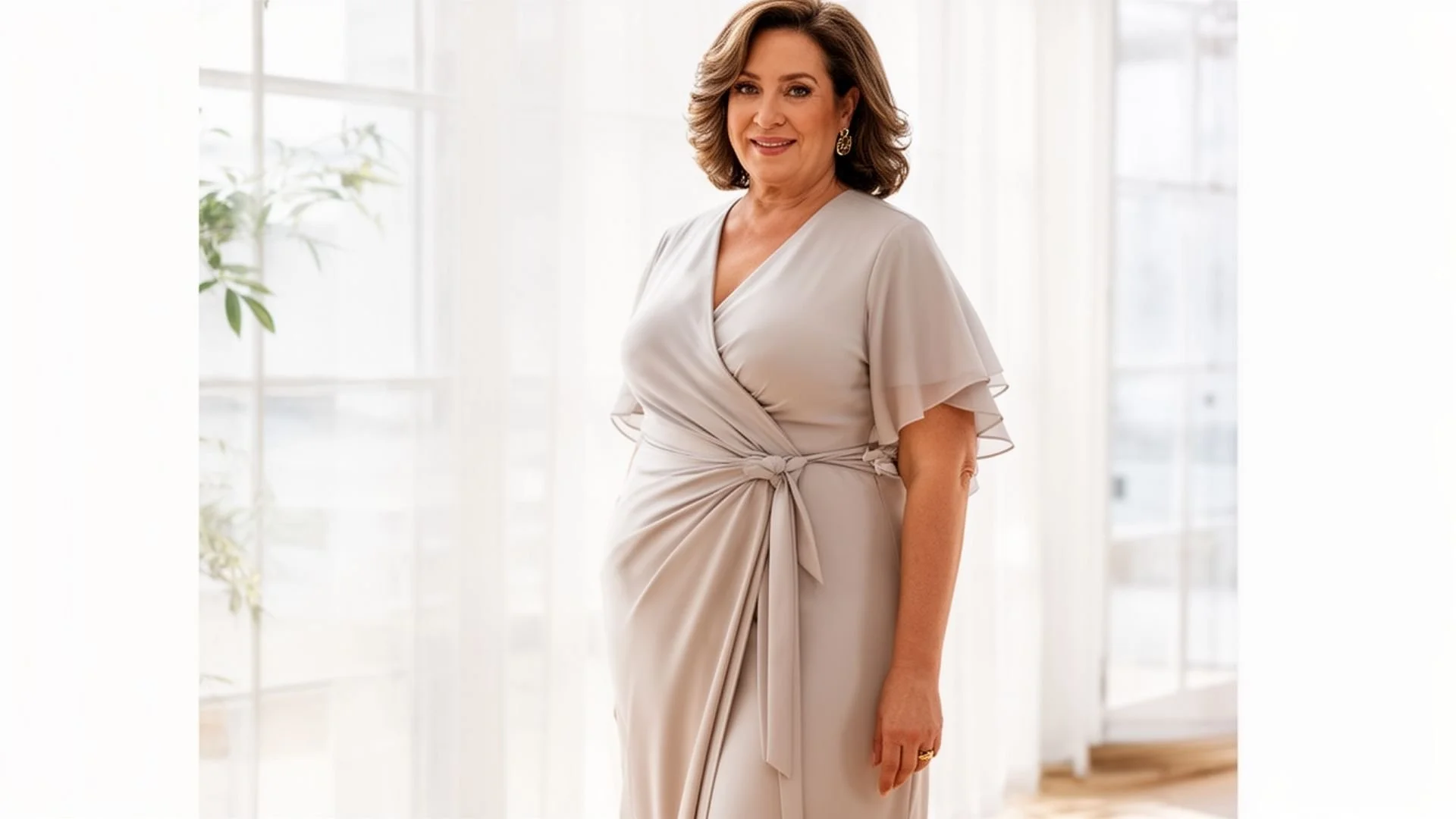
Why Wrap Dresses Can Feel “Off”
A true wrap dress is literally two pieces of fabric crossing over each other and tied at the side.
That means:
The neckline can split if you have a fuller bust
The wrap seam can pull across the midsection
The tie can hit at the widest part of the stomach
Thin jersey can cling instead of skim
When the fabric is lightweight, and the tie placement sits too low, the dress doesn’t define your shape. It emphasizes tension.
And you feel it.
You’re adjusting the neckline. Tugging the skirt. Re-tying the waist. Wondering why something that’s supposed to be flattering feels unstable.
It’s not you.
It’s the construction.
The Difference Between a True Wrap and a Faux Wrap
This is where things shift. Now that I have a tummy, I actually prefer a faux wrap dress.
A faux wrap gives you the visual shape of a wrap dress without the instability.
Instead of two separate panels that rely on a tie to stay in place, a faux wrap is sewn closed. The overlap is secured. The waist shaping is built in.
You still get:
A defined waist
A soft V-neckline
A feminine silhouette
But you don’t get:
The neckline splitting
The wrap pulling open when you move
The constant adjusting
For many women with a tummy, a faux wrap is simply more comfortable.
You can put it on and forget about it.
What Actually Makes a Wrap Dress Work
If you do want to try a wrap (true or faux), here’s what matters.
Fabric Weight
Thin jersey is usually the biggest culprit.
It clings. It shows everything. It emphasizes lumps and bumps you didn’t even notice before.
Look for:
Medium-weight knits
Dresses with lining
Slight structure in the fabric
Material that skims instead of collapsing
If the fabric feels flimsy in your hand, it will likely feel flimsy on your body.
Tie Placement
If the tie sits directly at the fullest part of your stomach, it will draw the eye there.
A slightly higher tie placement closer to the natural waist often feels more balanced.
You don’t want the tie acting like a spotlight.
Seam Direction
Diagonal seams can be beautiful. But if the wrap seam dips too low across the midsection, it creates tension.
A seam that sits slightly higher and moves cleanly across the body without pulling tends to feel more flattering and stable.
Length
Too short and everything feels amplified.
A knee-length or midi wrap dress usually creates better balance, especially when paired with a sleeve that adds structure.
Sleeve Structure
This matters more than most people realize.
A 3/4 sleeve or a long sleeve you can push up often balances the torso beautifully. Very short or overly full sleeves can throw off proportion and make the upper body feel heavier overall.
Common Wrap Dress Mistakes
If a wrap dress didn’t work for you before, it was likely one of these:
Jersey that was too thin
A neckline that felt too revealing
A tie sitting too low
Excess cling across the stomach
A design that wasn’t made with real proportions in mind
That doesn’t mean wrap dresses aren’t for you.
It means that one wasn’t the right construction.
Here are some of my favorite wrap and faux wrap dresses for those of us with a tummy.
Shopping Tips
Look for wrap and faux wrap options with better structure and fabric weight. I’ve found it helpful when shopping online to look for brands that show side views in the photos so you can evaluate how the dress drapes across the midsection.
Pay attention to fabric descriptions. Words like “lined,” “medium-weight,” or “structured knit” are encouraging.
When browsing, don’t focus on the model’s stomach. Look at:
Where the seam hits
Where the tie sits
How the fabric falls in the side view
Whether the neckline looks secure
You can usually tell by the side view and the fabric description whether the dress has enough structure to stay put when you move.
A Quick Shopping Checklist
Before adding a wrap dress to your cart, ask:
Is it faux wrap or fully secured?
Is the fabric thick enough to skim?
Does the tie sit above the fullest part of my stomach?
Is the neckline structured or likely to shift?
Can I move without worrying about it opening?
If you can answer yes to most of those, you’re much more likely to feel confident wearing it.
Wrap dresses aren’t off-limits.
They just need to be designed thoughtfully.
Your body changed. That’s normal. That doesn’t mean you give up on styles you once loved. It means you choose the version that works now.
And when you find the right one, you won’t have to adjust it all night.
You’ll be enjoying it.
Stay gorgeous!


Looking for a comfortable dress that doesn’t cling? Discover the best shift dresses for women over 50, plus my favorite styles for everyday wear, travel, vacations, and dressier occasions.