
Easy Skincare Habits That Make Makeup Look Better
If your makeup used to look smooth and now it clings, creases, or separates, the problem usually isn’t your foundation.
It’s what’s happening before makeup ever touches your face.
Makeup behaves best on skin that’s hydrated, lightly smoothed, and calm. When skin is dry, irritated, or overloaded, even great products can look disappointing.
These are the skincare habits that make the biggest difference without turning your routine into a full-time job.
This post may contain affiliate links. Please see my full disclosure for more information.
1. Cleanse Without Stripping Your Skin
When your skin feels tight right after cleansing, it usually means your cleanser (or your water temperature, or how long you’re cleansing) has stripped away too much of your skin’s natural moisture and oils.
And here’s why that matters for makeup:
Tight skin = dry surface
Even if you “don’t feel dry,” a tight feeling means the surface is dehydrated. Makeup loves to cling to dry spots, so foundation grabs in random places and then… hello texture.
Tight skin exaggerates lines
When skin is a little dehydrated, it looks slightly crinkly and less plump. Foundation settles into fine lines because the skin isn’t smooth and cushioned. It’s like putting paint on a dry sponge, it catches.
Your skin will overcompensate
Stripped skin often tries to fix itself by producing more oil later. That’s when makeup can look dry at 10 a.m. and shiny by 2 p.m. It’s not your foundation being “bad.” Your base is unstable.
So what does “clean but comfortable” actually mean?
What your skin should feel like after cleansing
You want it to feel:
Fresh
Soft
Calm
Normal
Not:
Tight
“Squeaky”
Stretched
Like you need moisturizer within 10 seconds or you’ll crack
The quick test
After cleansing, wait 2 minutes before skincare.
If your skin starts feeling tight or itchy, your cleanser is too harsh for makeup days (even if it “works” for you otherwise).
Easy fixes that make makeup sit better immediately
Use lukewarm water, not hot
Cleanse for 30–45 seconds, not 2 minutes
Use less cleanser than you think you need
If you wear light makeup, try a gentler cleanser in the morning and save the deeper cleanse for night
The big takeaway: when cleansing is too aggressive, makeup spends the whole day trying to sit nicely on a surface that’s already stressed. When cleansing is gentle, everything you put on afterward looks smoother and more polished with less effort.
Favorite Cleansers
2. Exfoliate Lightly So Makeup Sits Smoothly
When makeup looks bumpy, patchy, or like it’s sitting on top of your skin, it’s often not the makeup. It’s the surface.
Think of your skin like a wall. If the wall has little flakes and uneven spots, the paint is going to catch and look textured. Foundation does the same thing.
Why this happens more over 50
As we get older, skin turnover slows down. That means dead skin doesn’t shed as quickly; it hangs around on the surface. You might not see flakes in the mirror, but makeup will find them. Immediately.
That’s when you get:
foundation that looks dry even when it’s a dewy formula
makeup that grabs around the mouth, chin, or nose
“polka dot pores” where the product sits in texture
patchiness that looks like your foundation “isn’t working anymore”
What exfoliation actually does for makeup
Light exfoliation does three things that make makeup look better fast:
It smooths the surface so foundation can glide instead of catching
It helps skincare absorb better (so your base is more hydrated)
It makes your makeup look more like skin and less like product
Why “lightly” matters (this is where most people go wrong)
When skin is already a little drier or more sensitive, over-exfoliating creates irritation, and irritated skin makes makeup look worse, not better.
Over-exfoliation looks like:
tightness
redness
stinging when you apply skincare
flaking that wasn’t there before
makeup separating or clinging more than usual
So the goal isn’t “scrub until smooth.”
The goal is “keep the surface calm and even.”
The easiest routine that works for most people
A chemical exfoliant 1–2 times per week is usually the sweet spot.
Not daily. Not harsh. Not aggressive.
Pick one lane:
If you’re more dry/sensitive, go gentler and slower
If you’re more congested/texture-prone, you can usually tolerate a bit more, but still not daily
The simple test to know if you’re doing it right
The next morning after exfoliating, your skin should feel:
smoother
calmer
more even
Not:
tight
irritated
flaky
If it feels irritated, back off. Less is more here.
“No harsh scrubs” explained (without being dramatic)
Scrubs can be fine for some people, but for those of us over 50, they often create micro-irritation, especially if you press too hard. That irritation shows up as texture and dryness, which is exactly what you’re trying to avoid for better makeup.
If you love the feeling of physical exfoliation, keep it very gentle and very occasional. But for makeup purposes, chemical exfoliation tends to give a smoother result with less drama.
Practical cheat code
If your makeup is suddenly looking worse, try this:
Exfoliate one night
Hydrate well after
Keep morning skincare simple and moisturizing
Apply makeup after everything has set
That one small change can make your foundation look like you switched products, even if you didn’t.
Favorite Exfoliators
3. Hydrate on Damp Skin (This Changes Everything)
If your skincare feels like it’s just sitting there instead of doing anything, this is usually why.
Applying hydrating products to bone-dry skin is like watering a dry sponge that’s already hardened. The product sits on top, evaporates quickly, and never really sinks in. Then makeup goes on, and it looks dry, textured, or patchy even when you’re using good products.
Slightly damp skin changes that completely.
Why this matters more over 50
As we get older, our skin holds onto moisture less efficiently. That means hydration isn’t just about what you use, it’s about how you apply it.
When skin is dry before product:
serums absorb unevenly
moisturizer seals in dryness instead of hydration
foundation clings instead of smoothing
When skin is slightly damp:
hydration spreads more evenly
products absorb instead of sitting on top
skin looks plumper and smoother almost immediately
This one habit alone can make makeup look fresher without changing a single product.
What “damp” actually means (because this gets misunderstood)
We’re not talking dripping wet.
Damp means:
you just finished cleansing
or you misted lightly
or you patted with a towel but didn’t dry completely
Your skin should feel cool and slightly moist, not wet.
The simple order that works
This doesn’t need to be complicated.
Cleanse
Lightly pat, don’t fully dry
Apply a hydrating serum
Seal with moisturizer
That’s it.
The serum pulls hydration into the skin.
The moisturizer locks it in.
When you skip the damp skin step, you lose half the benefit.
Why lightweight hydration works better than heavy creams here
A lot of women think dryness means they need heavier products. Sometimes that actually backfires.
Heavy creams on dry skin can:
sit on the surface
pill under makeup
make foundation slide or separate
Lightweight hydration on damp skin:
absorbs faster
plumps the skin from within
creates a smoother base for makeup
You want hydrated skin, not greasy skin.
How this affects makeup specifically
When skin is properly hydrated before makeup:
foundation blends instead of dragging
concealer creases less
powder looks softer, not chalky
skin looks like skin again
This is one of those “why didn’t anyone tell me this sooner?” habits.
The quick test
If you apply your serum and it disappears smoothly within a few seconds, you did it right.
If it sits on top or feels slippery, your skin was probably too dry.
Once you get used to this, you’ll never apply skincare to dry skin again. It’s one of those small tweaks that quietly changes everything.
Favorite Products
4. Use a Moisturizer That Plays Well With Makeup
This is where a lot of makeup frustration actually starts.
You can have oily skin and dehydrated skin at the same time. And when that happens, makeup does the worst of both worlds: it looks shiny and patchy, settles into lines, and breaks apart by midday.
That’s not a makeup problem. That’s a moisturizer problem.
What’s really happening
When skin is dehydrated, it overproduces oil to compensate. So you end up with:
shine on the surface
dryness underneath
makeup that slides, separates, or clings
If your moisturizer is too heavy, makeup slips.
If it’s too light or not hydrating enough, makeup grabs and emphasizes texture.
The goal is balance.
What a makeup-friendly moisturizer actually does
A good moisturizer for makeup prep should:
soften the surface of the skin
smooth without greasiness
absorb fully within a minute or two
leave skin feeling comfortable, not slick
Think hydrated and calm, not shiny.
This creates a smooth canvas so foundation glides instead of dragging or breaking apart.
Why “mattifying” isn’t the answer
A lot of women try to fix shine by skipping moisturizer or using mattifying products underneath makeup. That usually backfires.
When skin is under-hydrated:
foundation clings to dry areas
oil breaks through faster
powder looks heavy or cakey
Hydrated skin actually controls shine better because it’s not trying to overcorrect.
The simple way to apply it
You don’t need a complicated routine here.
Apply moisturizer to slightly damp skin
Use a small amount, more is not better
Press it in with your hands, don’t rub aggressively
Give it a minute to settle before makeup
If your skin still feels slick after a minute, you used too much, or the formula isn’t right for makeup.
How to tell if your moisturizer is the problem
Your moisturizer might not be makeup-friendly if:
foundation pills on top
makeup separates around the nose or chin
powder looks dry even with hydration underneath
skin feels tight again an hour later
When you find the right one, makeup suddenly feels easier, faster, and more forgiving.
The big takeaway
Moisturizer isn’t just skincare. It’s makeup prep.
When your moisturizer works with your makeup instead of against it, everything looks smoother without extra steps, extra products, or heavier coverage.
This is one of those quiet upgrades that makes your whole routine feel more polished without doing more.Products to link
Favorite Moisturizers
5. Choose SPF That Doesn’t Ruin Your Base
SPF is non-negotiable.
But the wrong sunscreen can make your makeup look like it’s melting, pilling, or separating… and you’ll blame your foundation when the real issue is underneath it.
If you’ve ever put makeup on and thought, “Why is this rolling up into little crumbs?” or “Why is my base sliding off my face?” that’s often an SPF layering problem.
What goes wrong with the “wrong” SPF
A lot of sunscreens are designed for the body, not the face. They can be:
too oily
too heavy
too siliconey
too sticky
too quick to move around on the skin
And when you add foundation on top, you get:
Pilling (those little balls/crumbs)
Sliding (makeup won’t stay put)
Separating (especially around the nose/chin)
Patchiness (foundation grabs unevenly)
Why it’s worse over 50
Over 50, most of us are balancing:
hydration (so makeup doesn’t cling)
texture (so makeup doesn’t sit in lines)
and longevity (so it doesn’t break apart)
A sunscreen that’s too greasy or too thick throws that balance off fast.
What “face-specific SPF” really means
Face-specific SPF is made to:
absorb more cleanly
set faster
sit smoothly under makeup
not leave that slippery film
That’s what you want. Not “sunscreen that happens to be on your face.”
The easy rule: pick your SPF based on your makeup style
If you wear light makeup or tinted moisturizer, you can handle a slightly glowier SPF.
If you wear foundation and want longevity, you want an SPF that dries down and behaves.
And if you’re oily-but-dehydrated (super common), you need an SPF that hydrates without grease.
The biggest mistake people make
They apply skincare, then SPF, then immediately slap on makeup.
SPF needs a minute to settle.
Here’s your no-drama order:
Skincare
SPF
Wait 2–5 minutes
Makeup
That pause alone prevents a lot of pilling and sliding.
How to know your SPF is the problem (quick test)
Try this one morning:
Do your normal skincare
Skip SPF one day (only if you’re staying inside and not near windows, use common sense)
Apply makeup
If your makeup suddenly looks smoother and stays put better, your SPF is the issue — not your foundation.
What works best (the goal)
You want a sunscreen that:
layers cleanly
sets quickly
doesn’t stay tacky
doesn’t leave a greasy film
doesn’t pill when you apply makeup over it
When you find the right SPF, makeup stops feeling fussy. It just…works.
FAVORITE SUNSCREENS
6. Pick One Priming Step (Not Five)
If you’ve been prepping your skin a lot, when makeup starts separating, sliding, or pilling, it’s often not because you need more prep. It’s because you’re doing too much.
Layering too many prep products creates a surface that makeup can’t grip or settle into properly. Everything starts competing instead of working together.
This usually shows up as:
foundation breaking apart around the nose or chin
makeup sliding by midday
pilling when you apply base products
texture that wasn’t there before
Why this happens
Priming products are designed to control how makeup sits on the skin. When you stack multiple primers, moisturizers, oils, and gripping products, you create conflicting textures.
Some layers want makeup to slide.
Some layers want makeup to stick.
When both are present, makeup doesn’t know what to do.
The simple rule that fixes it
Pick one priming step.
That’s it.
How to choose which one to use
If your skin feels dry or tight before makeup, use:
A priming moisturizer
This hydrates and smooths so the foundation glides on evenly.
If your makeup tends to slide or fade quickly, use:
A gripping primer
This helps makeup hold on and last longer.
You usually don’t need both at the same time.
What to skip
Avoid using all of these together:
heavy moisturizer
hydrating primer
gripping primer
facial oil
setting spray before foundation
That combination almost guarantees separation.
The goal
You want a smooth, even surface that makeup can sit on comfortably.
When prep is simple:
foundation blends faster
makeup looks more like skin
products last longer
you stop fighting your base all day
If makeup keeps misbehaving, simplify first. In most cases, removing one step fixes more than adding three new ones.
Favorite products for this
7. Wait Before Applying Makeup
This step is boring but important.
Applying foundation over wet skincare leads to patchiness and sliding.
Rule: Finish skincare → wait 2–3 minutes → apply makeup.
If you’re rushed, simplify skincare instead of rushing it.
8. Focus on Finish, Not Coverage
When makeup starts looking heavy, textured, or older than it should, coverage is usually the wrong thing to focus on.
Heavy coverage sits on top of the skin. And on skin with natural texture, fine lines, or dryness, that extra product gives makeup more places to settle and catch. The result is makeup that looks thick instead of smooth.
Finish matters more than coverage.
For most over-50 skin, a satin or softly radiant finish reflects light in a way that softens texture. It makes skin look healthier and more even without needing a lot of product.
This doesn’t mean shiny. It means skin that looks alive.
A lighter base with a forgiving finish almost always looks better than piling on coverage. You can still spot-correct where needed, but the overall look stays fresher and more natural.
When makeup looks better with less effort, you’ve picked the right finish.
Favorite Foundations
9. Fix Makeup Midday Without Adding Powder
When makeup starts looking tired by midday, powder feels like the obvious fix. But on mature skin, more powder usually makes things worse.
Powder clings to dryness, settles into lines, and can make skin look flat and heavy by afternoon. That’s often why makeup looks older at 3 p.m. than it did at 9 a.m.
A better approach is to remove what’s breaking down before you add anything back.
Gently blot with a tissue to lift excess oil or creasing without disturbing the makeup underneath. Then, if certain areas feel tight or dull, add a tiny bit of moisture, just where needed. A light mist or a tap of hydrating spray can bring the skin back to life.
Only reapply makeup in specific spots that truly need it, not the whole face. Less product keeps texture from building up and helps everything look fresher longer.
Midday touch-ups work best when they’re about refreshing, not covering.
Favorite Fixes
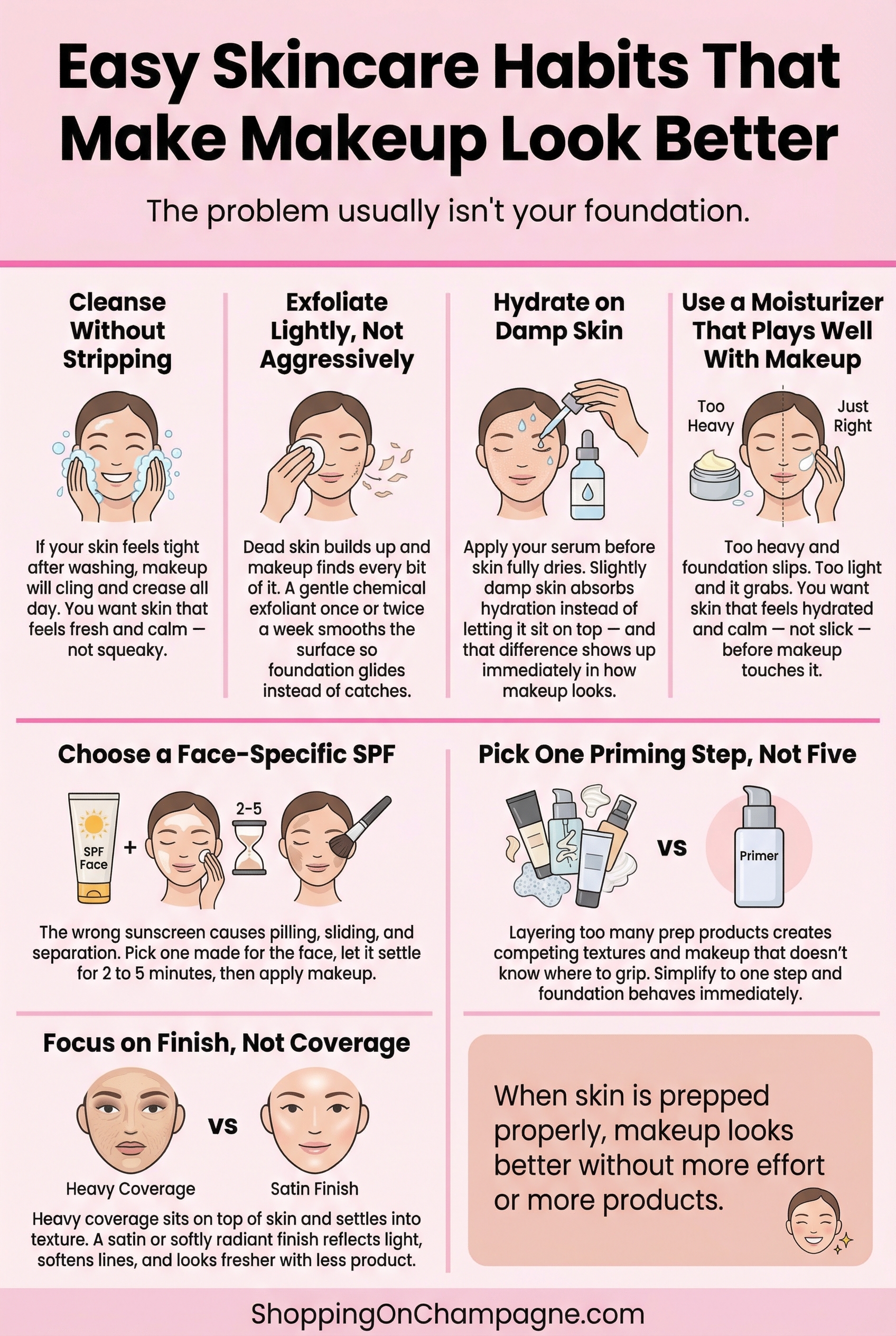
10. A Simple Routine You Can Actually Stick To
You don’t need perfect skin.
You need consistent habits.
A realistic routine:
Gentle cleanse
Hydrating serum
Moisturizer
SPF
Wait a few minutes
Makeup
When skin is prepped properly, makeup looks better without more effort or more products. You’ve got this.
Stay gorgeous!



The best Korean skincare products are finally easy to find, and Sephora carries more than you think. K-beauty has always prioritized skin health over coverage and hydration over heavy product, which makes it a perfect fit for women over 50. This roundup covers 15 products worth trying, from gentle cleansers to barrier-repair moisturizers. Korean skincare for women over 50, best K-beauty products, Korean beauty routine.