
Casual Dresses That Flatter a Belly Without Looking Tent-Like
If you’ve ever put on a loose dress hoping it would feel easy and comfortable, and instead felt wider, heavier, or swallowed up by fabric, you’re not imagining that reaction.
A lot of casual dresses are designed with “more fabric” as the solution. More swing. More drape. More volume.
And when there’s no structure to guide it, all that extra fabric doesn’t skim. It hangs.
That’s the difference most women feel immediately but can’t always name.
Loose means there’s room to move.
Shapeless means there’s no direction.
When a dress has no visual anchor, no seam, no neckline structure, no weight in the fabric, it doesn’t flatter anything. It just exists.
That’s when it starts to feel tent-like. Or worse, maternity-like. And that’s usually the moment you think, “I look bigger in this.”
You’re responding to construction, not your body.
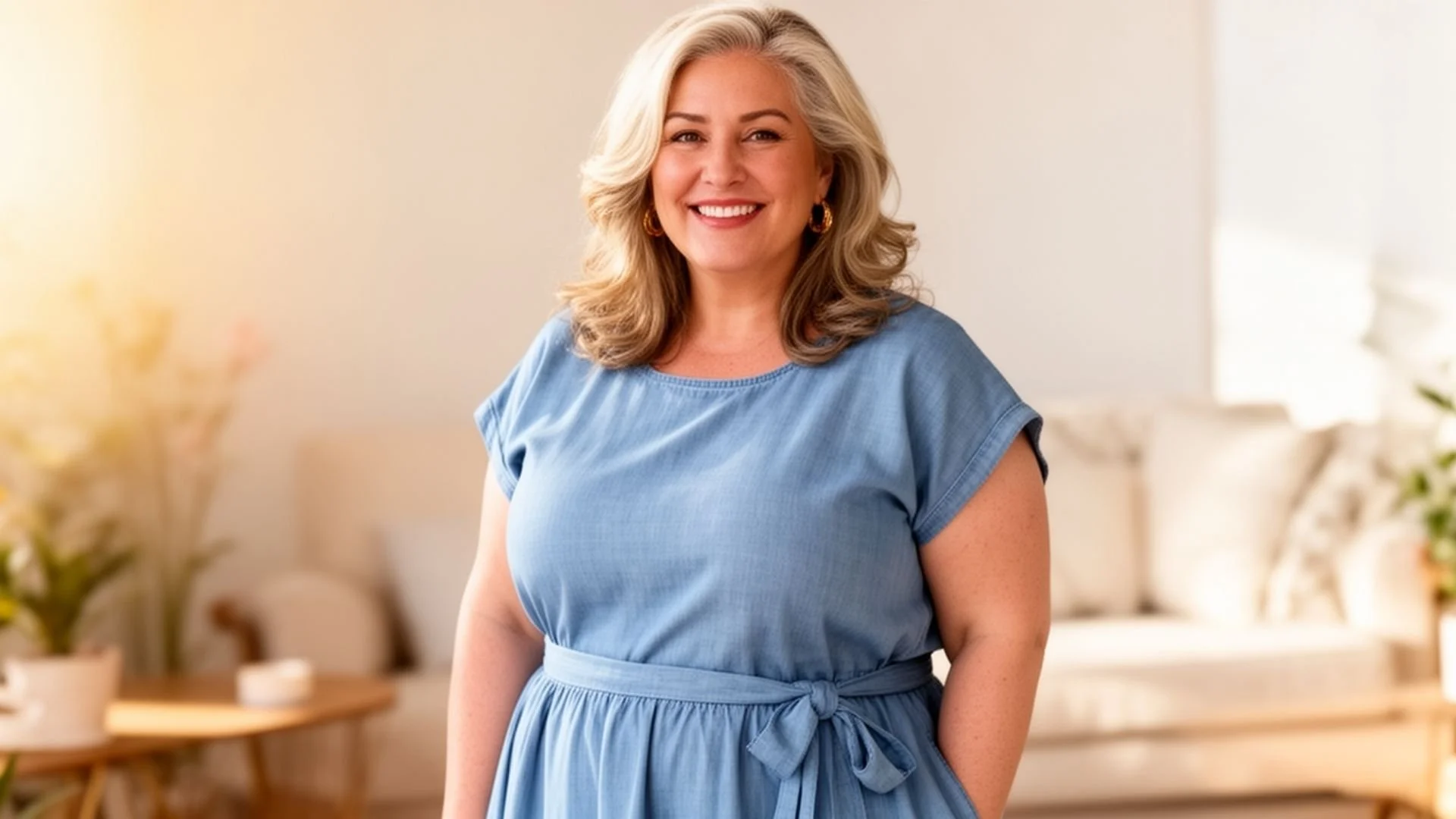
What Actually Makes a Dress Feel Tent-Like
This post may contain affiliate links. Please see my full disclosure for more information.
Most of the dresses that create this problem share a few things:
Too much fabric at the sides with no shaping
Lightweight cotton that collapses instead of skims
Wide, undefined waistlines
High crew necklines with no opening
Excess volume combined with a busy pattern
It isn’t that the dress is “too big.”
It’s that nothing is guiding the eye.
When there’s no vertical line, no defined shoulder, no seam to suggest shape, the fabric becomes the main event.
And that’s what creates that circus-clown feeling you described, especially when volume and pattern stack on top of each other.
The Subtle Shift: Loose vs Shapeless
A flattering casual dress can absolutely have ease.
Ease feels breathable.
Shapeless feels heavy.
Ease moves with you.
Shapeless moves around you.
A dress that flatters the belly area does not squeeze it. But it also doesn’t abandon structure entirely.
It gives the eye something intentional to follow.
That’s what we’re looking for.
Features That Quietly Make a Difference
When I wore more dresses in Southern California, I gravitated toward two types: shift styles and swing styles.
The shift dresses were thicker cotton, fully lined, slightly structured at the shoulder, often with a bateau neckline. They skimmed instead of clinging. The weight of the fabric helped them hold their shape instead of collapsing against the body.
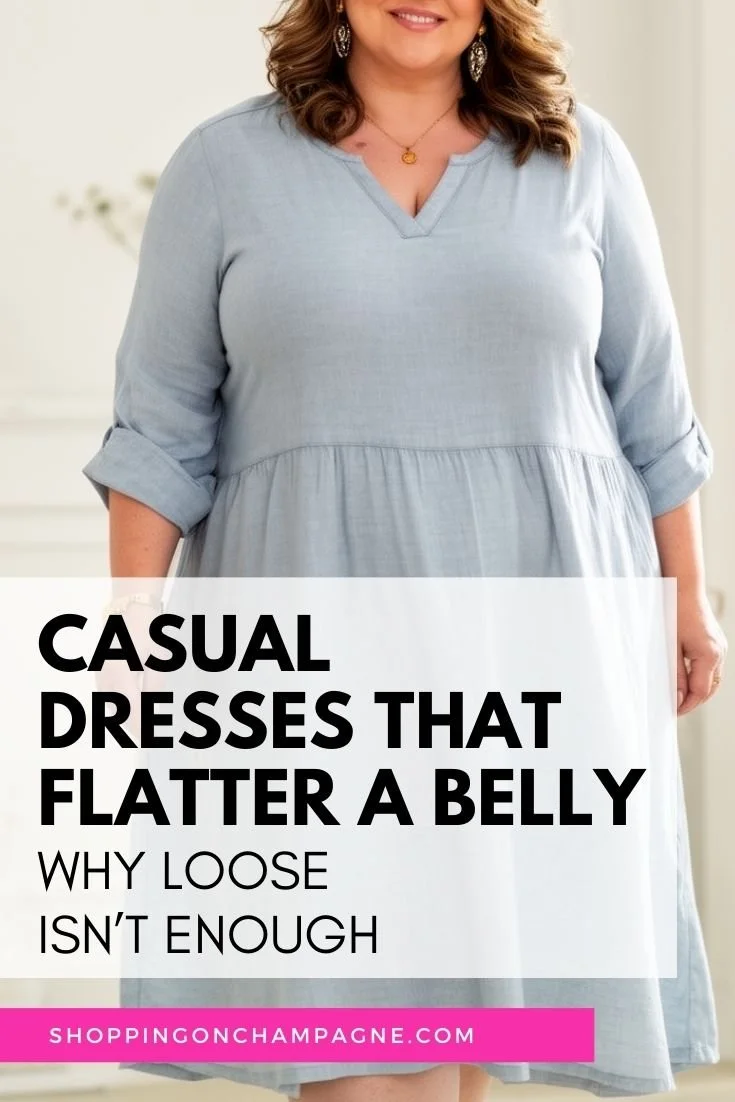
The swing dresses were lighter, sometimes silk with lining, often with a subtle empire seam or a slit V neckline. Even though they had movement, there was still direction built into the design.
That’s the key.
Here’s what tends to work well when you’re shopping:
A neckline with some openness (slit V, soft V, subtle scoop)
Fabric with enough weight to skim, not cling
Lining, especially in lighter fabrics
A seam - empire, vertical, or slight waist shaping
Sleeve structure (not overly dropped shoulders)
A hemline that hits at a flattering proportion for your height
You’re not looking for tight.
You’re looking for guided.
The Third Piece Solution
If you love a dress but it feels a little undefined, this is where a third piece changes everything.
A fitted denim jacket adds structure to the shoulders.
A cardigan worn over the shoulders breaks up volume.
A coordinating wrap introduces vertical lines.
Even subtle layering can interrupt excess fabric and create shape without squeezing anything.
That small addition can take a dress from tent-like to intentional.
A Quick Shopping Checklist
Before you add a casual dress to your cart, check for this:
Does the fabric have weight or lining?
Is there any seam or shape built into the torso?
Does the neckline open up the upper body slightly?
Is the volume balanced, not exaggerated at the sides?
Can you easily add a structured third piece?
If most of those are yes, you’re looking at a dress with potential.
If you can’t identify where the dress creates shape, that’s usually a sign to move on.
A Few Dress Styles Worth Looking At
Instead of scrolling endlessly and hoping something works, it helps to know where to start, and I’ve rounded up some of my favorites above.
When Shopping, Look For:
Structured shift dresses in thicker cotton or ponte
Midi dresses with subtle waist shaping
Dresses that are lined and have defined shoulders
Brands that show seam details clearly in product photos
Pay attention to fabric descriptions. If it says “structured,” “lined,” or “medium-weight,” that’s usually a good sign.
Slight A-line silhouettes with built-in shaping
Dresses with subtle empire seams
Dresses with open necklines instead of high crew necks
Patterns that are scaled appropriately, not oversized and overwhelming
When you’re browsing either site, don’t focus on the model’s stomach. Zoom in on the construction. Look at where the seams hit. Look at how the fabric hangs in the side view. That’s where you’ll see whether it has direction or just volume.
If you find a dress you love but it feels slightly undefined, remember the third-piece strategy. A denim jacket, a cropped cardigan, or even a lightweight wrap can add structure without adding tightness.
You don’t need dozens of dresses. You need one or two that feel intentional.
And once you know what to look for, you won’t accidentally buy another tent.
One More Important Thing
You may notice that the models wearing these dresses don’t have your body shape.
That’s normal.
You are not evaluating their midsection. You’re evaluating the garment’s structure.
Look at the seams. The drape. The neckline. The weight.
Those details matter far more than the model’s stomach.
Casual dresses should feel easy. They should feel comfortable. They should feel like you can move through your day without adjusting or hiding.
But comfortable does not mean shapeless.
Once you start looking for structure instead of just size, shopping becomes much easier.
And when you find the right one, you won’t feel bigger.
You’ll feel put together.
That’s the goal.
Stay gorgeous!
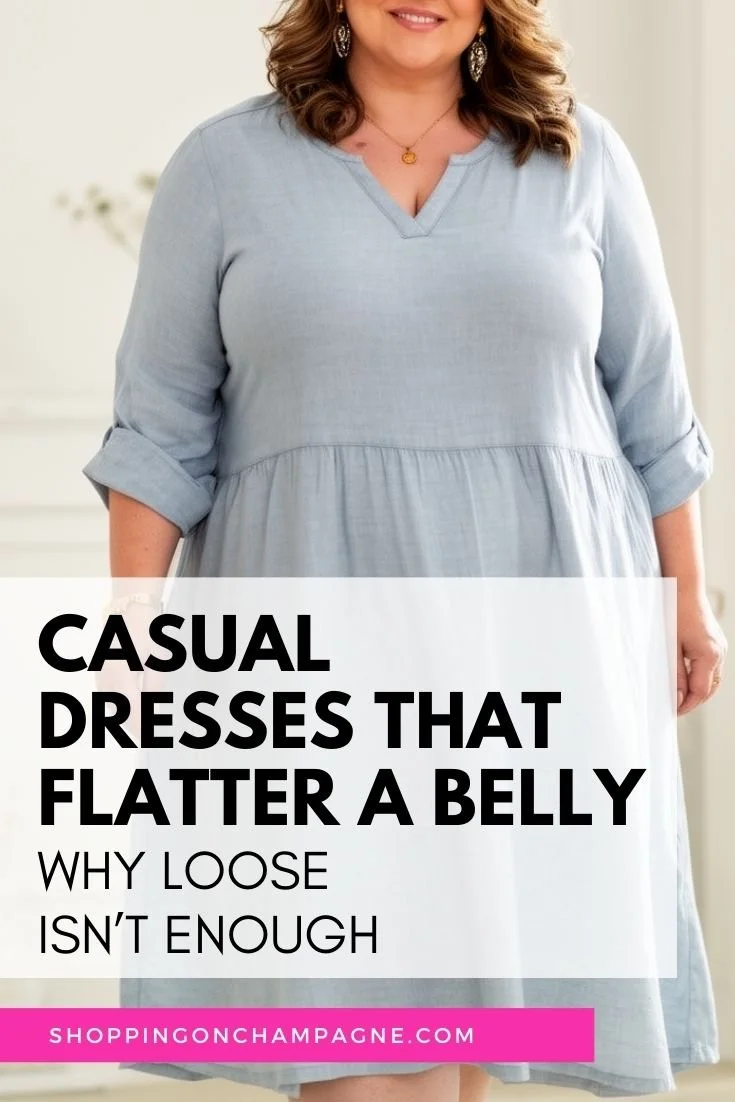
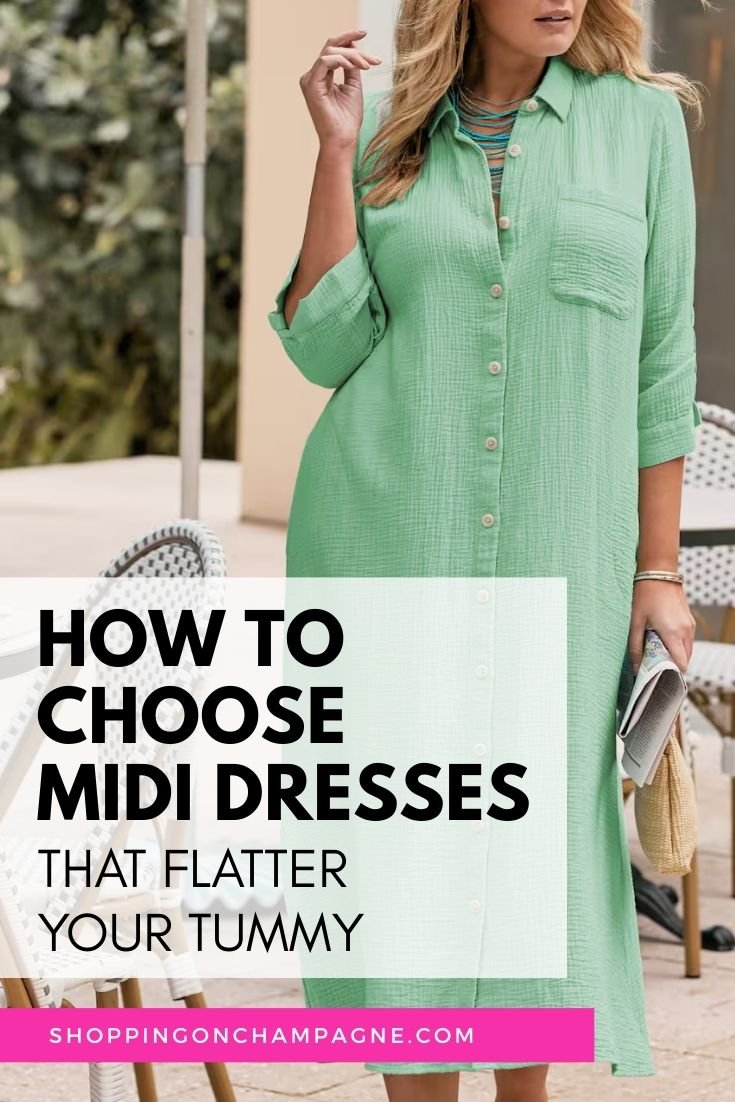
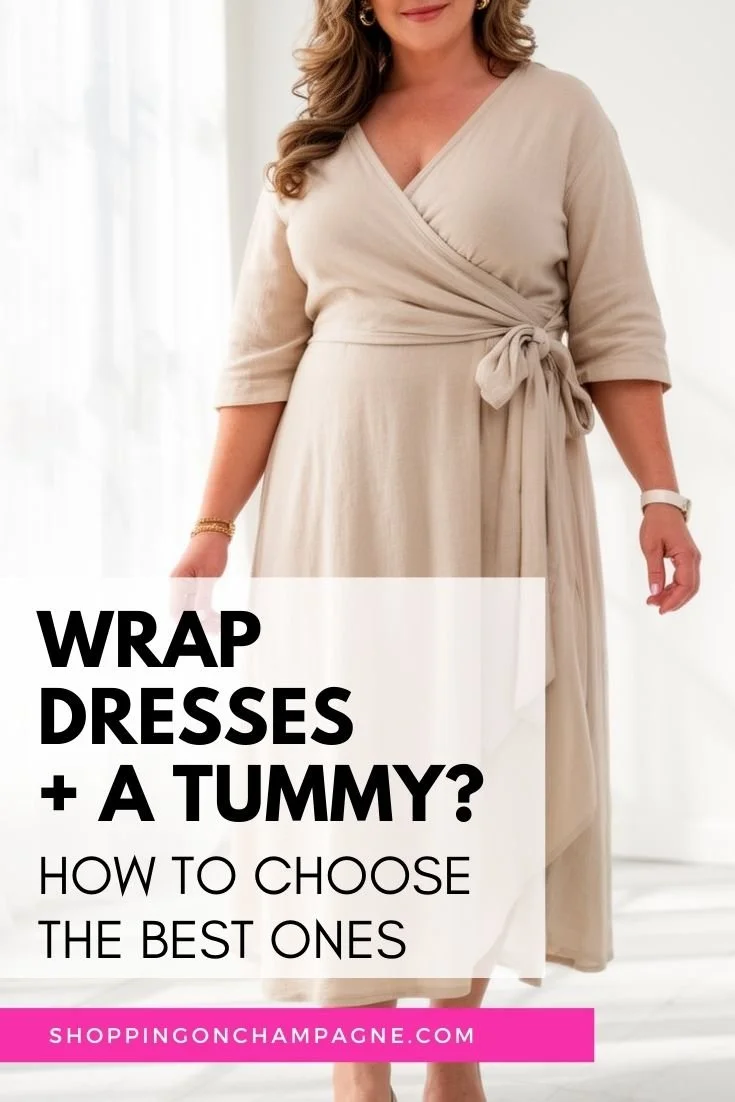

Looking for a comfortable dress that doesn’t cling? Discover the best shift dresses for women over 50, plus my favorite styles for everyday wear, travel, vacations, and dressier occasions.