
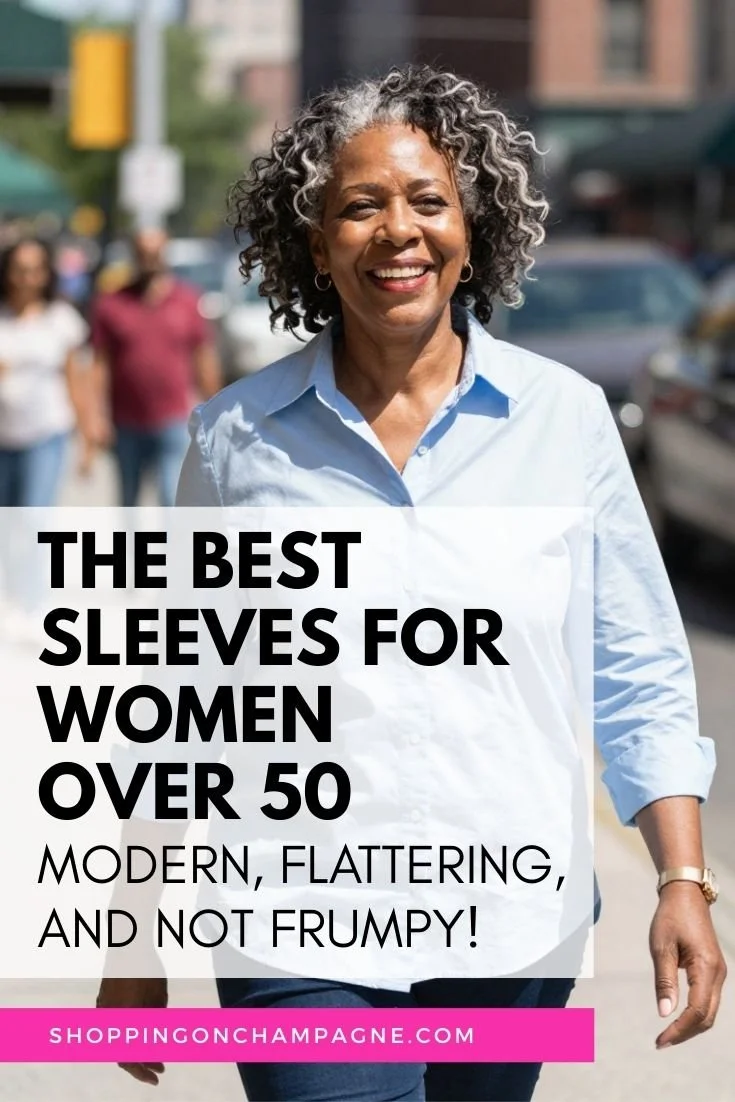
The Best Sleeves for Women Over 50 (Without Looking Dated)
If sleeves have started to feel like the hardest part of getting dressed, you’re not imagining it.
You put a top on, and everything else feels fine, but your arms feel exposed, bulky, heavy, or just not quite right. Suddenly the outfit feels off, even if you liked it on the hanger.
This usually isn’t about your arms.
It’s about how the sleeve is built, where it ends, and what it’s doing visually.
Let’s walk through the sleeve choices that actually work, why some sleeves feel instantly dated, and what to reach for instead so outfits feel lighter and more intentional.
Why Sleeves Matter More Than We Think
Sleeves sit right at the midpoint of the body. That means they affect:
where the eye stops
how balanced the outfit feels
whether the look feels current or stuck in another decade
A great sleeve can make a simple outfit feel polished.
The wrong sleeve can make even nice clothes feel heavy or old.
Once you understand a few sleeve rules, getting dressed gets much easier.
Related Post: How to Dress Over 50 When You Don’t Like Your Arms
Sleeves That Work (And Why They Do)
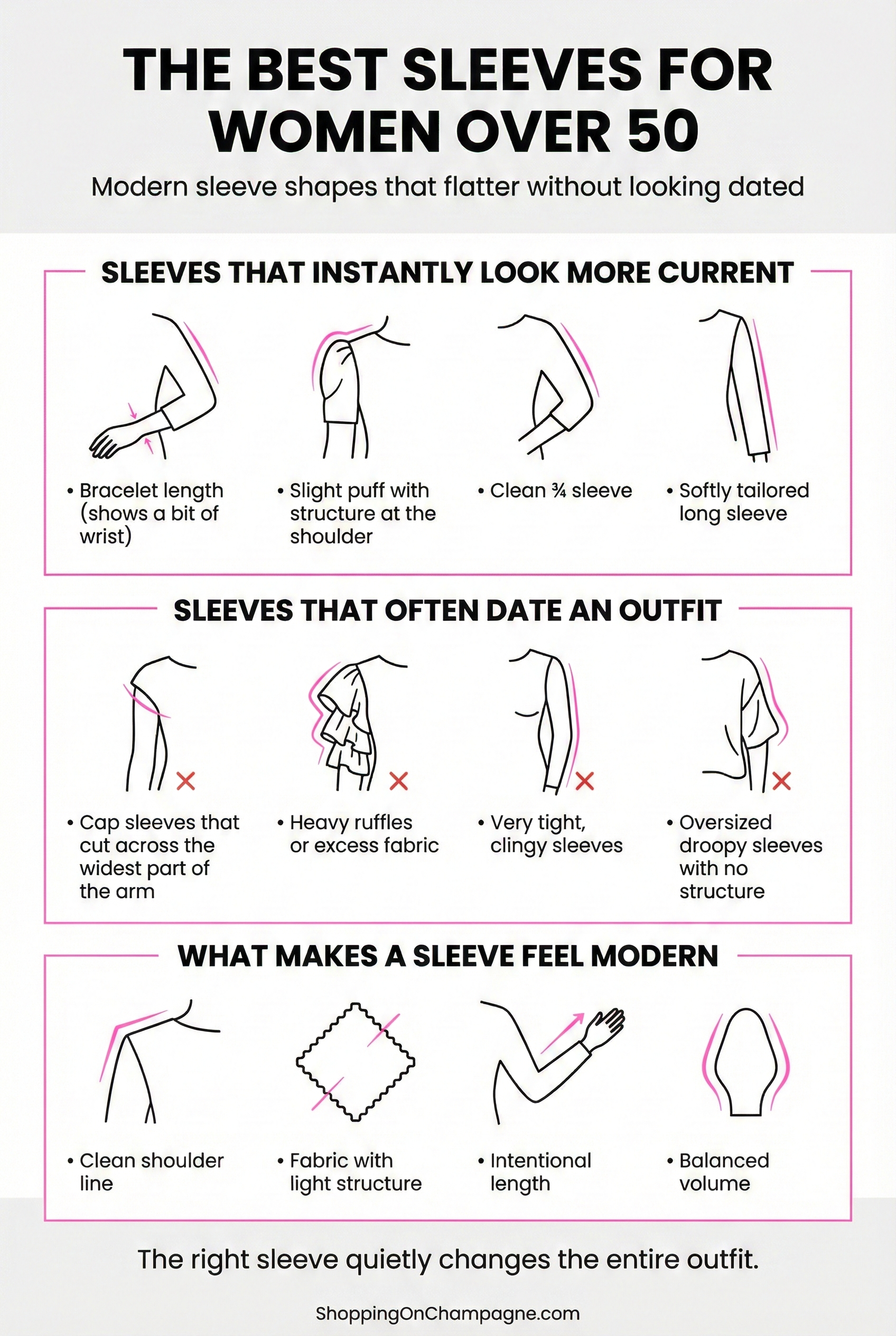
1. Elbow-Length and Just-Above-Elbow Sleeves
Why they work
These sleeves create a clean visual break at a flattering point on the arm. They offer coverage without cutting the arm in half or drawing attention to the widest part.
What they prevent
The “stuck in the middle” look of cap sleeves
The heaviness of overly long, tight sleeves
That awkward feeling of wanting coverage but not wanting bulk
What to look for
Soft structure, not clingy
A sleeve that skims the arm, not hugs it
Slight shaping or a gentle taper
This is one of the easiest sleeve lengths to wear and one of the most modern-looking.
2. Bracelet-Length Sleeves (3/4 Length Done Right)
Why they work
Showing a bit of wrist lightens the whole outfit. The wrist is a visually delicate area, and exposing it helps the look feel light and open.
What they prevent
That “everything is long” feeling
Sleeves that feel dated or overly conservative
What to watch for
Bracelet-length sleeves should end cleanly. If they’re too tight, overly stretchy, or slouchy, they can feel tired fast.
A crisp bracelet sleeve instantly makes outfits feel intentional.
3. Softly Shaped Short Sleeves
Short sleeves can work beautifully, but only when they’re doing the right job.
Why they work
A sleeve with a bit of shape gives the arm room and creates a smoother line from shoulder to elbow.
What causes problems
Cap sleeves that angle upward
Tiny sleeves that sit high on the arm
Tight sleeves that grab instead of skim
These styles draw the eye to the widest part of the arm and often feel dated.
What to choose instead
Short sleeves that angle slightly downward
A bit of width, not tight stretch
Fabrics with some structure
Think “skimming,” not “gripping.”
Shop Best Sleeves
Sleeves That Tend to Look Dated (And Why)
Cap Sleeves
Cap sleeves rarely flatter. They cut the arm at its widest point and often make the shoulder area look broader while making the arm feel heavier.
They also tend to show up in older silhouettes, which is why they can age an outfit fast.
Skin-Tight Long Sleeves
Tight sleeves emphasize texture and draw attention where most women don’t want it.
They also tend to show wear quickly, stretching out at the elbows and wrists, which makes outfits feel sloppy instead of polished.
Overly Fussy or Decorative Sleeves
Cold shoulders, dramatic ruffles, heavy bell sleeves, or layered flounces can feel dated because they tie the outfit to a very specific trend era.
Sleeves like this often overpower the rest of the outfit and make styling harder than it needs to be.
Related Post: What to Wear When Clothes Feel Heavy on Your Body
The Sleeve Balance Rule (This Changes Everything)
When a sleeve feels off, the problem is usually balance, not coverage.
Ask yourself:
Is the sleeve heavier than the rest of the outfit?
Is it cutting the arm at an awkward point?
Is it adding bulk where I want smoothness?
A good sleeve supports the outfit.
It doesn’t compete with it.
When in doubt, choose the sleeve that creates the cleanest line and lets the rest of the outfit do the talking.
If You Want Coverage Without Feeling Covered Up
This is where a lot of women get stuck.
The answer isn’t longer sleeves or looser sleeves.
It’s smarter sleeves.
Try this approach:
Choose a flattering sleeve length first
Make sure the fabric has some structure
Pair with a clean third piece if you want extra coverage
A light jacket, cardigan, or blazer layered over a good sleeve always looks better than relying on the sleeve alone to do all the work.
Related Post: The One Styling Shift That Makes Outfits Look Intentional
The Takeaway
Great sleeves don’t hide your arms.
They create balance.
When sleeves skim instead of cling, end at the right place, and work with the rest of the outfit, clothes stop feeling fussy and start feeling easy again.
If sleeves have been the thing making outfits feel dated or uncomfortable, start there. It’s one of the quickest fixes you can make without changing your entire wardrobe.
And once sleeves work, everything else gets easier.
If you want, next we can talk about how sleeves interact with jackets and layering pieces, because that’s where a lot of outfits quietly succeed or fall apart.
Stay gorgeous!

How to Dress for the Hamptons