
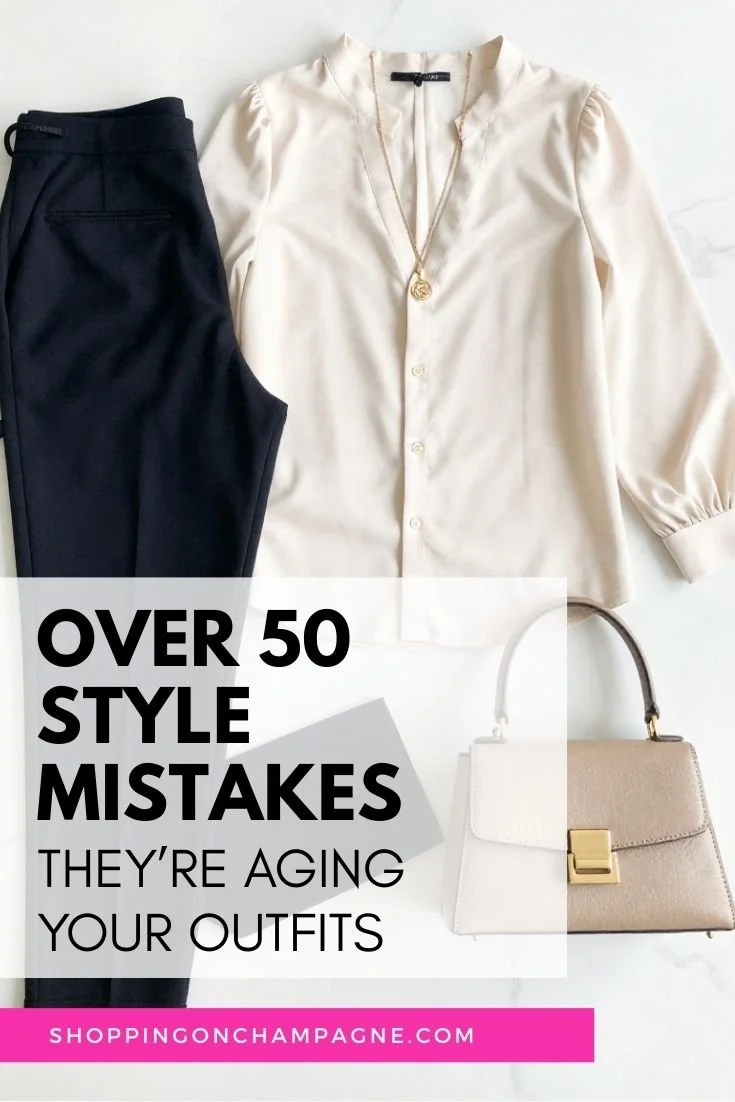
The Biggest Style Mistakes Women Over 50 Make
The Biggest Style Mistakes Women Over 50 Make
There’s a moment that happens quietly.
You get dressed. You look in the mirror. And nothing is technically wrong.
But something feels…older than you meant it to.
Not mature. Not elegant.
Just older.
Most of the time, that feeling has nothing to do with your age. And it definitely has nothing to do with your size.
It’s usually one of a few subtle patterns that start creeping in over time.
Once you see them, you can adjust them.
This post may contain affiliate links. Please see my full disclosure for more information.

1. Holding Onto Silhouettes That Have Moved On
Clothes don’t age. Silhouettes do.
A bootcut that worked beautifully ten years ago can suddenly feel dated if the cut is too long, too low-rise, or too narrow at the hem compared to what’s current now.
A cardigan that once felt soft and feminine can start looking shapeless if it’s too long, too thin, or dragging the body down.
The issue isn’t that you’re over 50.
It’s that fashion shifts slowly, and if you don’t adjust your shapes even slightly, your outfits start living in a different year.
What to do:
You don’t need a closet overhaul. You need micro-updates.
Look at:
The rise of your jeans
The width of your pant leg
The length of your layers
The shape of your jackets
Often, one updated silhouette refreshes five older pieces instantly.
2. Ignoring Proportion
This is the one that changes everything.
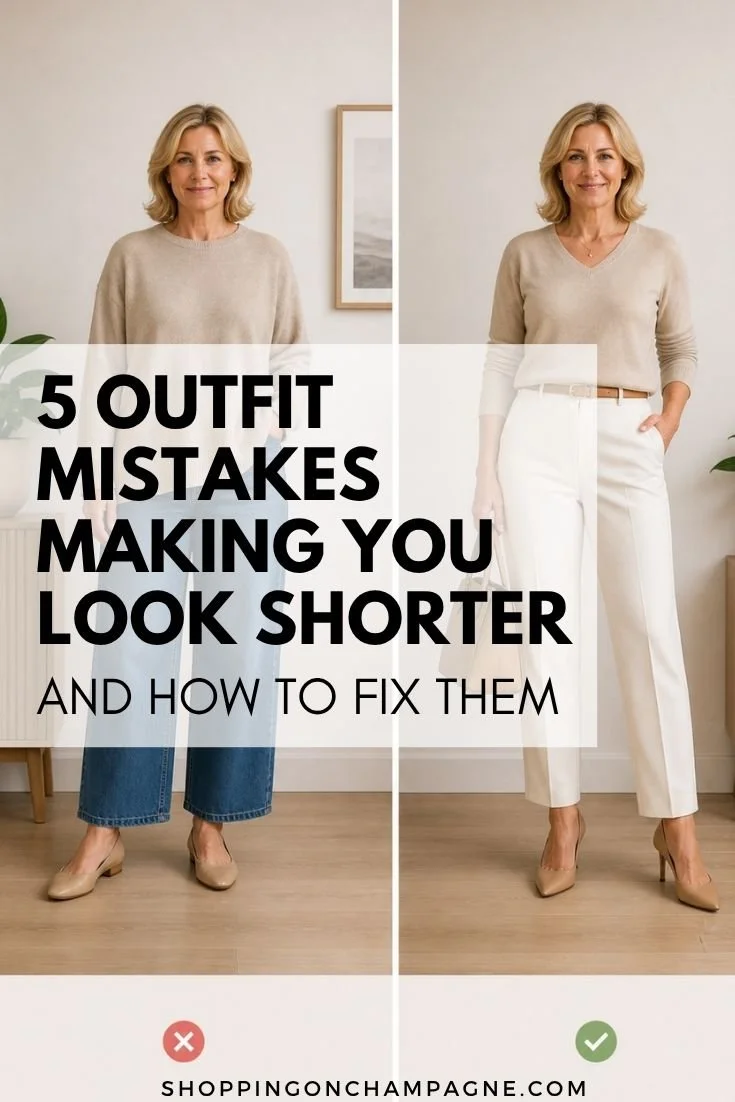
When tops are too long, sleeves hit at the widest part of the arm, hems cut across the widest part of the leg, or layers stack without intention, the outfit feels heavier.
And heavier can read older.
Not because of your body.
Because of visual balance.
When the proportion is off, the eye doesn’t move. It stops.
What to do:
Start noticing where things hit.
Does your top end at the widest part of your hip?
Does your midi hit mid-calf instead of closer to the ankle?
Is your sleeve cutting your arm at the fullest part?
Small shifts in hem length, sleeve length, or shoe choice can change the entire tone of an outfit.
This is where outfit formulas help. Structure removes guesswork.
3. Dressing From Fear Instead of Preference
This one is subtle.
Many of us have things we don’t like about our bodies, so personal rules start creeping in:
“I can’t show my arms.”
“My knees aren’t what they used to be.”
“I need to hide this part.”
So you add more fabric. Longer sleeves. Longer hems. More layers.
And suddenly the outfit feels cautious.
When clothing decisions are based on what you’re trying to conceal, the result often looks heavier and more conservative than you intended.
What to do:
Instead of asking, “How do I hide this?” ask, “What do I enjoy wearing?”
If you love 3/4 sleeves, wear them.
If you like a little ankle showing, choose a hem that allows it.
If you love a sweater over your shoulders because it feels polished, lean into that.
Style that’s chosen from preference looks alive.
Style chosen from fear looks guarded.
4. Letting Basics Get Stale
You can build beautiful outfits on simple pieces. But basics still need updates.
A tired white tee.
A blazer with dated shoulders.
A shoe shape that hasn’t shifted in years.
You don’t need trendy. You need current.
What to do:
Once or twice a year, look at your foundational pieces and ask:
Does this still feel fresh?
Is the cut modern?
Does the fabric still look good?
Replacing one or two basics can revive your entire wardrobe.
Here are some of my favorite stores for replenishing your basics:
Quince - my absolute favorite for quality luxury basics at an affordable price. Focus on natural materials like cotton, silk, linen, and cashmere
Everlane - crisp tees, button-downs, structured denim, relaxed trousers, and versatile outer layers. Focus on good fits and clean lines.
Universal Standard- Sizing is exceptional (00–40+), and basics are genuinely well-made from sleek tees and knits to trousers and foundational layering pieces.
COS - Contemporary basics with architectural lines, refined knitwear, tailored trousers, structured outerwear, relaxed blouses, and elevated essentials. Perfect for clean, modern outfits.
J.Crew - (especially Classic & Tall collections)Clean classics with updated proportions
5. Believing Style Has an Age Limit
This one is more mindset than wardrobe.
Trends are not reserved for younger women.
They’re options.
You don’t have to adopt every color, every cut, or every micro-trend. But staying aware of what’s happening keeps you from accidentally freezing your wardrobe in time.
Being informed doesn’t mean chasing.
It means choosing intentionally.
What to do:
Each season, choose one small update.
A new shoe shape.
A slightly wider pant.
A color that feels fresh near your face.
That’s enough to keep your outfits feeling current without feeling like you’re trying too hard.
If any of this felt familiar, it’s not a criticism.
It’s just awareness.
You don’t need to dress younger.
You don’t need to dress trendier.
You don’t need to change who you are.
You need updated silhouettes, balanced proportions, and decisions rooted in preference rather than fear.
Want help with this?
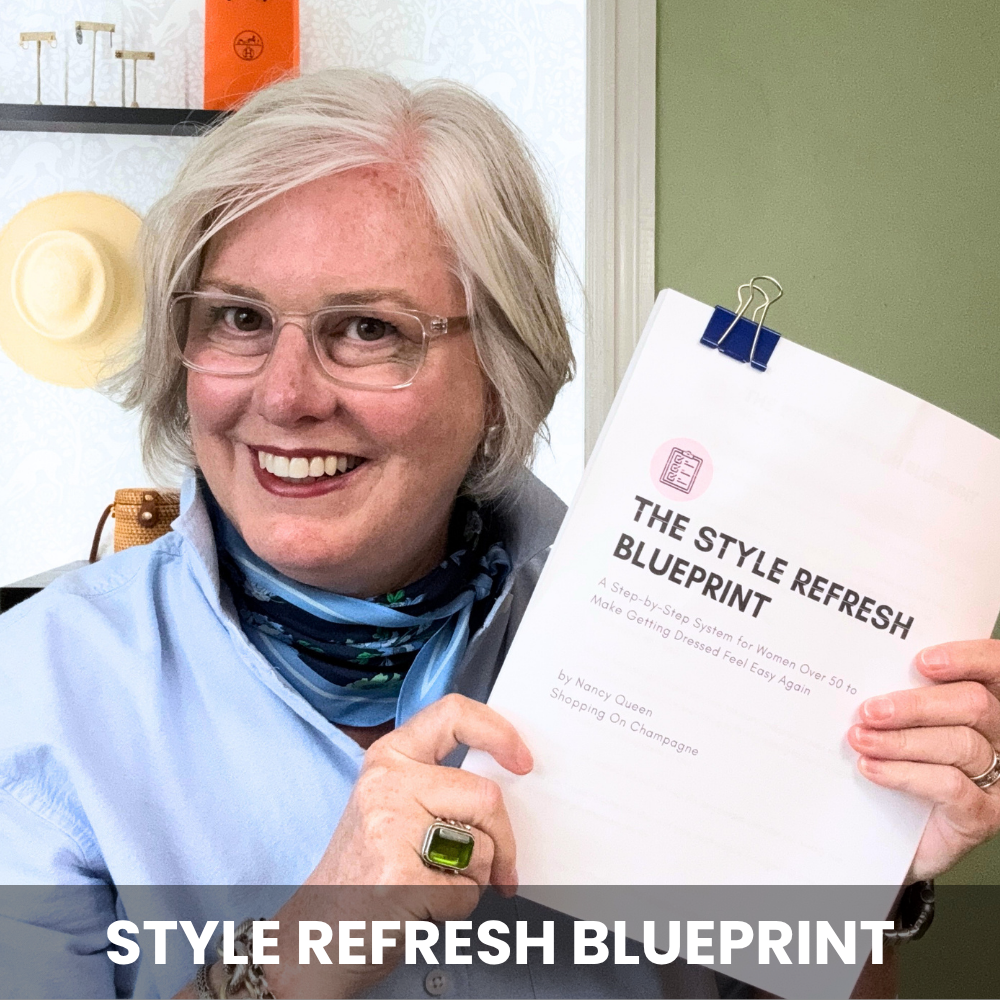
If you are ready to stop guessing and start making real progress, I have tools that will walk you through every step of this journey. Whether you are just getting started, ready to build a wardrobe that truly works for your life, or want a fully personalized experience, I have something for you at every level.
You can find all of them linked below.👇



You have a closet full of clothes and still nothing to wear.
You're holding onto pieces that don't fit, don't flatter, and honestly don't even feel like you anymore. Some still have the tags on. Some belong to a job, a body, or a chapter you've already closed.
👉🏻 You're not alone, and you don't need a total overhaul to feel better about getting dressed.
The Closet Detox is your step-by-step reset. Work through every item with 18 honest questions, a decision guide for the hard ones, and a clear action plan for what comes next.
💌 What's Inside:
✅ 18 questions to ask about every single item in your closet with honest, practical guidance on what to do with each answer
✅ A decision guide for the six hardest pieces to let go of
✅ A What Comes Next action plan - three things to do before you bring in a single new thing, so you never end up back where you started
✅ Live links to the Style Refresh Blueprint and the Champagne Edit - two ways to keep the momentum going
👗 This is for you if...
You have a full closet, but nothing to wear
You've been holding onto things out of guilt, sentiment, or "just in case."
You're done dressing for a body, a job, or a life you no longer have
You're ready to open your closet and actually feel good about what's in there
💡 Why It Works:
Every question is designed to cut through the noise and help you make a clear, confident decision about every single item without second-guessing yourself the whole way through.
Your closet should feel like you. This is where that starts.
This is a digital download. You will receive a PDF immediately after purchase.