
Why Style Has Nothing to Do With Size or Age
If you have ever been in a fitting room, reached for your usual size in a brand you trust, and then had to go up one, two, sometimes even three sizes, you know how quickly your mind can turn that moment into a story about you.
Or maybe it wasn’t the tag at all. Maybe it was catching your reflection and noticing your shape has shifted. Menopause weight gain. A new softness through the middle. Gray hair coming in. Lines that weren’t there before.
And before you even realize it, the thought lands:
“Maybe style just isn’t for me anymore.”
I want you to pause right there.
Whether it’s a changing label or a changing body, neither one is a verdict on your ability to enjoy style.
And neither one gets to decide that for you.
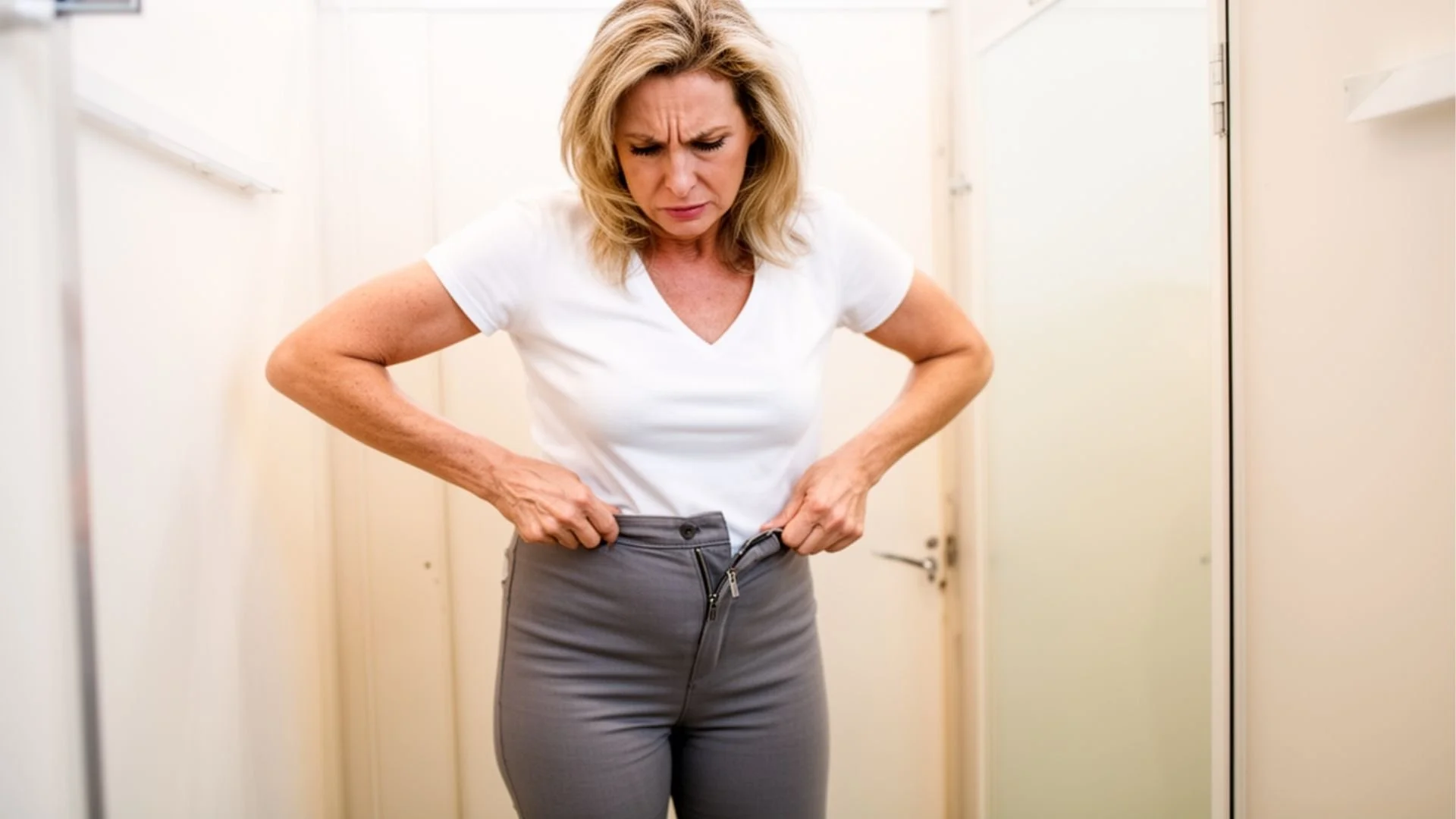
The moment this shows up for almost everyone
It usually starts the same way.
You grab the size you “always wear.” You try it on. It does not fit the way you expected. And in about three seconds, your mind fills in the blank with something like:
“My body changed, so now nothing works.”
“I guess I’m bigger than I thought.”
“I’m too old to bother with style anyway.”
That internal spiral is so common, especially over 50, because you have lived through enough changes to assume the problem must be you.
But clothing sizes are not consistent enough to deserve that kind of emotional authority.
Why the size on the label is not a verdict
Here is what can change behind the scenes without you knowing, and it can change from one season to the next.
A brand can switch factories.
They can change their fit model.
They can alter their sizing chart.
Their quality control can drift.
They can use a different fabric that behaves differently on the body.
They can “modernize” a silhouette, and the same size suddenly fits tighter in the hip, looser in the waist, shorter in the torso, or all three.
None of that has anything to do with your worth, your attractiveness, or whether you “can wear things anymore.”
So when the number changes, the most useful interpretation is usually this:
“This item is not cut for me,” not “something is wrong with me.”
That shift alone protects your confidence and keeps you from making panic decisions, like buying something that barely works just to avoid going up a size, or leaving the store thinking your style is over.
The second story women tell themselves: “Style is for younger people”
This one is quieter, but it affects everything.
Some women stop trying new shapes, new colors, or even simple modern updates because they assume trends are “for kids” or “for people who can pull it off.”
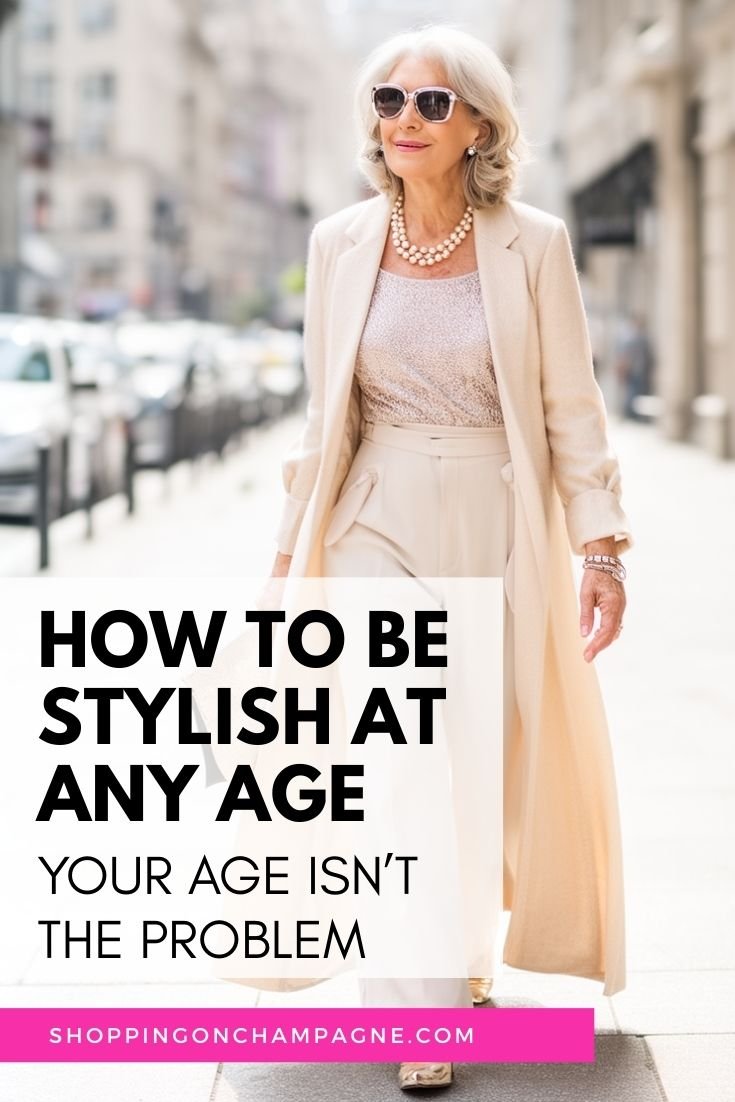
But style is not an age bracket.
Style is expression. It is a choice. It is how you show up in your own life.
And you do not need to dress like a trend report to let your wardrobe feel current. You only need to stay aware enough to bring in one or two updates each season that actually fit your taste and your lifestyle.
That is it.
Not because you need to “keep up,” but because it brings you joy, it keeps outfits from feeling stale, and it helps you avoid that stuck feeling of wearing the same safe look on repeat.
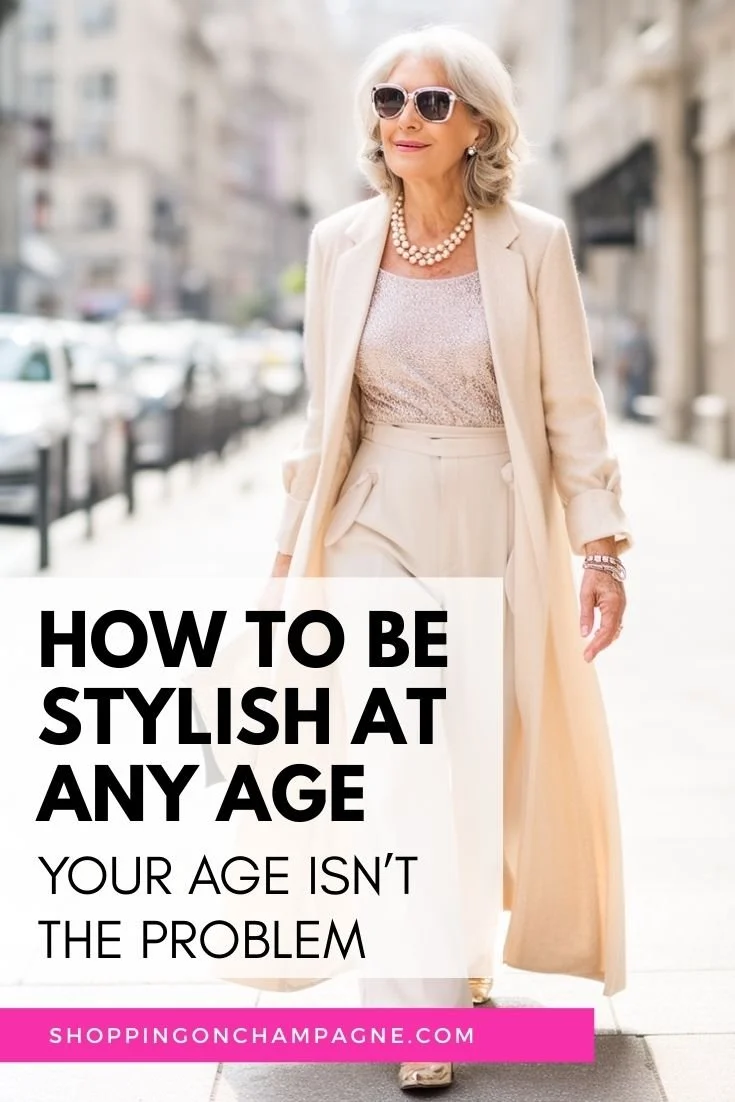
If you want a perfect reminder that age does not limit style, Iris Apfel is still one of my favorite examples. I’ll link my Iris post here so you can read it after this.
Iris Apfel post: [link]
When your body changes, it’s not just about clothes
There’s another layer here that we need to talk about honestly.
Sometimes it’s not the label.
Sometimes your body really has changed.
Menopause shifts your weight distribution.
Medication can add pounds you didn’t plan for.
Stress, sleep, health issues, all of it shows up in your shape and your face.
And that can feel unsettling.
You look in the mirror and think, “I don’t recognize myself.”
Or, “I don’t feel like the woman I used to be.”
Or even, “Maybe I’m just too old to care about this now.”
That reaction makes sense.
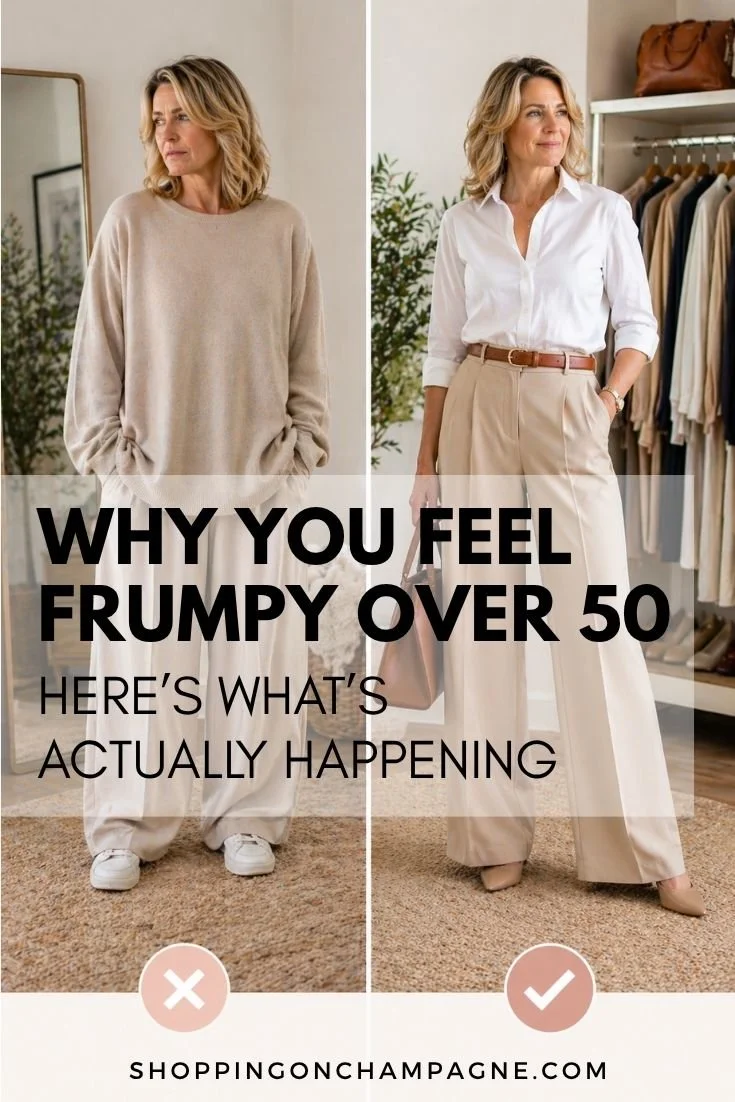
When your body changes, your old formulas may not work the same way. Your go-to outfits might suddenly feel tight, heavy, or wrong.
But here is the important shift:
A changing body does not disqualify you from style.
It simply requires adjustment.
The mistake most women make at this point is retreating.
They move toward hiding.
Looser, shapeless clothes.
Neutral everything.
No experimentation.
No updates.
Not because they don’t love style.
Because they don’t feel good in their skin.
What actually helps is not giving up on style; it’s updating your approach.
That might mean:
Choosing fabrics that feel lighter and move with you.
Adjusting proportions so you feel balanced again.
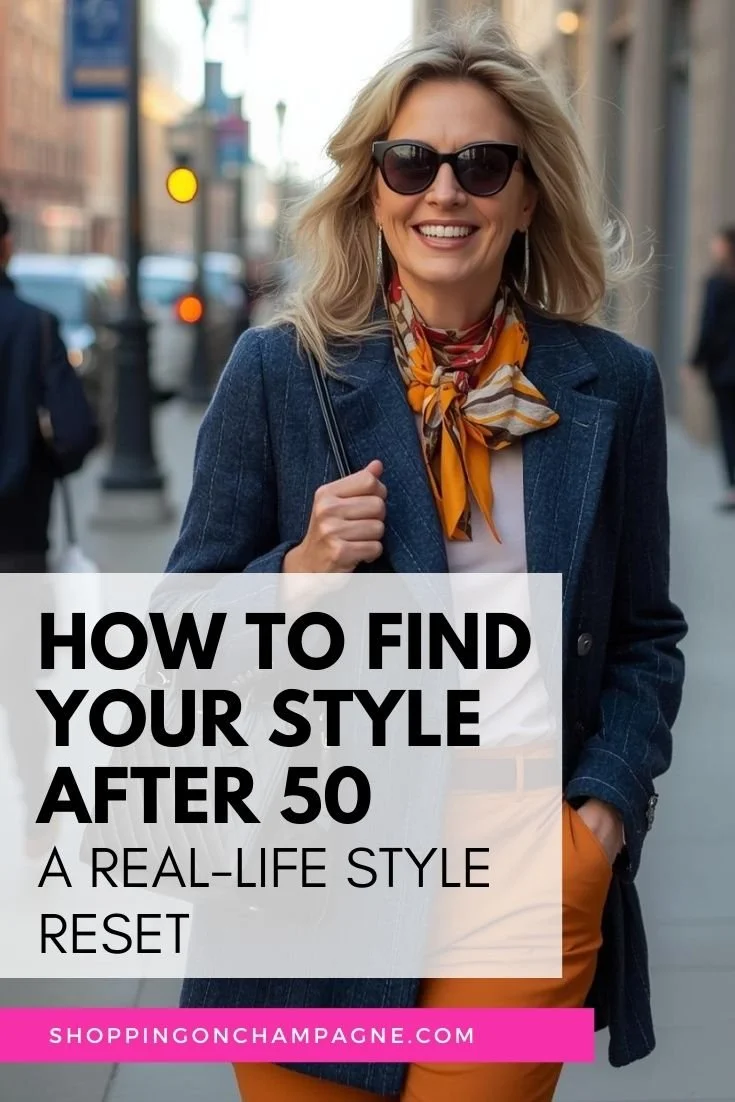
Bringing color closer to your face if your hair is graying and your skin tone has softened.
Letting go of silhouettes that used to work and replacing them with ones that support your body now.
Style evolves because you evolve.
That is not failure.
That is growth.
And enjoying style at 55, 65, or 75 does not mean pretending your body is 35.
It means dressing the woman you are today with intention.
What style actually has to do with
If size and age are not the drivers, what is?
In real life, these are the three things I see make the biggest difference.
1. Knowing your personal style, even if it is not “on trend”
Personal style is not something you invent from scratch every spring. It is something you recognize, refine, and repeat in a way that still feels like you.
This is where I want to tell you something that made me laugh out loud.
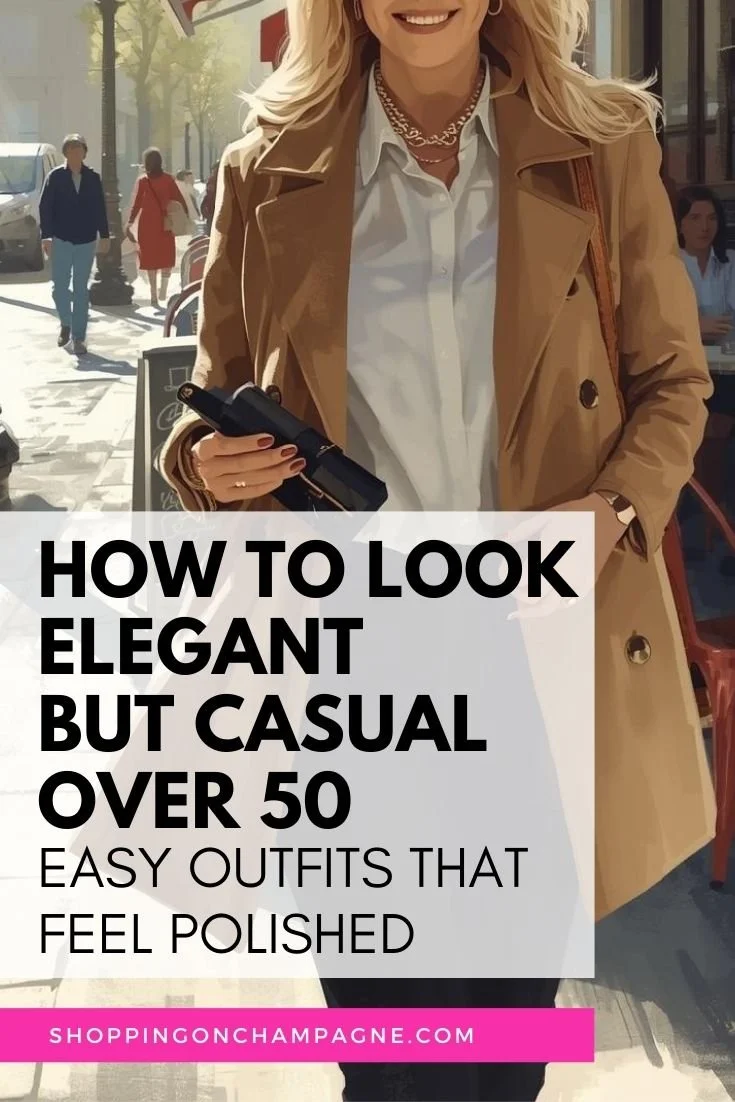
I am about to film a video on white button-down shirts because I love them so much. And one of my favorite ways to style a white button-down is with a sweater over my shoulders.
It gives me that finishing touch. It feels polished. It feels like me.
Well, yesterday I was flipping through old family photos, and I found a photo of me as a tween wearing a white shirt with a sweater over my shoulders.
That is not a trend.
That is a thread.
And that is what personal style is. It is the thing you return to, over and over, because it makes you feel like yourself in your skin.
So instead of asking, “Can I wear this at my age?” a better question is:
“Does this feel like me, and does it work in my real life?”
2. Having go-to outfit formulas so you are not reinventing your wardrobe every morning
When women feel “too old for style,” what I often see is not a lack of style; it is a lack of structure.
If you do not have repeatable ways to build outfits, getting dressed starts to feel like problem-solving. And problem-solving is exhausting when you are already juggling life.
Outfit formulas are what keep style feeling easy.
They let you rotate pieces without starting from scratch, and they keep you from defaulting to the same safe outfit because it is the only one your brain can assemble quickly.
If you have not seen it yet, I walk through 10 easy outfit formulas for this year here:
10 Outfit Formulas video: [link]
3. Being “in the know,” without chasing every trend
You do not need to adopt every trend.
But I do think it helps to know what is happening, the same way you stay generally aware of what is happening in the news. It gives you context.
Because when you are completely out of touch with what is current, two things happen:
You accidentally buy things that already feel dated the moment you bring them home.
You avoid updates altogether because they feel confusing or “not for you.”
Being in the know is not about pressure.
It is about options.
You get to choose what fits you, and you get to skip what does not.
A practical way to apply this when you feel stuck
If you have been thinking, “Nothing looks good on me anymore,” I want to give you a simple way to reset without making it a whole project.
Step 1: Separate the label from the meaning
The next time something does not fit, treat it like feedback about that garment, not feedback about you.
If it does not fit well, it is not your job to make your body match the clothing. It is the clothing’s job to work for your body and your life.
Step 2: Find your thread
Think about the looks that consistently make you feel like yourself, even if your body has changed.
Ask yourself:
What do I reach for when I want to feel like me again?
What details show up again and again (a crisp shirt, a layered sweater, clean denim, a specific neckline, a certain shoe shape)?
What do I keep wearing even when trends shift?
That thread is your style. You build from there.
Step 3: Choose one small update each season
Not a closet overhaul.
One update that supports your thread and keeps outfits feeling fresh.
Examples could be:
A current shoe shape that works with your jeans.
A jacket shape that modernizes your basics.
A color you love in one accessory, so you feel updated without feeling exposed.
Small updates add life to a wardrobe without turning it into a shopping hobby.
Want help with this?
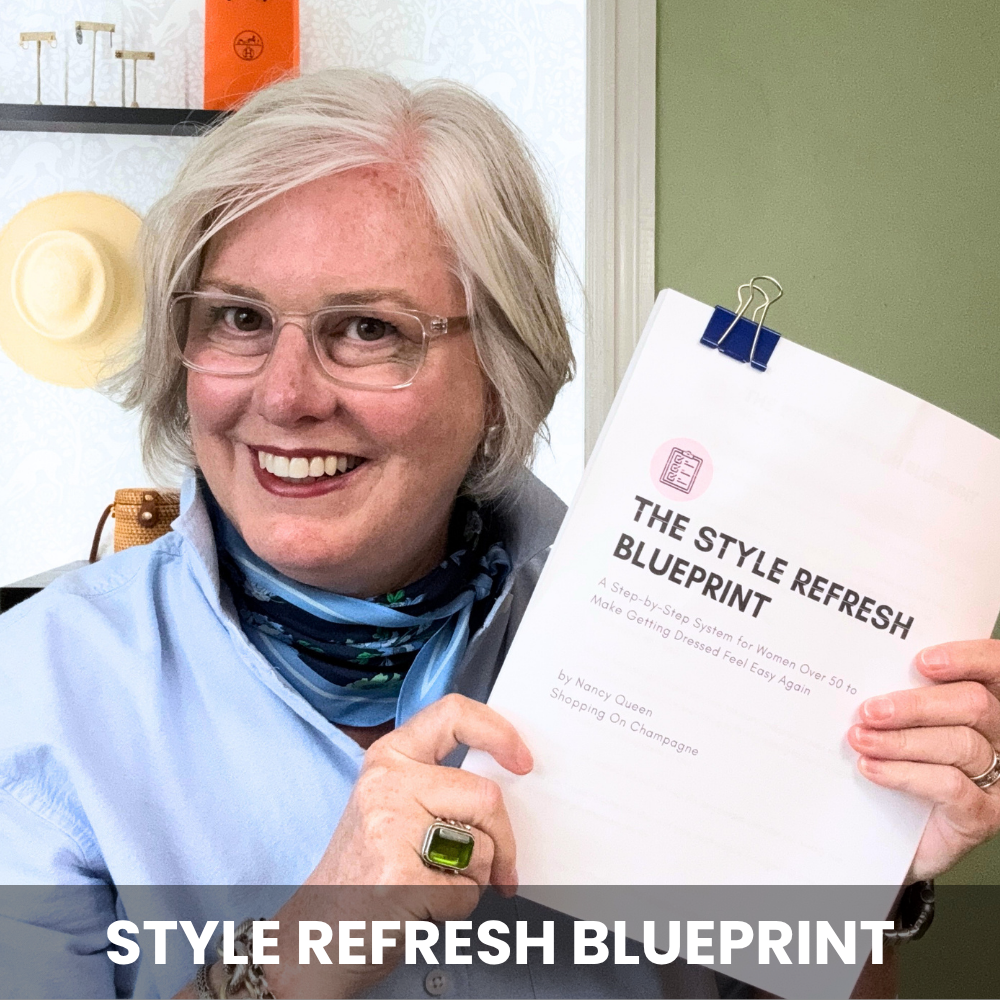
If you are ready to stop guessing and start making real progress, I have tools that will walk you through every step of this journey. Whether you are just getting started, ready to build a wardrobe that truly works for your life, or want a fully personalized experience, I have something for you at every level.
You can find all of them linked below.👇

You have a closet full of clothes and still nothing to wear.
You're holding onto pieces that don't fit, don't flatter, and honestly don't even feel like you anymore. Some still have the tags on. Some belong to a job, a body, or a chapter you've already closed.
👉🏻 You're not alone, and you don't need a total overhaul to feel better about getting dressed.
The Closet Detox is your step-by-step reset. Work through every item with 18 honest questions, a decision guide for the hard ones, and a clear action plan for what comes next.
💌 What's Inside:
✅ 18 questions to ask about every single item in your closet with honest, practical guidance on what to do with each answer
✅ A decision guide for the six hardest pieces to let go of
✅ A What Comes Next action plan - three things to do before you bring in a single new thing, so you never end up back where you started
✅ Live links to the Style Refresh Blueprint and the Champagne Edit - two ways to keep the momentum going
👗 This is for you if...
You have a full closet, but nothing to wear
You've been holding onto things out of guilt, sentiment, or "just in case."
You're done dressing for a body, a job, or a life you no longer have
You're ready to open your closet and actually feel good about what's in there
💡 Why It Works:
Every question is designed to cut through the noise and help you make a clear, confident decision about every single item without second-guessing yourself the whole way through.
Your closet should feel like you. This is where that starts.
This is a digital download. You will receive a PDF immediately after purchase.