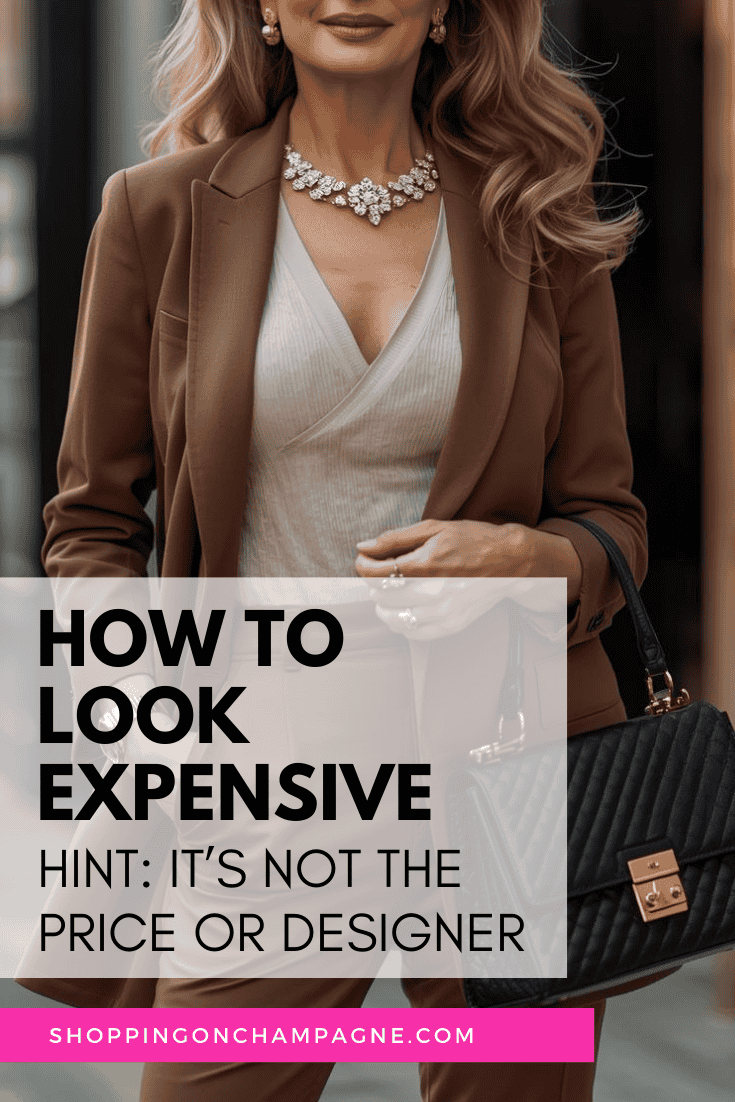
The Small Details That Make an Outfit Look Expensive
There is a moment I notice almost every single day.
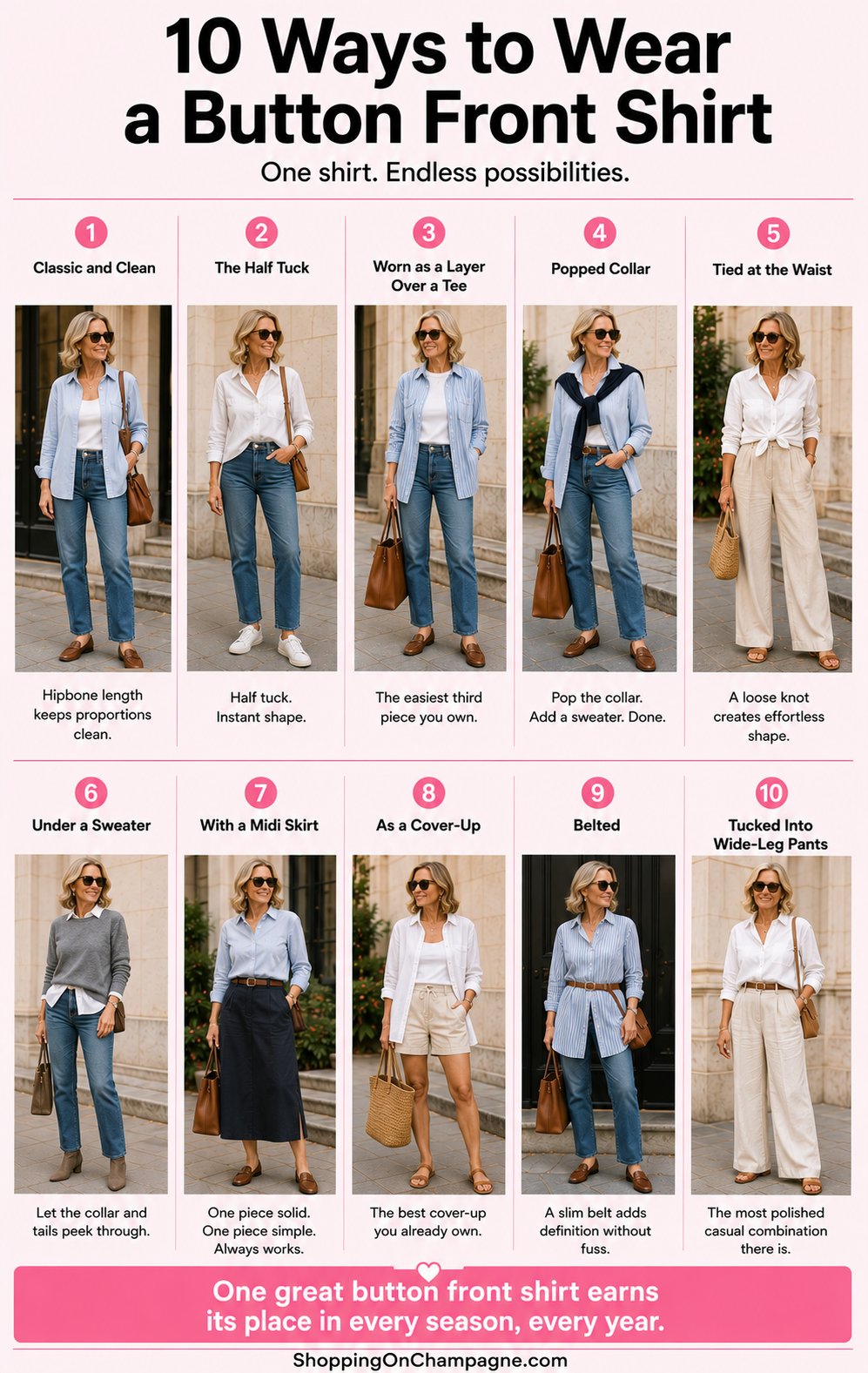
I’ll be wearing something very simple. A navy cashmere sweater. A white button-down underneath so the collar, cuffs, and shirttail peek out. Khaki wide-leg pants. Navy sneakers. A coordinating crossbody. My Ray-Ban Meta glasses. A large green peridot ring.
Nothing about that outfit is flashy.
But I’ll get a compliment.
Not because it’s designer. Not because it’s trendy. But because it feels intentional.
Last week, someone told me I looked so chic and pulled together. And I knew it wasn’t the sweater or the pants. It was the details. The sleeves rolled just right. The shirt layered cleanly. The bag matches the tone of the shoes. The jewelry is not competing, just finishing.
That is what makes an outfit look expensive.
It isn’t about price. It’s about paying attention to the details most people rush past.
Let me show you what I mean.
This post may contain affiliate links. Please see my full disclosure for more information.
1. Fabric You Can Feel Before You See
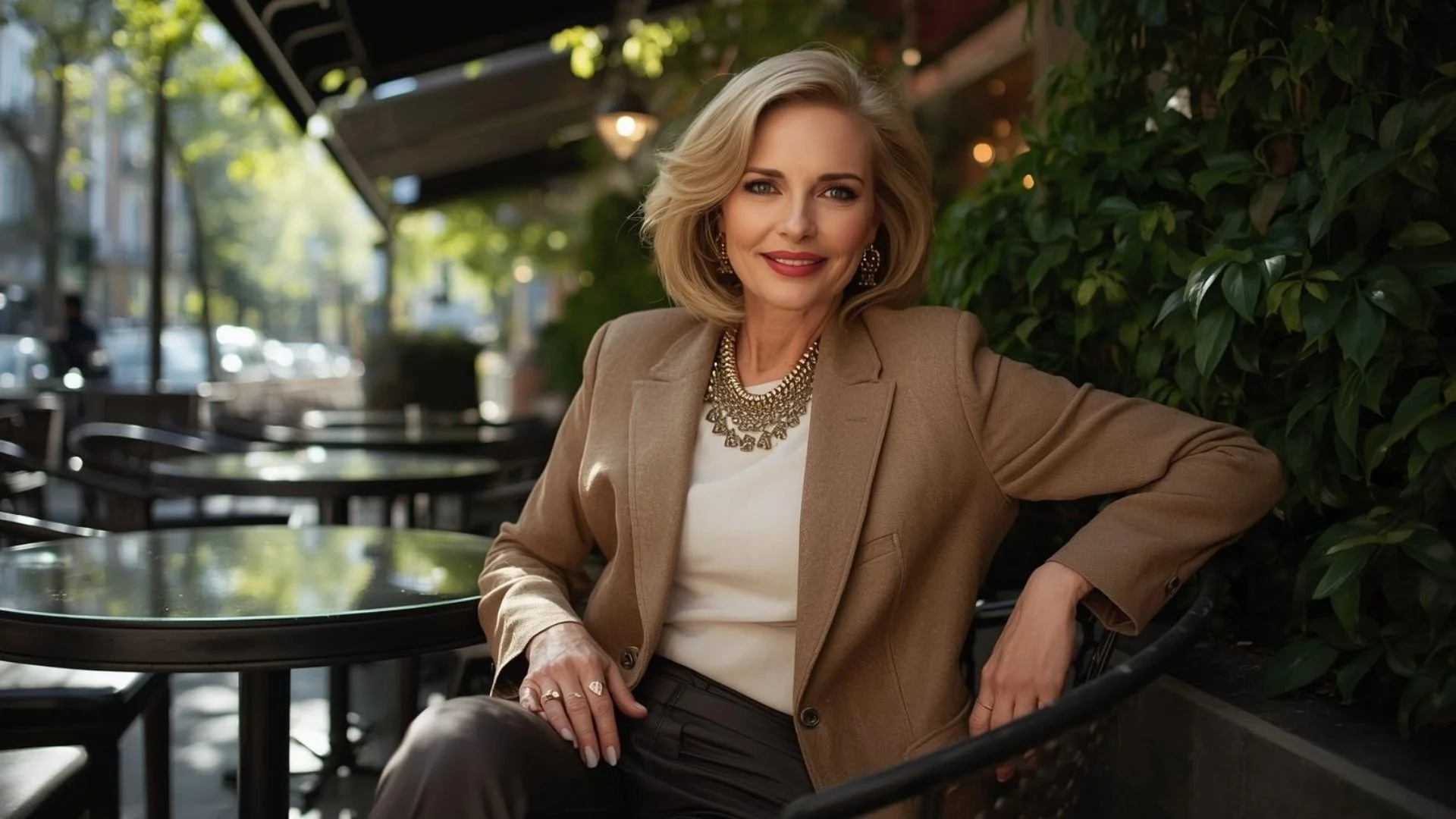
One of the biggest differences I notice between outfits that feel elevated and ones that fall flat is fabric.
When you choose natural fibers: cotton, silk, wool, cashmere, linen, the garment moves differently. It holds its shape better. It reflects light differently. It drapes instead of clinging.
Cheap synthetic fabrics often look fine on a hanger. But on the body, they wrinkle strangely, shine under light, or lose their structure after one season. That is when an outfit starts to feel tired.
This doesn’t mean you need luxury pricing. It means you read labels before you buy.
Brands that consistently focus on quality natural fibers and modern classic silhouettes include:
You don’t need all of these. It’s just a jumping-off point to help give you direction. You need to start noticing how fabric feels and how it wears over time. That alone elevates everything else in your closet.
2. Proportion Is Quiet Power
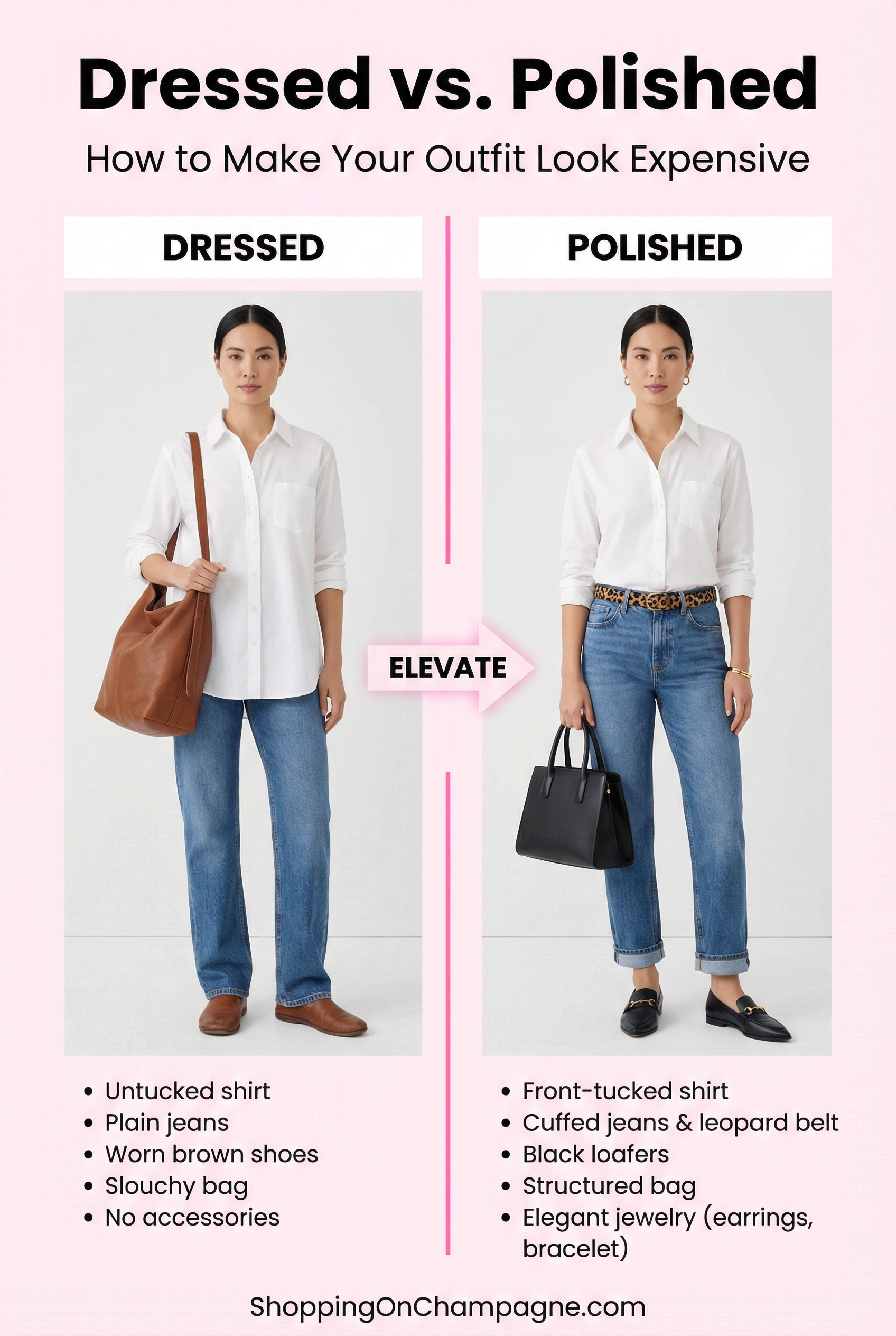
Two women can wear the same outfit—jeans and a white button-down shirt—and look completely different.
One wears plain brown shoes and a slouch bag, leaving everything loose. It’s fine. Nothing is wrong.
The other rolls and cuffs the sleeves, tucks the front of the shirt, adds a leopard belt, slips on updated loafers with a slight cuff at the hem, wears her favorite silver jewelry, and carries a sleek, structured bag.
Same base pieces.
Completely different energy.
The second woman paid attention to proportion and balance. A tuck to define shape. A cuff to show intention. A structured shoe. A bag that matches the vibe of the outfit.
It isn’t more complicated. It is more considered.
3. Shoes and Bags Carry the Outfit
This is one of my biggest pet peeves.
If the bag and the shoes feel like afterthoughts, the entire outfit feels unfinished.
It doesn’t matter how beautiful the sweater is if the shoes are worn down, dated in shape, or the bag doesn’t align with the rest of the look.
You don’t need logos.
You need cohesion.
If you are wearing soft-casual pieces, choose a structured bag to elevate them. If you are wearing tailored pieces, balance them with a slightly relaxed element so it doesn’t look overly stiff.
One tailored piece paired with something softer always looks more modern than a head-to-toe rigid structure.
And please, pay attention to the condition of your shoes. Scuffed leather, flattened loafers, or worn heels instantly pull everything down.
4. Intentional, Not Overdone
There is a misconception that looking expensive means being overly formal or perfectly matched.
Head-to-toe matching in one exact shade can look dated. Head-to-toe tailoring can look stiff. A head-to-toe designer can look try-hard if the rest of the outfit isn’t cohesive.
Elevated style is about restraint.
Roll the sleeve. Add the belt. Choose the updated shoe shape. Add one piece of jewelry that feels personal. Leave the rest alone.
When everything is screaming, nothing looks refined.
When one or two elements feel intentional, the whole outfit rises.
5. Grooming and Care Matter More Than Price
Wrinkled fabric. Dull jewelry. Overdone eyeliner. A bag that doesn’t match the outfit’s tone. Shoes that aren’t cared for.
These details quietly age an outfit.
And they are fixable.
Steam your pieces. Polish your shoes. Clean your jewelry. Edit your accessories before you leave the house.
These are not expensive upgrades. They are habits.
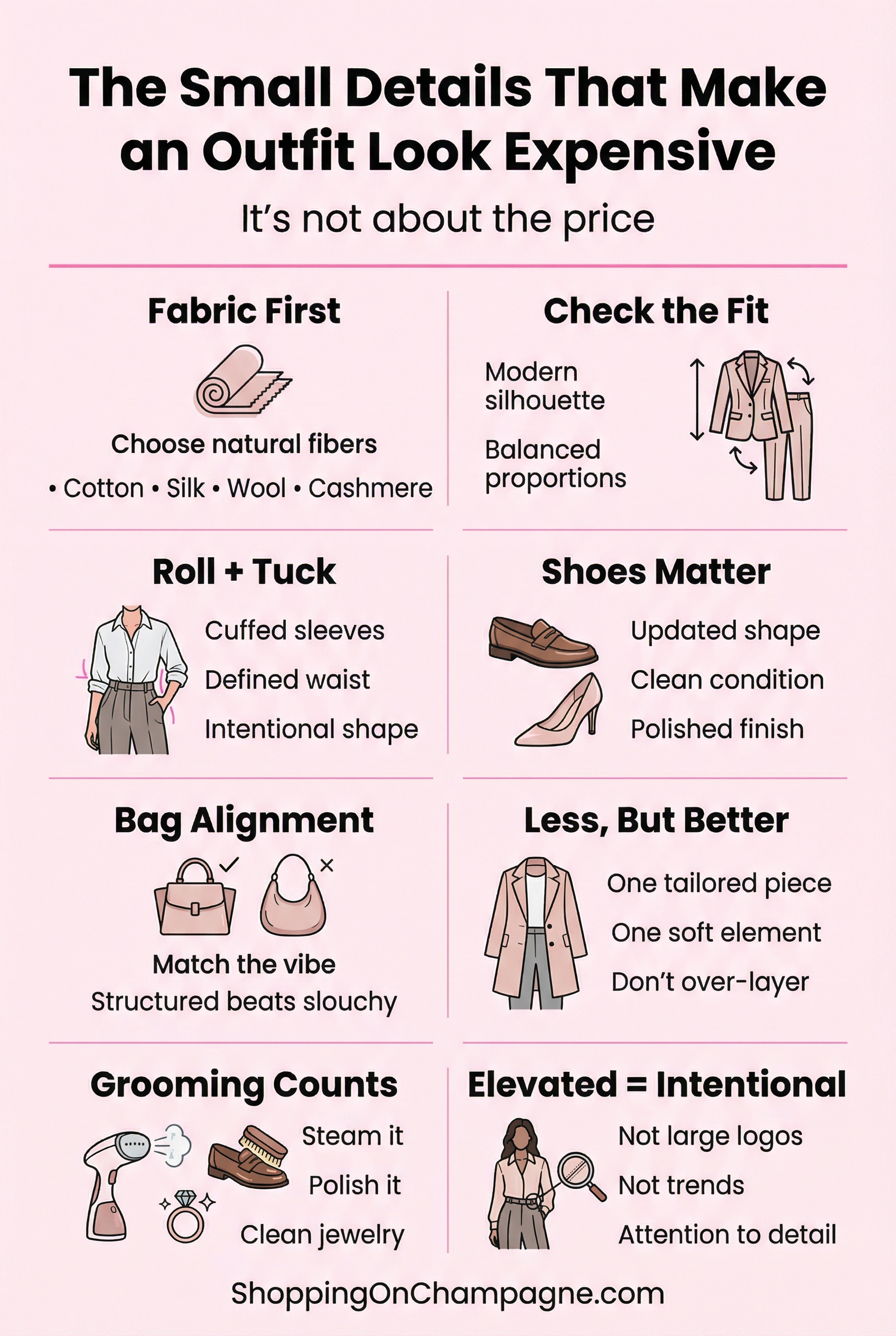
What “Expensive” Really Means
It does not mean logos.
It does not mean designer.
It does not mean buying new every season.
It means:
Quality fabric
Modern silhouette
Thoughtful proportion
Coordinated accessories
Good condition
When you build your wardrobe around classic pieces that fit your real life and mix them in a variety of ways, you don’t need excess.
You need intention.
And the best part is this: it has nothing to do with money.
It has to do with awareness.
Once you see the details, you can’t unsee them.
And once you start paying attention to them, your outfits shift without replacing your entire closet.
Stay gorgeous!