
Why Most Women Over 50 Feel "Frumpy" (And How to Fix It)
About ten years ago, I was in the thick of it.
Running a business, raising my daughter, managing a household, and somewhere in the middle of all of that, taking care of myself had slipped way down the list.
The stress caught up with me, the way it does, and I had put on some weight.
And instead of dressing for the body I had, I started hiding. Baggier tops. Baggier bottoms. Clothes that were too big and didn't really fit.
I thought I was making it better. I was making it worse. I felt frumpy and dumpy every single day, and I couldn't figure out why nothing in my closet was working.
If that sounds familiar, I want you to know something: it was not about my body. And it is not about yours either.
Frumpy Is Not a Body Problem
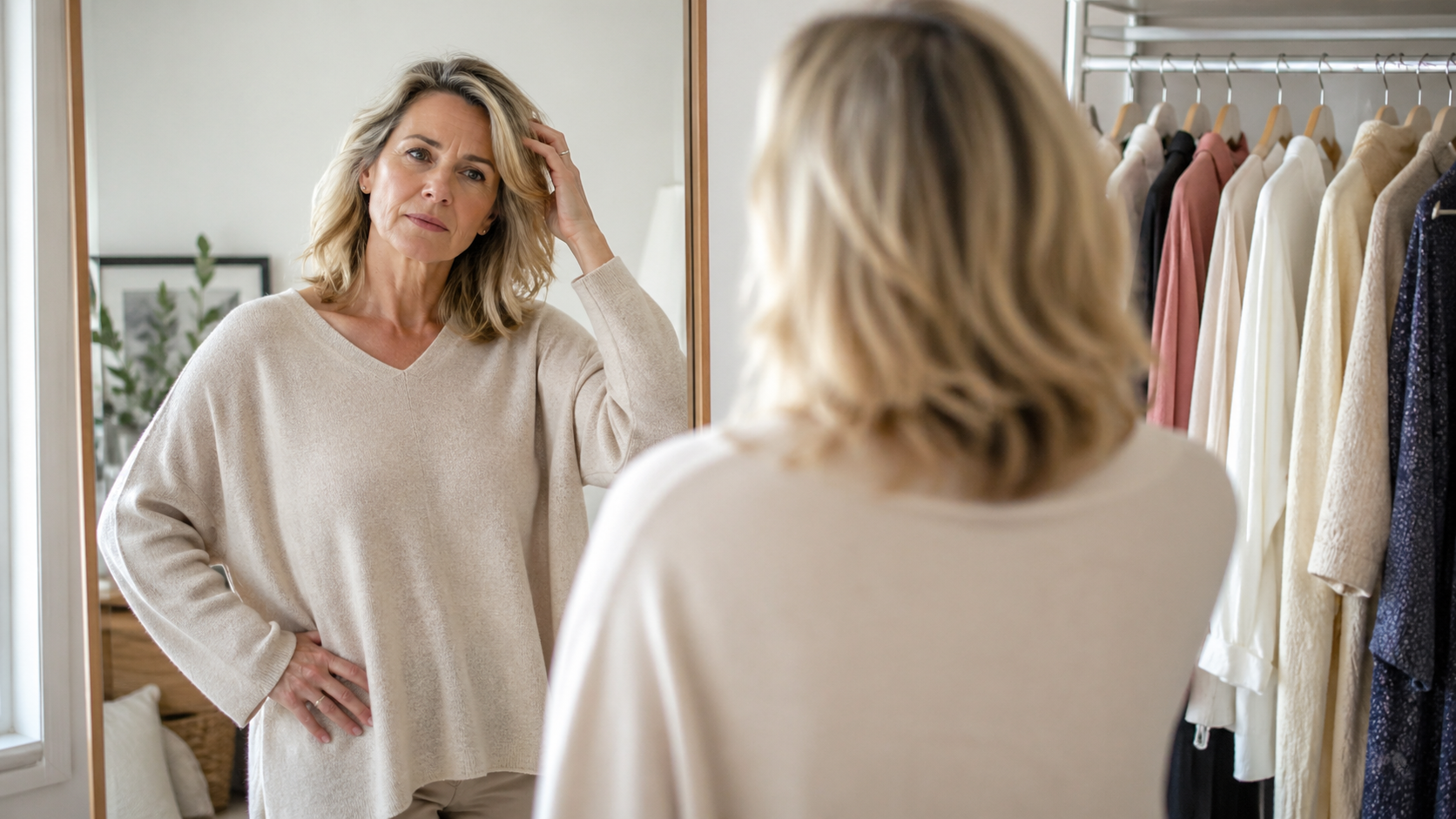
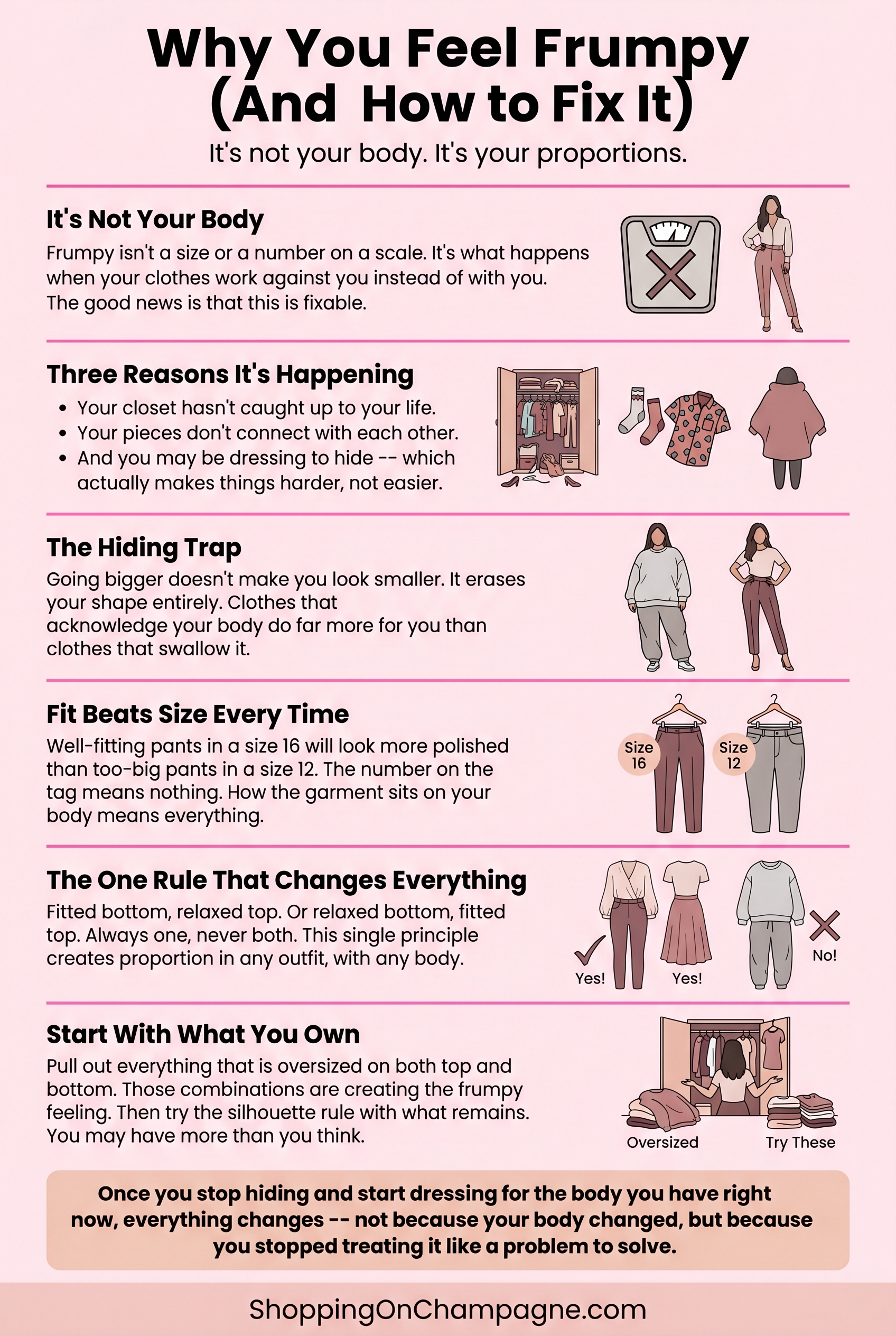
This is the part nobody says out loud, so I'm going to say it. Frumpy is not a size. It's not a number on a scale or a tag on a pair of pants. Frumpy is what happens when your clothes are working against you instead of with you.
For most women over 50, the frumpy feeling comes from one of three places, and usually it's a combination of all three.
The first is wearing clothes from a different chapter of your life. Career clothes for a job you've retired from.
Pieces that made sense ten years ago but don't reflect who you are now or how you actually spend your days. Your life changed. Your closet didn't catch up.
The second is a closet full of pieces that don't work together.
You bought things you loved in the store, but they don't connect with anything else you own.
So getting dressed feels like a puzzle with missing pieces every single morning.
The third, and the one that gets women the most, is dressing to hide.
Hiding your midsection. Hiding your arms.
Hiding the weight you gained, the body that changed, the version of yourself you're not quite sure how to dress anymore. And the way most of us hide is by going bigger. Looser. More covered.
The problem is that hiding in your clothes doesn't make you look smaller.
It makes you look shapeless.
And shapeless reads as frumpy, no matter what size you are.
The Hiding Trap
When I was covering up with oversized everything, I thought I was being smart.
More fabric, more coverage, problem solved.
But what I was actually doing was erasing my shape entirely.
Baggy on top and baggy on bottom create a silhouette with no definition, no waist, no sense of proportion. And when there's no proportion, the eye has nowhere to land. Everything just becomes one big, undefined shape.
The irony is that trying to minimize actually draws more attention to what you're trying to minimize. Clothes that fit, that acknowledge your shape rather than swallow it, do so much more for you than clothes that are simply big.
Fit matters more than size. I cannot say that enough.
A pair of well-fitting straight-leg pants in a size 16 will look a thousand times more polished than a pair of too-big pants in a size 12.
The number on the tag means nothing.
How the garment actually sits on your body means everything.
The One Rule That Changed Everything for Me
Once I stopped hiding and started actually dressing for my body as it was, one principle made more difference than anything else.
It's simple. It works every single time.
And once you see it, you will not be able to unsee it.
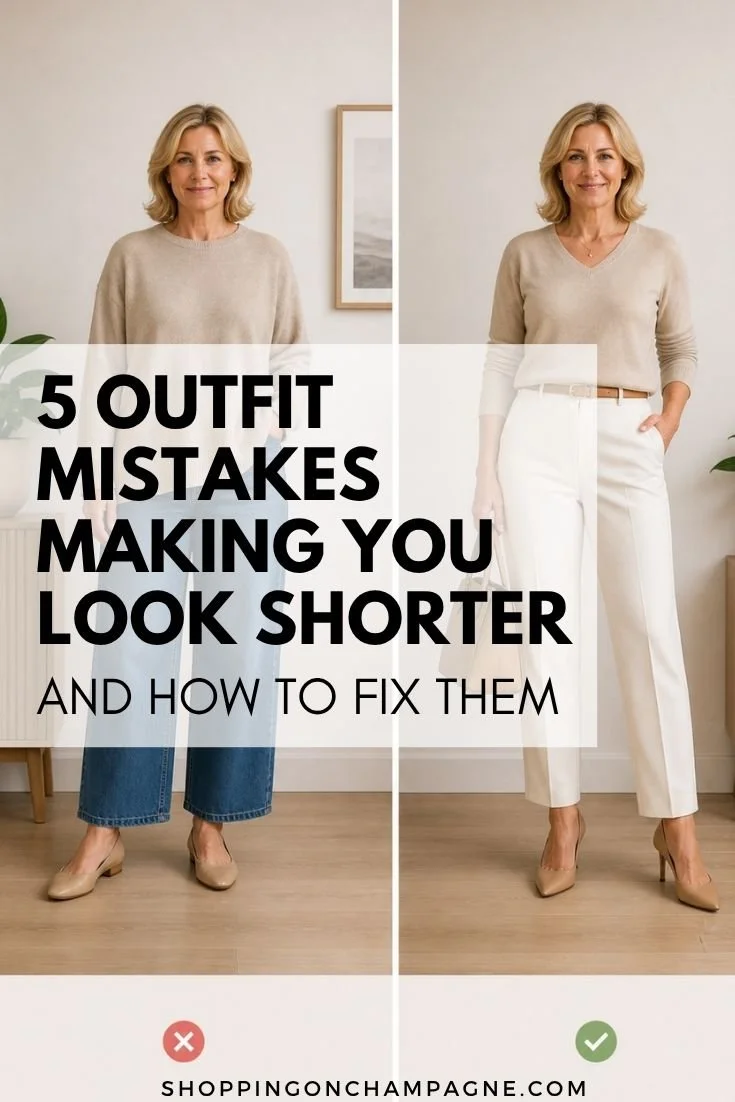
Fitted bottom, relaxed top. Or relaxed bottom, fitted top. Always one. Never both.
That's it. That's the whole rule.
If I'm wearing my straight-leg jeans or a more fitted pair of trousers, I reach for a relaxed, slightly oversized top.
If I'm wearing wide-leg pants or a flowy skirt, I tuck in a more fitted top or choose something that follows my torso.
The two halves of the outfit balance each other. There's always proportion. There's always a waist implied, even when nothing is actually fitted at the waist.
Here's what that looks like in a real outfit:
Wide leg trousers (relaxed) paired with a fitted white button-front shirt, front tucked. The shirt gives you shape on top, while the pants give you ease on the bottom. Polished, comfortable, and proportional.
Straight leg jeans (more fitted) paired with an oversized linen shirt worn open over a fitted tank. The jeans anchor the look while the relaxed shirt gives you all the ease you want up top. Effortless and put together.
A flowy midi skirt (relaxed) paired with a fitted ribbed top or a slim turtleneck tucked in. The skirt moves beautifully. The top gives the whole outfit a waist. Elegant without trying.
None of these outfits requires a perfect body. They require proportion.
And proportion is something you can build into any outfit, with any body, starting today.
Start With What You Already Own
You do not need to go shopping to fix this. You need to look at what you have differently.
Go to your closet and pull out everything that is oversized on both top and bottom.
Not oversized on one. Both.
Those are the combinations that are creating the frumpy feeling.
Set them aside and look at what remains.
Now try the silhouette rule with those pieces.
Take your more relaxed tops and pair them with your more fitted bottoms.
Take your relaxed, wide-leg bottoms and pair them with your more fitted tops.
Try it with things you would not normally put together. You may have more workable combinations than you think.
Pay attention to how each pairing feels. Not just how it looks, but how it feels.
The goal isn't to squeeze yourself into something uncomfortable.
The goal is to find the balance point where you feel like yourself, feel good, and the clothes work with you.
That is what getting dressed is supposed to feel like.
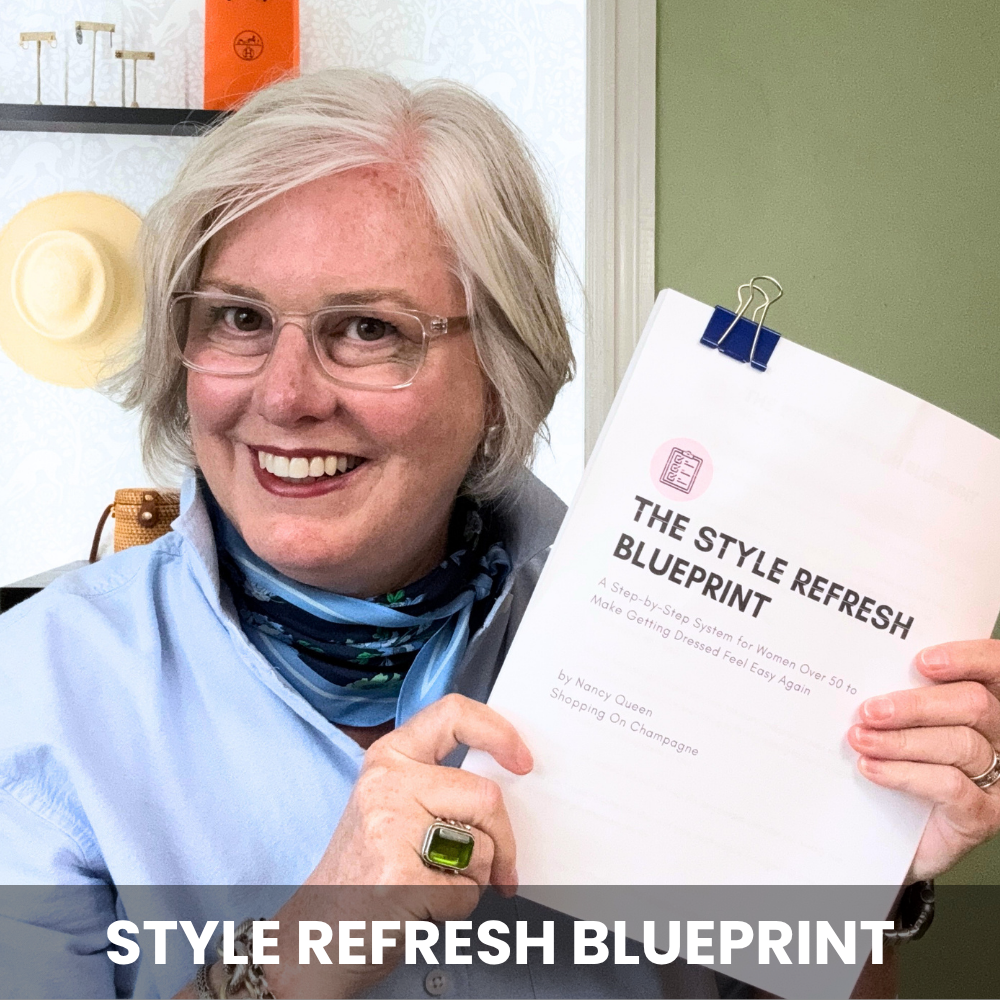
If you want a more guided process for this, my Style Refresh Blueprint walks you through a full wardrobe edit step by step, including how to assess what you own, identify what's actually working, and build outfits from what you have before you ever think about buying anything new.
It's the tool I wish I'd had during those years when I was hiding in my clothes and wondering why nothing felt right.
What Happened When I Stopped Hiding
I kept moving forward. That's really the honest answer.
I started paying more attention to myself, being kinder to myself in the mirror, and slowly accepting my body as it was instead of fighting it.
And the more I leaned into my own style, the better I felt.
Not because my body changed, but because I stopped treating it like a problem to be solved and started treating it like something worth dressing beautifully.
The silhouette rule gave me a framework.
The self-acceptance gave me permission.
And together, those two things changed the way I got dressed every single morning.
If you have been feeling frumpy and you cannot figure out why, I want you to look at your outfits this week through this lens.
Are you hiding? Are you going oversized on both top and bottom? Is there any proportion in what you are putting together?
Because once you start seeing it, you can start fixing it.
And the fix is so much simpler than you think.
Want help with this?
If you are ready to stop guessing and start making real progress, I have tools that will walk you through every step of this journey. Whether you are just getting started, ready to build a wardrobe that truly works for your life, or want a fully personalized experience, I have something for you at every level.
You can find all of them linked below.👇



You have a closet full of clothes and still nothing to wear.
You're holding onto pieces that don't fit, don't flatter, and honestly don't even feel like you anymore. Some still have the tags on. Some belong to a job, a body, or a chapter you've already closed.
👉🏻 You're not alone, and you don't need a total overhaul to feel better about getting dressed.
The Closet Detox is your step-by-step reset. Work through every item with 18 honest questions, a decision guide for the hard ones, and a clear action plan for what comes next.
💌 What's Inside:
✅ 18 questions to ask about every single item in your closet with honest, practical guidance on what to do with each answer
✅ A decision guide for the six hardest pieces to let go of
✅ A What Comes Next action plan - three things to do before you bring in a single new thing, so you never end up back where you started
✅ Live links to the Style Refresh Blueprint and the Champagne Edit - two ways to keep the momentum going
👗 This is for you if...
You have a full closet, but nothing to wear
You've been holding onto things out of guilt, sentiment, or "just in case."
You're done dressing for a body, a job, or a life you no longer have
You're ready to open your closet and actually feel good about what's in there
💡 Why It Works:
Every question is designed to cut through the noise and help you make a clear, confident decision about every single item without second-guessing yourself the whole way through.
Your closet should feel like you. This is where that starts.
This is a digital download. You will receive a PDF immediately after purchase.