
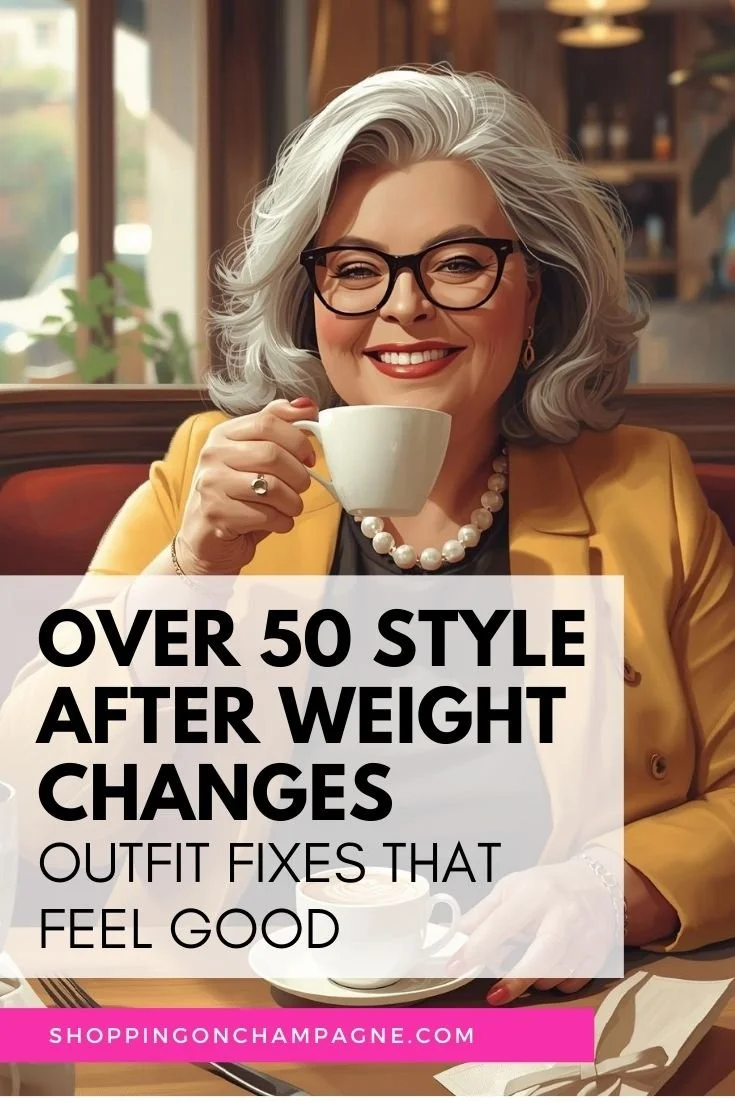
How to Dress Over 50 When You’ve Gained Weight
If getting dressed feels harder than it used to, and you know your body has changed, you’re not imagining it.
This is a really common moment and something most of us over 50 can relate to. Clothes that once felt easy now feel fussy. Outfits that used to work suddenly feel off. And even though your closet might be full, nothing feels quite right on your body anymore.
That doesn’t mean you’ve lost your style. It means your clothes haven’t caught up yet.
Let’s talk through what actually helps when your weight has changed, without turning this into a “fix your body” conversation. This is about making clothes work for you, right now.
Why Getting Dressed Feels So Much Harder After Weight Gain
When weight changes, it usually shows up first in specific places. The midsection, hips, thighs, and arms. And most clothes are cut very precisely. So even a small shift can throw off how things sit, pull, or cling.
What usually happens next is this:
You start buying looser pieces for comfort.
You keep older clothes “just in case.”
You default to the same few outfits that feel safe.
None of that is wrong. It’s just not very helpful in the long term.
The goal here isn’t to hide your body. It’s to stop fighting your clothes every morning.
Start With Fit, Not Size
This is important, and it’s often skipped.
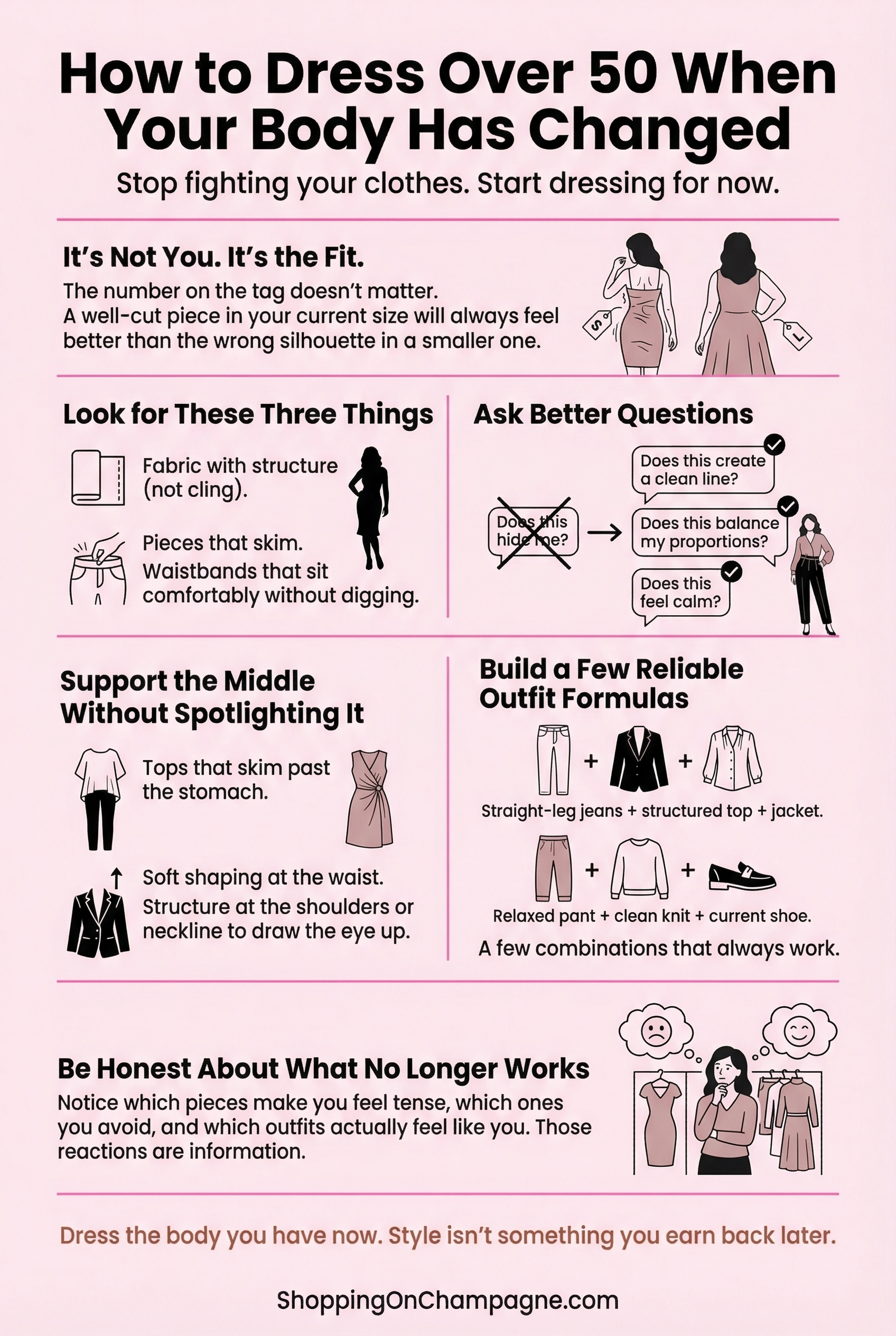
The number on the tag doesn’t matter nearly as much as how the garment is cut. A size up in the wrong silhouette will still feel uncomfortable. A well-cut piece in your current size will instantly feel better.
Look for:
Fabrics with a bit of structure, not flimsy stretch that clings
Pieces that skim your body instead of grabbing it
Waistlines that sit comfortably without digging or sliding
If something technically fits but you’re adjusting it all day, it’s not doing its job.
Focus on Shape, Not Coverage
When weight changes, the instinct is often to add length, volume, or layers to cover everything up.
The problem is that too much fabric usually makes outfits feel heavier, not better.
Instead of asking “does this hide me,” try asking:
Does this create a clean line?
Does this balance my proportions?
Does this feel calm when I put it on?
Simple shifts like a hipbone-length top, a clean straight-leg pant, or a structured third piece can make an outfit feel intentional instead of defensive.
Related Post: The 5 Proportion Fixes That Make Clothes Flatter You Instantly
Choose Clothes That Support the Middle Without Highlighting It
You don’t need to avoid your midsection, but you also don’t need to spotlight it.
What usually works best:
Tops that skim past the stomach without clinging
Soft shaping through the waist instead of a tight cinch
Light structure through the shoulders or neckline to draw the eye up
A lot of women find that once the top half feels supported, the rest of the outfit falls into place more easily.
Related Post: How to Dress Over 50 When Your Belly Is Bigger
Build Around a Few Reliable Outfit Formulas
When your body changes, starting from scratch every morning is exhausting.
This is where outfit formulas help so much.
For example:
Straight-leg jeans + a softly structured top + a jacket or cardigan that holds its shape
A relaxed pant + a clean knit + a shoe that feels current
A dress that skims (not stretches) + one modern layer
You don’t need dozens of outfits. You need a few combinations that you know feel good on this body.
Once you have those, getting dressed stops being such a mental workout.
Be Honest About What No Longer Works
This part can be emotional, and it’s okay if it takes time.
Clothes that were made for a different body will quietly make every morning harder. Not because you’re doing something wrong, but because the clothes aren’t aligned with you anymore.
You don’t have to purge everything at once.
Just start noticing:
Which pieces make you feel tense
Which ones do you avoid unless you “have to”
Which outfits actually feel comfortable and like you
Those reactions are information. They’re not judgments.
Dress the Body You Have, Not the One You’re Waiting For
This might be the most freeing shift of all.
Waiting to feel better “once things change” keeps you stuck in limbo. Dressing the body you have now lets you feel like yourself again today.
Style isn’t something you earn back later. It’s something you’re allowed to adjust as your life and body change.
Want help with this?
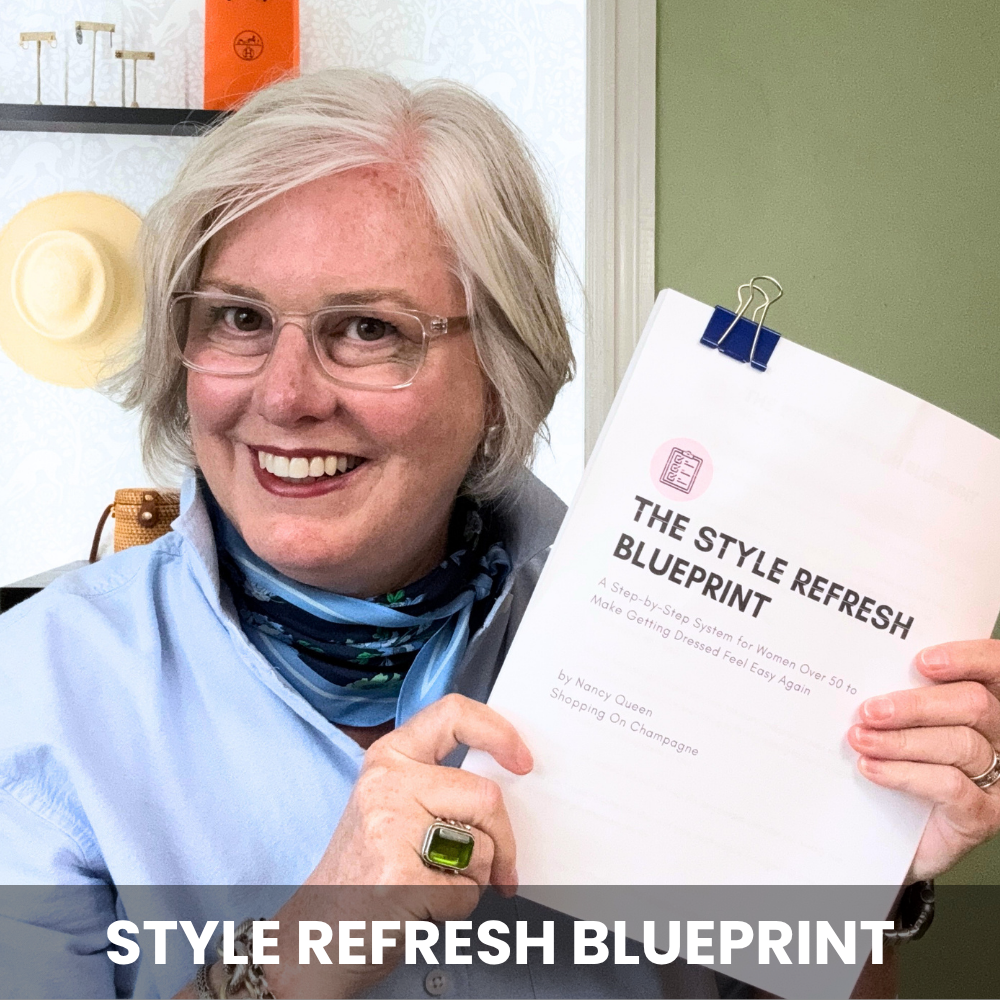
If you are ready to stop guessing and start making real progress, I have tools that will walk you through every step of this journey. Whether you are just getting started, ready to build a wardrobe that truly works for your life, or want a fully personalized experience, I have something for you at every level.
You can find all of them linked below.👇


You have a closet full of clothes and still nothing to wear.
You're holding onto pieces that don't fit, don't flatter, and honestly don't even feel like you anymore. Some still have the tags on. Some belong to a job, a body, or a chapter you've already closed.
👉🏻 You're not alone, and you don't need a total overhaul to feel better about getting dressed.
The Closet Detox is your step-by-step reset. Work through every item with 18 honest questions, a decision guide for the hard ones, and a clear action plan for what comes next.
💌 What's Inside:
✅ 18 questions to ask about every single item in your closet with honest, practical guidance on what to do with each answer
✅ A decision guide for the six hardest pieces to let go of
✅ A What Comes Next action plan - three things to do before you bring in a single new thing, so you never end up back where you started
✅ Live links to the Style Refresh Blueprint and the Champagne Edit - two ways to keep the momentum going
👗 This is for you if...
You have a full closet, but nothing to wear
You've been holding onto things out of guilt, sentiment, or "just in case."
You're done dressing for a body, a job, or a life you no longer have
You're ready to open your closet and actually feel good about what's in there
💡 Why It Works:
Every question is designed to cut through the noise and help you make a clear, confident decision about every single item without second-guessing yourself the whole way through.
Your closet should feel like you. This is where that starts.
This is a digital download. You will receive a PDF immediately after purchase.