The 3 Jeans Shapes That Make Outfits Easier in 2026
If jeans have started to feel like the hardest thing in your closet, you’re not imagining it.
You try a pair on. They fit…technically. But the outfit still feels off. Heavy. Wrong somehow. So you change tops. Then shoes. Then jackets. And suddenly you’re annoyed, even though you’re wearing “good jeans.”
This isn’t a problem with your body. And we’re not talking about chasing trends.
The real problem is a jean shape that quietly makes the rest of the outfit harder than it needs to be.
But I’ve got a fix for that!
In 2026, three jean shapes consistently make outfits feel simpler, lighter, and more modern. Not because they’re trendy, but because they work with how clothes are cut right now and how real life actually looks.
Let’s dive in!
This post may contain affiliate links. Please see my full disclosure for more information.
First, a quick mindset shift about jeans
Before we get into shapes, I want to mention this in a very helpful way.
Jeans aren’t meant to be “the outfit.”
They’re meant to support the outfit.
When the cut is right, everything else falls into place. When the cut is wrong, you end up over-layering, over-adjusting, and wondering why nothing looks quite right.
So instead of asking, “Do these jeans look good on me?”
Try asking, “Do these jeans make the rest of my clothes easier to wear?”
That’s the filter we’re using here.
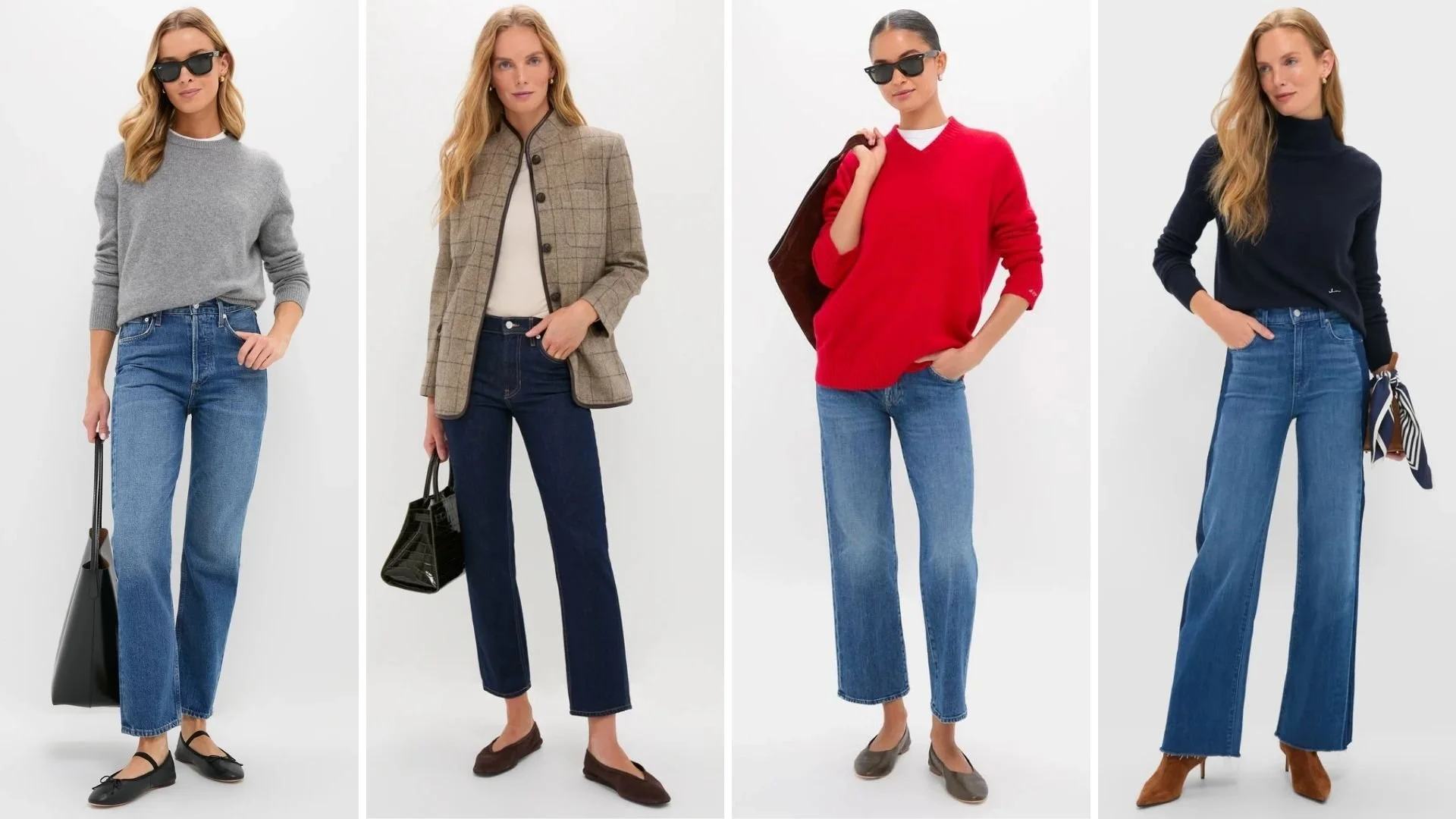
Jean Shape #1: The Straight-Leg (Your Most Reliable Option)
If you want one pair of jeans that quietly works with almost everything, this is it.
A straight-leg jean runs in a clean line from hip to hem. Not tight. Not flared. Just steady.
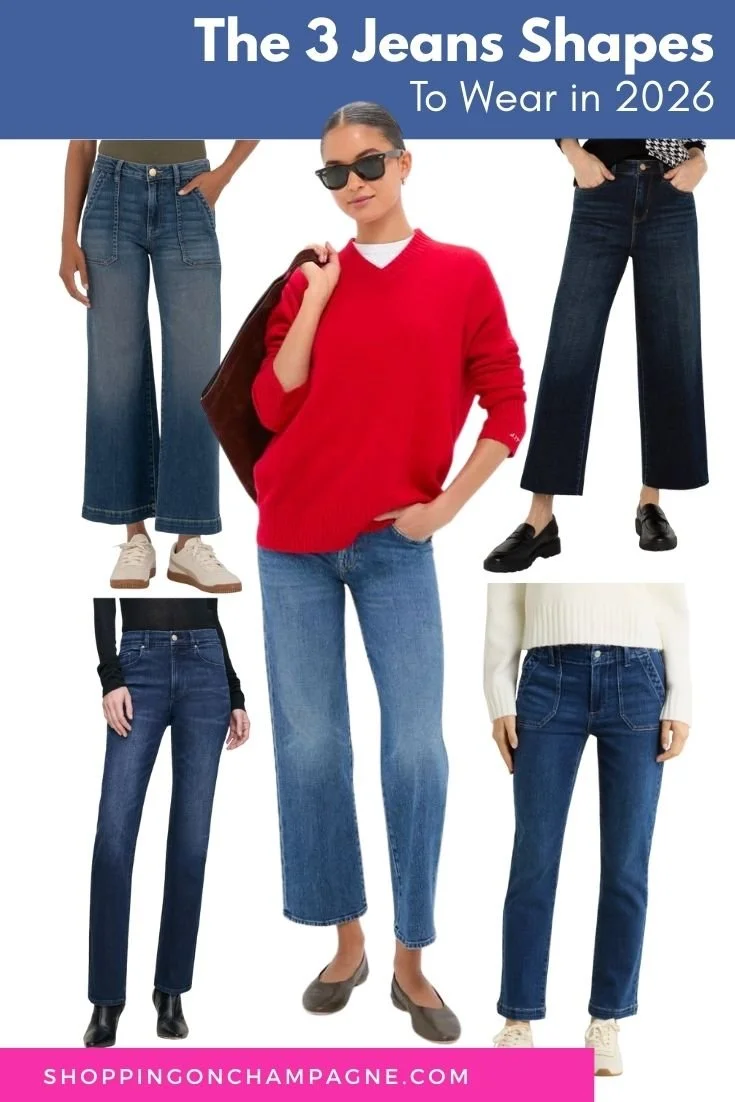
Straight-Leg Jeans Featured Above
Why this shape makes outfits easier:
It balances tops naturally, especially knits, blouses, and casual layers
It works with flats, loafers, sneakers, ankle boots, and low-profile heels
It doesn’t draw attention to the midsection or thighs
It doesn’t require “special” styling to look intentional
If you’ve ever put on jeans and felt like your top suddenly looked too short, too long, or too bulky, chances are the leg opening was fighting the rest of the outfit.
Straight-leg jeans calm everything down.
What to look for:
A mid or mid-high rise
A hem that hits at the ankle or just below (not puddling)
Enough structure to hold its shape, without stiffness
This is the pair that lets you get dressed without thinking so hard.
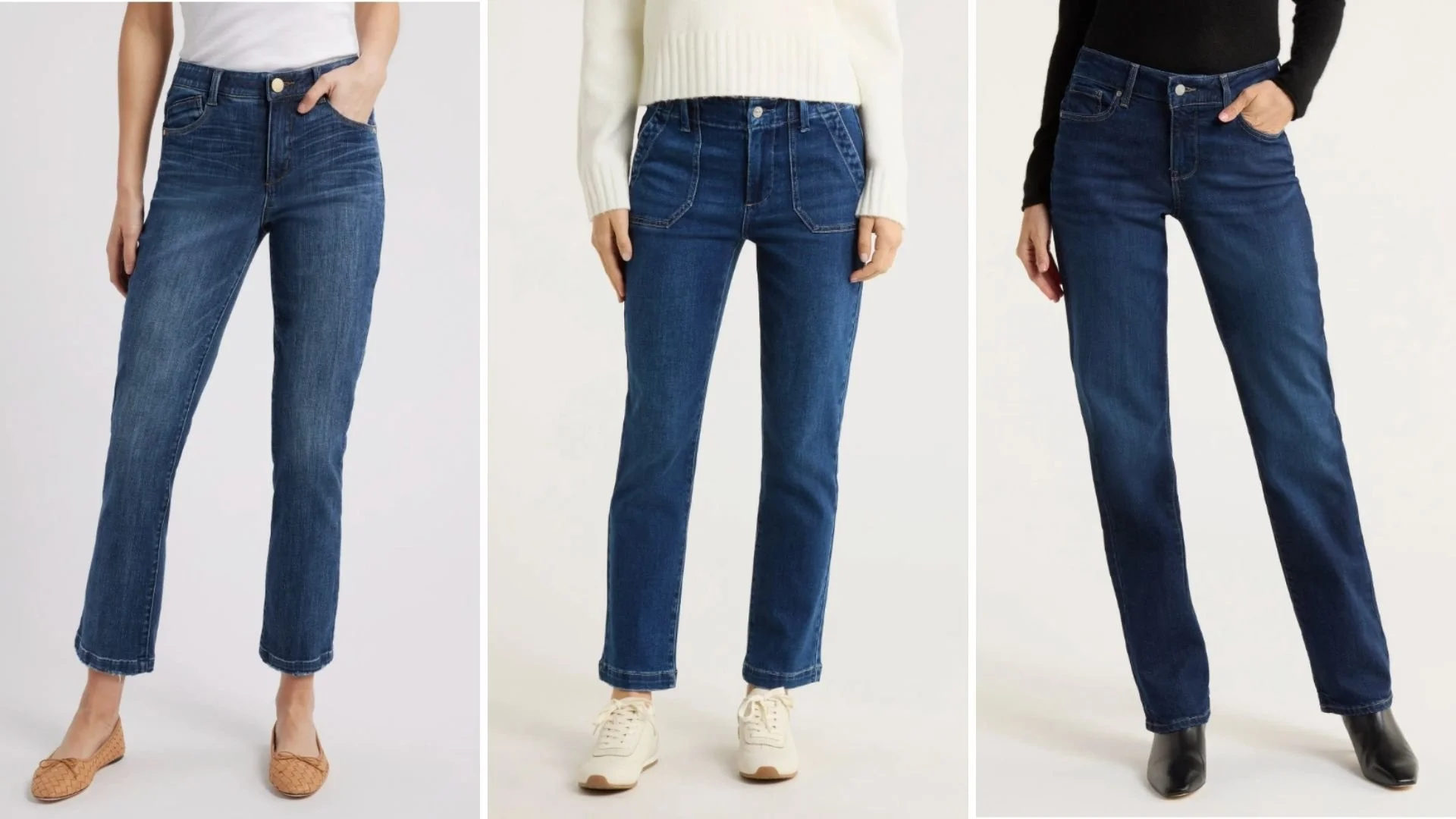
Jean Shape #2: The Slim-Straight (When You Want a Cleaner Line)
This is the shape a lot of women mean when they say they want “something slimmer, but not skinny.”
A slim-straight jean follows the leg a bit more closely than a straight-leg, but it still falls straight down from the knee to the ankle. There’s no taper at the bottom.
Slim-Straight Jeans Featured Above
Why this shape works so well in 2026:
It looks clean with softer or more relaxed tops
It pairs beautifully with lightweight layers and jackets
It feels modern without being tight or clingy
It gives you a longer visual line than many tapered cuts
This shape is especially helpful if your jeans tend to feel sloppy with knits or too bulky with jackets. The slimmer line gives structure without squeezing you.
What to look for:
Stretch that feels supportive, not thin
A straight hem opening (avoid aggressive tapering)
A rise that lets you sit and move comfortably
If skinny jeans used to be your default but don’t feel great anymore, this is often the easiest transition.
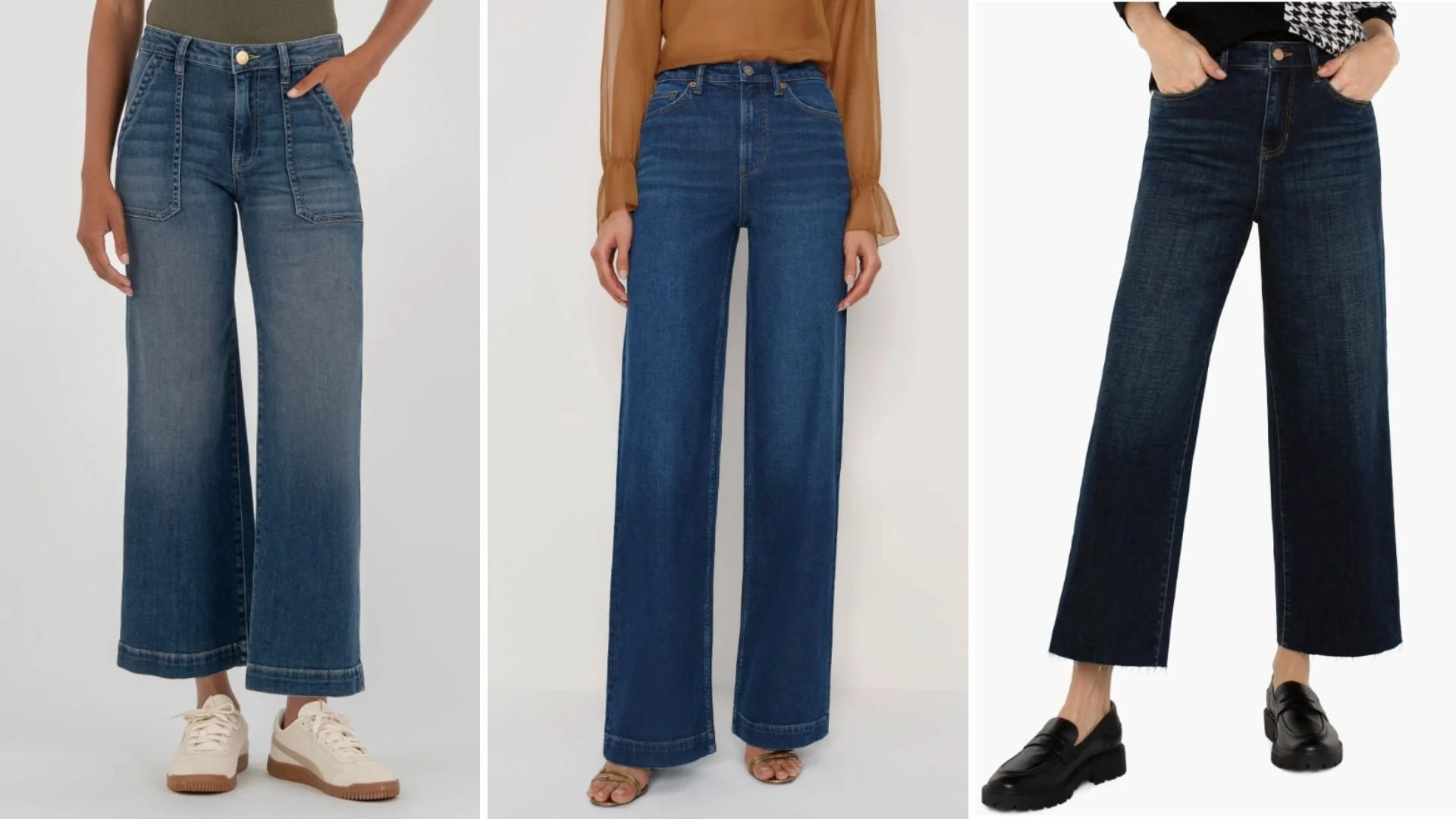
Jean Shape #3: The Relaxed Wide-Leg (When You Want Effortless Polish)
I know this one can feel intimidating, so let’s slow it down.
A relaxed wide-leg jean isn’t oversized, sloppy, or dramatic. The right version creates space through the leg while staying clean through the waist and hip.
Wide Leg Jeans Featured Above
Why this shape makes outfits easier (once you get the pairing right):
It removes cling, which instantly lightens the outfit
It works beautifully with simpler tops
It creates a modern silhouette without trying
It looks intentional with minimal effort
The key here is balance. Wide-leg jeans don’t need volume everywhere. They need simplicity up top.
What to look for:
A clean waistband (no bunching or excess fabric)
A leg that falls straight down, not ballooned
A length that works with your shoes (this matters)
When paired with a simple knit, tee, or structured layer, this shape makes outfits feel both current and relaxed.
Why these three shapes work better than most others
Here’s the part no one really explains.
These jean shapes don’t demand styling gymnastics.
They don’t require special shoes.
They don’t force you into specific tops.
They don’t make you layer just to “fix” them.
They create a neutral base so the rest of your closet can do its job.
If getting dressed has started to feel tiring, frustrating, or overly complicated, simplifying your jean shapes is one of the fastest ways to reduce that stress.
How to use this without buying new jeans right away
Before you shop, go to your closet.
Pull out the jeans you already own and sort them into three piles:
Jeans that make outfits easier
Jeans that require a lot of fixing
Jeans you avoid unless you’re desperate
This isn’t about judging your body or your taste. It’s just noticing patterns.
Often, you’ll see that the jeans you reach for most already fall into one of these three shapes. That’s your clue.
When you do decide to update, you’ll know exactly what earns a place in your closet.
Final Thoughts
If jeans used to feel easy and now they don’t, that doesn’t mean you “lost your style.”
It means cuts shifted. Fabrics changed. Your life changed.
Choosing jean shapes that support your real life instead of fighting it is not giving up. It’s getting smarter.
And once jeans stop being the hardest part of getting dressed, everything else feels lighter, too.
If you want, let me know which shape you’re currently wearing most. Or which one you’re curious to try next.
Stay gorgeous!