
How to Balance Your Outfit When Your Top Half Changes First
Let’s talk about something that happens to a lot of women over 50, but nobody really warns you about.
One day, you wake up, and your jeans still fit fine, but your tops feel…weird.
Buttons pull. Necklines sit wrong. Sleeves feel tight. You size up, and now the shoulders are sliding off. You try a looser top, and suddenly you feel like a tent.
And then the spiral starts.
You stand in front of the mirror thinking, “What is happening to my body?” and “Why does nothing look right anymore?”
Here’s the truth. This is common. It’s normal. And it’s not a personal failure.
When your top half changes first, the goal is not to hide it. The goal is to rebalance the outfit so everything looks intentional again.
And the good news is, balance is a styling problem, not a body problem. Which means it’s fixable.
Let’s get into the simple ways to do it.
First: what “top half changes first” usually looks like
Most of these changes have happened to me, so I think it’s really important to make you aware of them so you know how to deal with these issues.
This can show up in a few ways:
Your bust line feels fuller or sits differently
Your upper arms feel more sensitive in certain sleeves
Your midsection feels softer, especially in structured tops
Your shoulders or back feel tighter in woven fabrics
Your neck and décolletage feel different in high necklines
Different bodies, different versions of the same issue.
But the result is the same: tops that used to feel easy now feel complicated.
So instead of trying to “fix” your body, we’re going to fix the outfit balance.
The biggest mistake: going looser and longer everywhere
This is what most women do when tops start feeling tricky.
They size up.
They go longer.
They add a cardigan.
They go flowier.
(Yep, I’ve made all of these mistakes to deal with the problem, too.)
And then they wonder why they feel frumpy.
Here’s why it happens.
Loose and long can be comfortable, but when you combine:
Long top + long layer + long pants + closed-toe shoes…
It creates one heavy column. The eye has nowhere to land. The outfit loses shape. You don’t look more balanced, you look more covered.
And covered isn’t the goal.
Clean lines are the goal.
So let’s talk about what works instead.
Balance Fix #1: Choose tops that skim, not cling or float
This is the magic zone.
When your top half changes, clingy fabric can feel unforgiving, and oversized fabric can feel like you’re hiding.
Skimming is the sweet spot.
Look for tops that:
Hold a clean line (not droopy)
Have a little structure or weight
Don’t grip your midsection
Don’t balloon out from the bust
If you’ve been living in thin knits or ultra-soft tees that collapse, this is a fast upgrade. You don’t need stiff, you just need fabric that behaves.
A top that skims makes everything look calmer.
Balance Fix #2: Use neckline like a styling tool
When your top half changes, your neckline is your best friend.
A neckline can create “air” and vertical space without showing anything you don’t want to show.
The easiest flattering necklines for most women:
V-neck
Scoop
Open collar (button-down worn slightly open)
Soft square neck
Wrap-style neckline
If you’ve been defaulting to high necklines because they feel safe, that’s often the thing making the top half feel heavier.
You don’t need a plunge. You just need a little openness.
It’s amazing how much lighter your whole outfit looks with a neckline shift.
Balance Fix #3: Let the bottom half do the balancing
This is where most women miss the opportunity.
If your top half feels like the area you’re styling around, then your bottom half should help create balance.
That means your bottom should be:
Cleaner
More structured
A little straighter
You don’t have to wear skinny jeans. But a straight leg, a kick flare, or a clean trouser does wonders.
If your top feels fuller, pairing it with wide-leg pants can work, but the top needs to be clean and slightly shorter so the outfit doesn’t become “big + big.”
A very easy formula:
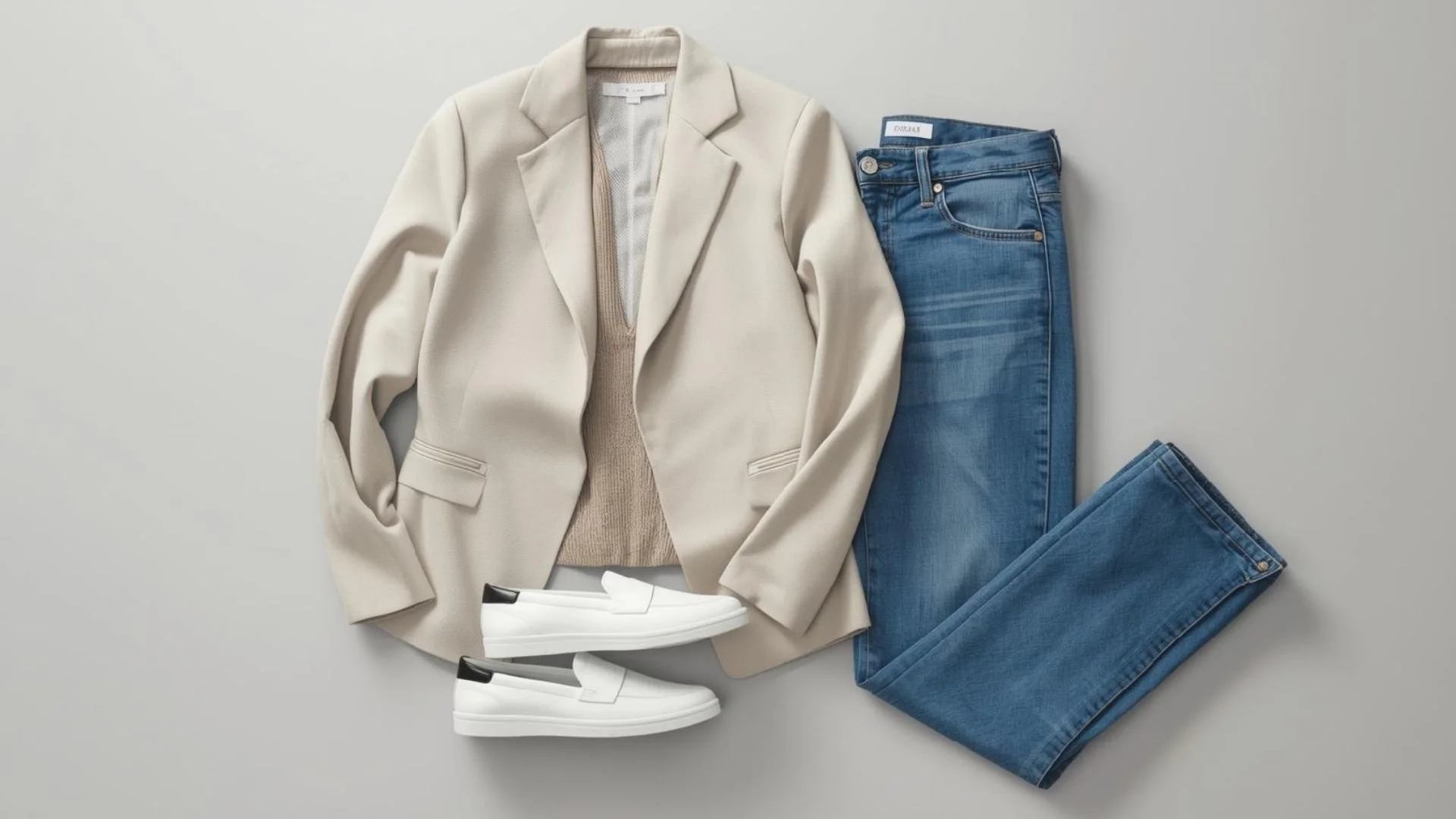
Skimming top + straight leg bottom + modern shoe = balanced, current, easy.
Balance Fix #4: Control the hem, don’t hide behind it
A lot of tops become tricky because the hem hits the wrong spot.
If a top hits at the widest part of your hip, it can widen you visually even if you’re not actually wider. And that’s when women start buying longer tops, which often makes the whole outfit feel heavier.
So here’s what I want you to try:
Hipbone length tops (or slightly below)
A half tuck or front tuck
A “high-low” hem that creates a clean front line
Cropped layers over longer bases
You’re not “showing your stomach.” You’re creating shape and line.
Small hem changes create big visual payoff.
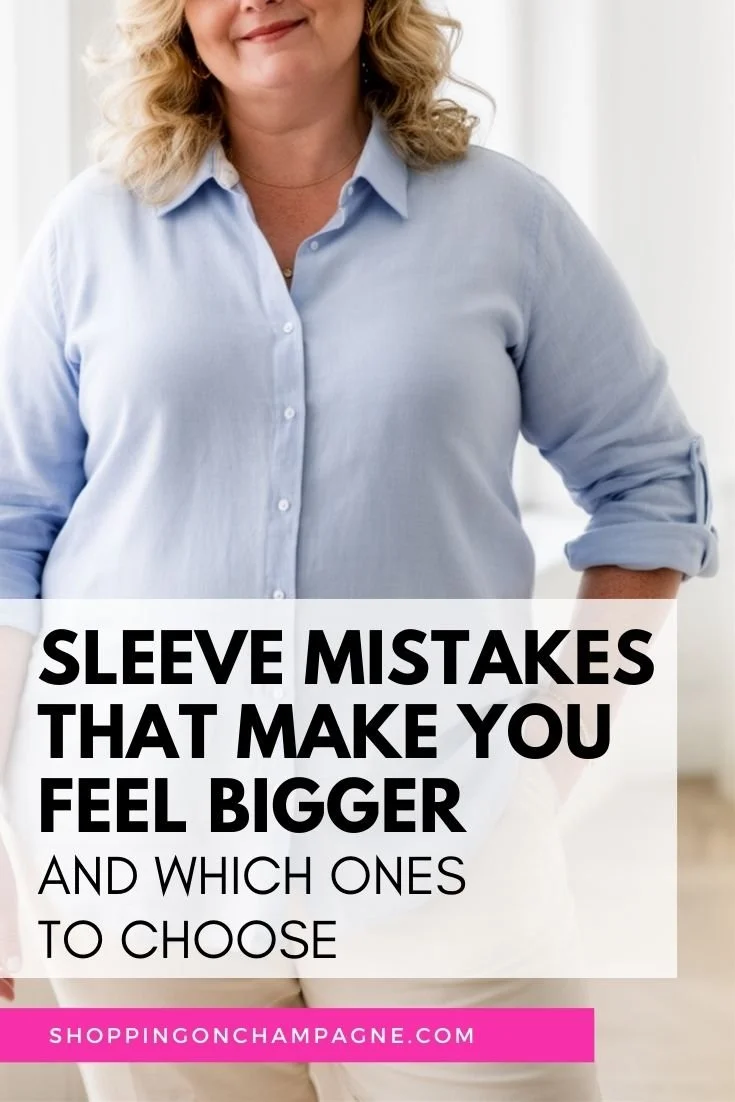
Balance Fix #5: Use sleeves strategically (this is huge)
If your arms are the part that feels different, you don’t have to suffer or hide.
You just need the right sleeve.
Sleeves that usually feel most flattering and modern:
3/4 sleeves
Bracelet sleeves
Slightly wider sleeves that don’t cling
Structured sleeves in woven fabrics
Sleeves that can be pushed up easily
The trick is to avoid sleeves that cut you at the widest point of your upper arm and sleeves that grip.
And here’s a simple styling move that instantly elevates:
Push up your sleeves.
Even a cardigan. Even a sweatshirt.
Showing wrist creates air, breaks up the top half, and makes the outfit look intentional.
Balance Fix #6: Add one “third piece,” but make it the right one
A third piece can be your best friend… or your worst enemy.
If your default third piece is a long cardigan, and you’re already feeling like the top half is changing, that cardigan can amplify the “long and loose” effect.
Instead, try third pieces that create structure:
A denim jacket
A blazer that skims
A cropped jacket
A vest
A cardigan with a cleaner edge and less drape
Third pieces should finish the outfit, not hide the outfit.
Think punctuation, not blanket.
A quick “Nancy-tested” formula you can use this week
If you want a no-thinking outfit formula that works when the top half is the tricky part, try this:
Skimming top with an open neckline
Straight-leg jeans or clean trousers
Hipbone-length layer (jacket, blazer, or vest)
Modern shoe
One simple accessory (earrings or bag)
That formula looks polished without feeling tight, and it doesn’t rely on hiding.
The mindset shift you need to hear
If your top half changed first, it does not mean you’re “hard to dress.”
It means your closet needs a new balance strategy.
You are not the problem. The old shapes just aren’t doing the job anymore.
And that is fixable.
What to read next
If this post helped, you’ll love these:
Both will help you get that “oh, there I am” feeling back faster.
Your turn
Which part is your biggest struggle right now: necklines, sleeves, hems, or finding tops that skim the right way?
Let me know in the comments, you know I love hearing from you!
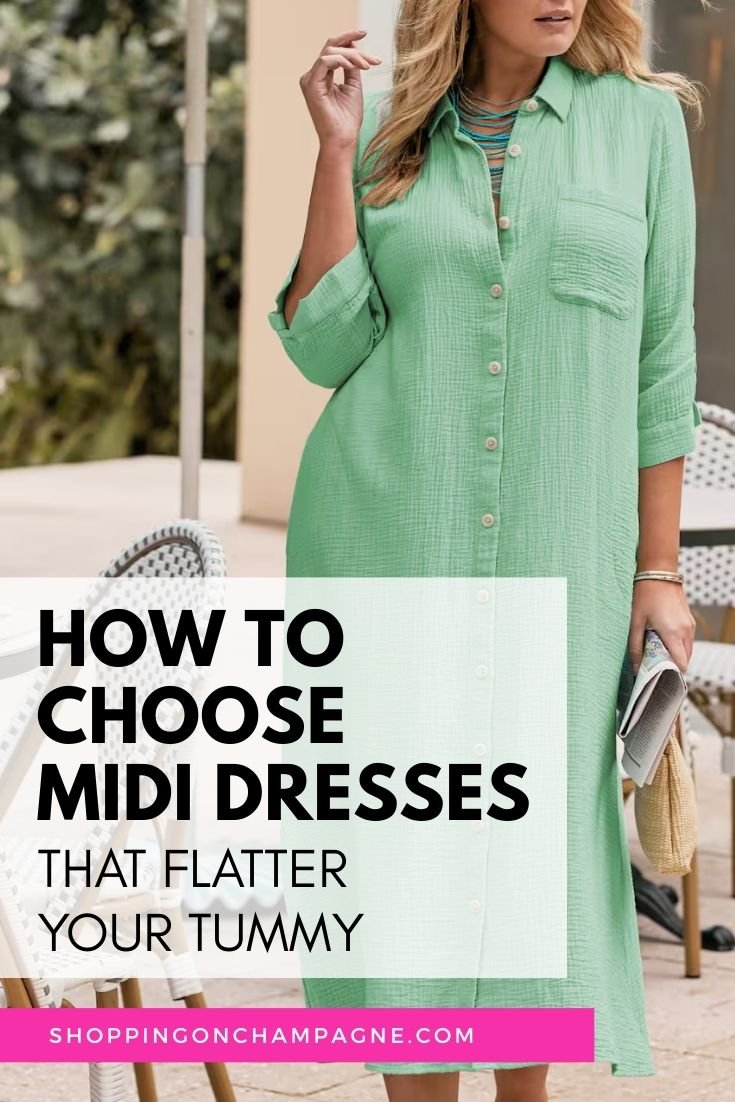
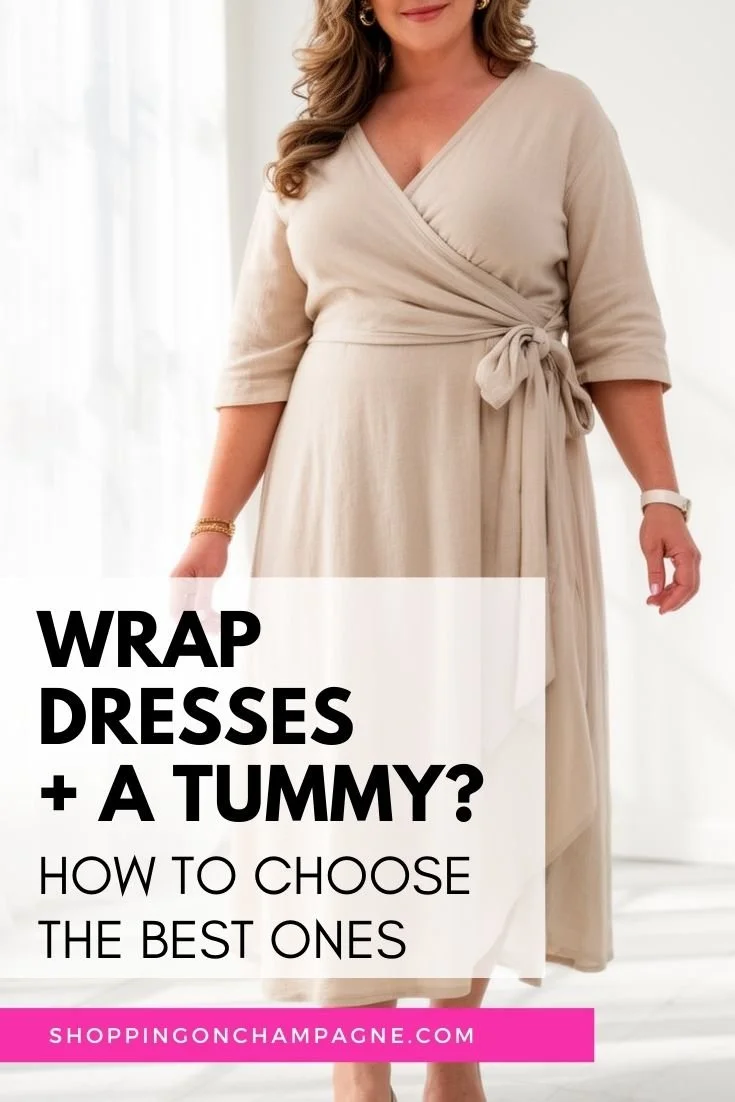
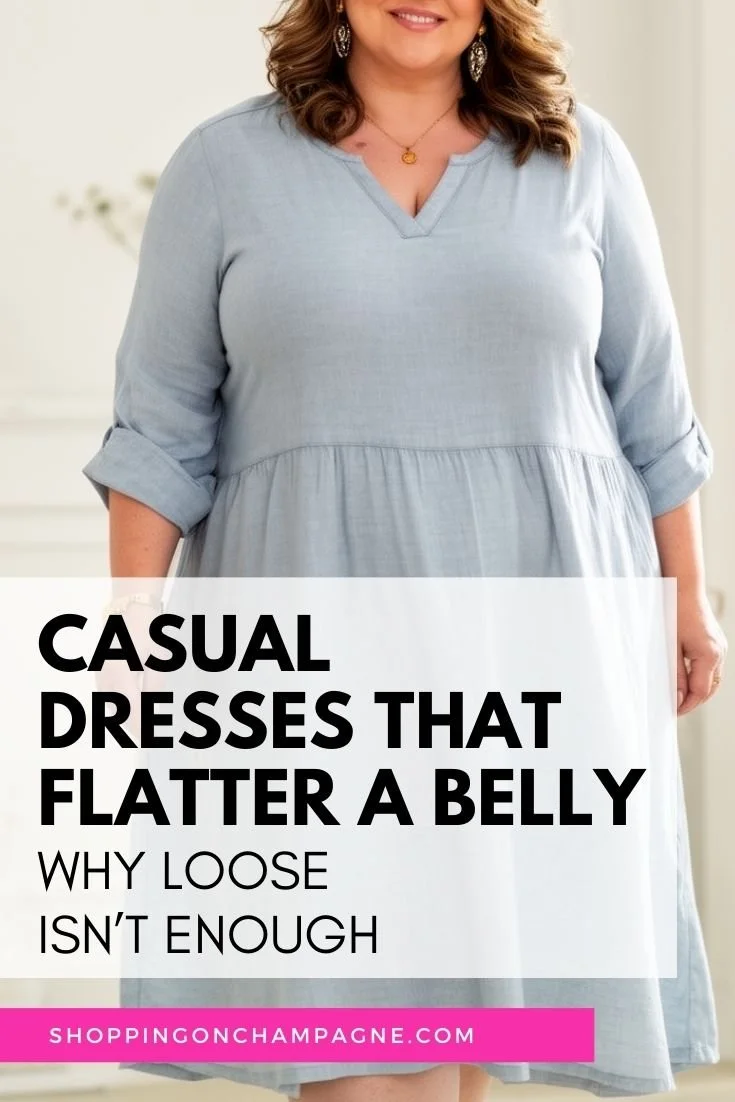


Looking for a comfortable dress that doesn’t cling? Discover the best shift dresses for women over 50, plus my favorite styles for everyday wear, travel, vacations, and dressier occasions.