
Closet Organization for Small Closets (Simple Fixes That Work)
If you have a small closet and it constantly feels messy, tight, or frustrating, I want to say this first:
Your closet isn’t failing.
It’s just being asked to hold too many undecided clothes.
Small closets don’t have room for “maybe,” “just in case,” or “I’ll figure this out later.” When everything stays, nothing works well.
The goal of organizing a small closet is simple:
Make the clothes you actually wear the easiest ones to see and grab.
That’s it. Everything else supports that goal.

Stop trying to make a small closet hold your whole wardrobe history
Most small closets feel overwhelmed because they’re trying to do too much.
They’re holding:
Clothes you wear every week
Clothes for a life you don’t live anymore
Clothes that don’t fit quite right
Clothes you’re unsure about
Clothes you’re keeping out of guilt
That’s not an organizational problem.
That’s too many clothes competing for daily space.
A small closet works best when it only holds daily-use clothing.
Daily clothes get first priority. Always.
This is the rule that changes everything.
If you wear something weekly or even biweekly, it deserves:
The easiest hanger to reach
The most visible spot
Zero obstacles in front of it
If you wear something once or twice a year, it does not deserve prime space.
Here’s what to do:
In each category (tops, pants, dresses), pull forward the pieces you wear most.
Push rarely worn items to the far end of the rod.
If you have to move something out of the way to reach your favorite piece, the system is wrong.
Your closet should match how you live, not everything you own.
Related Post: What to Do When Your Closet Is Full but You Still Feel Stuck
Keep categories simple so your brain doesn’t have to work harder
Small closets need fewer categories, not more.
Stick with categories your brain already understands:
Tops
Bottoms
Dresses
Layers
Shoes
When closets get over-categorized, getting dressed takes longer, not less time.
If you can’t instantly tell where something belongs, the category system is too complicated.
Edit duplicates, not variety
Small closets don’t struggle because you have too many types of clothes.
They struggle because you have too many almost-the-same pieces.
This is where space disappears:
Five similar tops you rotate mindlessly
Multiple pants that serve the same purpose
Jackets that all feel “fine” but not great
Pick the best versions.
The ones that:
Fit the best
Feel the best
Look the best
Let the rest go.
Fewer duplicates give you more usable outfits, not fewer.
Related Post: How to Build a “Real Life” Capsule From What You Already Own
Don’t pack the rod tight
When clothes are jammed together:
You can’t see what you own
You default to the same two outfits
Everything feels harder than it should
You don’t need gaps between every hanger, but you do need enough space to slide pieces easily.
If something is annoying to pull out, you won’t wear it.
Use shelves for support, not storage chaos
If you have shelves, use them intentionally.
Shelves work best for:
Bags you actually carry
Sweaters that don’t need hanging
Seasonal shoes
They work poorly as dumping grounds.
If you can’t describe what belongs on a shelf, it doesn’t belong there.
Shoes need firm limits in a small closet
Shoes overwhelm small closets fast.
Here’s the rule:
Only keep the shoes you’re actually wearing this season in the closet.
Everything else:
Special occasion shoes
Out-of-season boots or sandals
Move them elsewhere.
Daily-use space should only hold daily-use items.
Make your closet easy to reset, not perfect
Small closets don’t need perfection.
They need regular maintenance.
Once each season:
Pull out anything you didn’t wear last season.
Re-sort the front row with what you’re wearing now.
Remove anything that’s annoying, uncomfortable, or constantly adjusted.
This takes about 20 minutes.
If you wait until the closet feels unbearable, it will always feel overwhelming.
Related Post: The Sunday Outfit Plan That Makes Getting Dressed Easy
The rule to remember
If you wouldn’t wear it in the next two weeks for your real life, it doesn’t get prime closet space.
That one rule will keep a small closet functional.
Small closets can work beautifully
A small closet isn’t limiting.
It just doesn’t tolerate indecision.
When you stop asking it to store everything and start asking it to support daily outfits, it becomes easier to use, easier to maintain, and much less stressful.
You don’t need more space.
You need fewer obstacles between you and a good outfit.
Want help with this?
If you are ready to stop guessing and start making real progress, I have tools that will walk you through every step of this journey. Whether you are just getting started, ready to build a wardrobe that truly works for your life, or want a fully personalized experience, I have something for you at every level.
You can find all of them linked below.👇

You have a closet full of clothes and still nothing to wear.
You're holding onto pieces that don't fit, don't flatter, and honestly don't even feel like you anymore. Some still have the tags on. Some belong to a job, a body, or a chapter you've already closed.
👉🏻 You're not alone, and you don't need a total overhaul to feel better about getting dressed.
The Closet Detox is your step-by-step reset. Work through every item with 18 honest questions, a decision guide for the hard ones, and a clear action plan for what comes next.
💌 What's Inside:
✅ 18 questions to ask about every single item in your closet with honest, practical guidance on what to do with each answer
✅ A decision guide for the six hardest pieces to let go of
✅ A What Comes Next action plan - three things to do before you bring in a single new thing, so you never end up back where you started
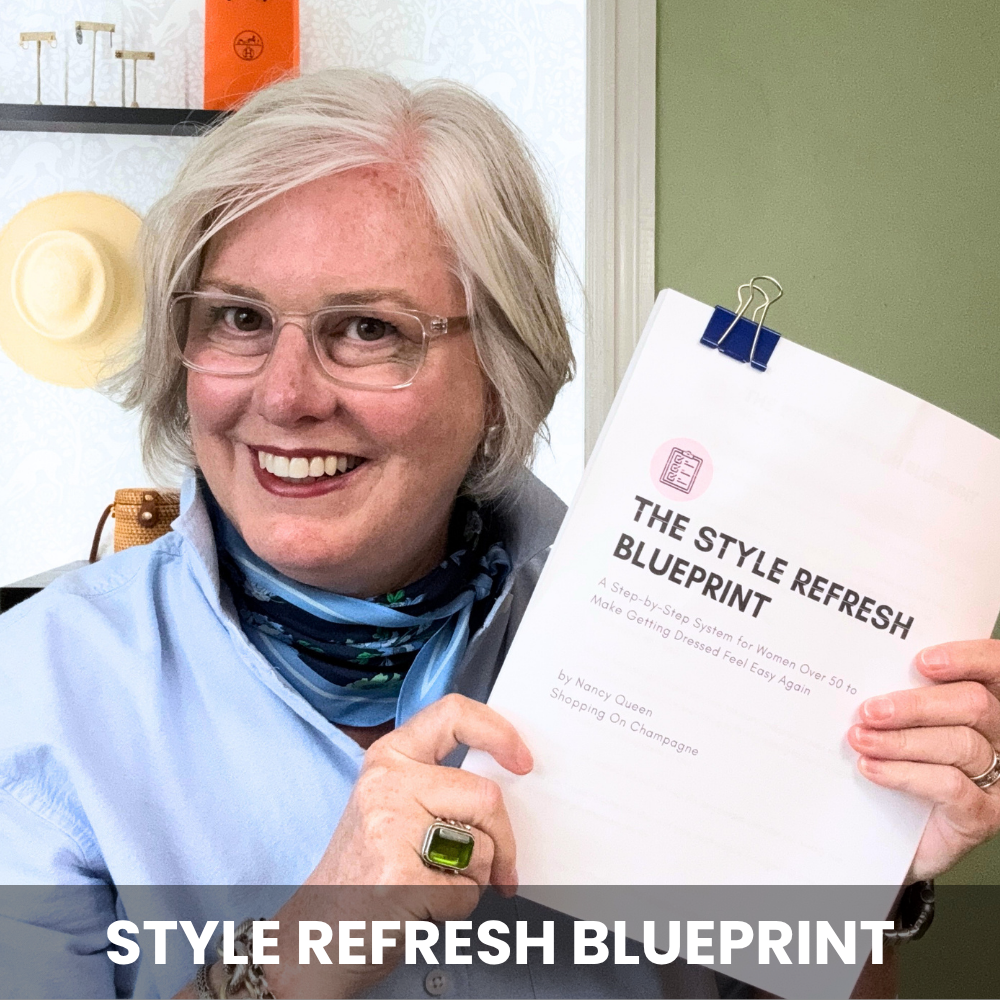
✅ Live links to the Style Refresh Blueprint and the Champagne Edit - two ways to keep the momentum going
👗 This is for you if...
You have a full closet, but nothing to wear
You've been holding onto things out of guilt, sentiment, or "just in case."
You're done dressing for a body, a job, or a life you no longer have
You're ready to open your closet and actually feel good about what's in there
💡 Why It Works:
Every question is designed to cut through the noise and help you make a clear, confident decision about every single item without second-guessing yourself the whole way through.
Your closet should feel like you. This is where that starts.
This is a digital download. You will receive a PDF immediately after purchase.