
How to Organize Your Closet by Silhouette (So Outfits Come Together Faster)
If your closet is already organized by category and you still feel stuck, this is usually why.
Your brain doesn’t get dressed by category.
You don’t wake up thinking, “I need a top.”
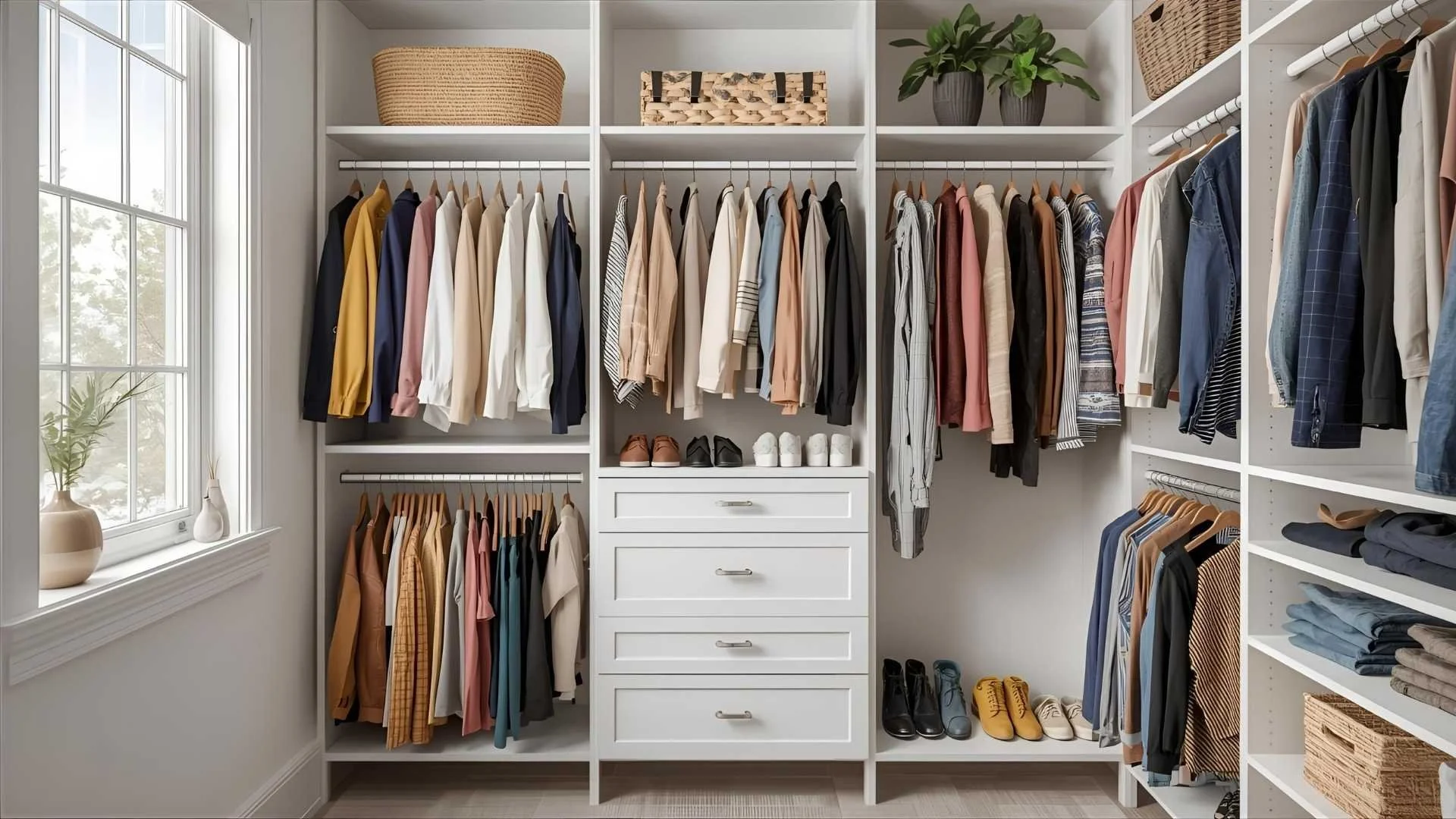
You wake up thinking things like:
“What top works with these pants?”
“Do I want something shorter or longer today?”
“Do I need shape or softness?”
“Why do I feel frumpy in everything?”
That’s silhouette. That’s proportion.
And when your closet is organized in a way that matches how you actually build outfits, getting dressed gets easy and fast.
So this is not a new system. You’re not reorganizing your whole life.
You’re just adding one simple layer inside your categories.
Let me show you exactly how.
First, what “silhouette organizing” means
It does not mean organizing by outfits.
It does not mean pairing things together one way.
It does not mean a zone system or anything that makes your closet feel complicated.
It means this:
Inside each category, you group pieces by shape and length.
That’s it.
Because shape is what makes outfits modern, flattering, and intentional.
And shape is what makes getting dressed faster.
Step 1. Start with your tops
Keep all tops together like you already do.
Then sort into three simple silhouette groups:
Group A. Hip-bone tops (shorter tops)
These are tops that hit around your hip bone or slightly above.
They’re a gift for outfits because they instantly balance proportions. They work beautifully with wide-leg pants, straighter jeans, fuller skirts, and any bottom where you want length and lightness.
If you’re ever staring at your closet thinking, “everything feels heavy,” this group is usually what you need.
Group B. Regular length tops
These hit mid-hip. Your everyday, easy tops that work with most bottoms.
This may be the bulk of your tops, and keeping them together helps you grab quickly without overthinking.
Group C. Long tops and tunics
These hit low hip or upper thigh.
Long tops aren’t “bad.” They just create a different silhouette. They work best when the bottom is clean and straighter, so you don’t get the long-on-long heaviness that can make outfits feel dated.
When these are grouped together, you can reach for them intentionally rather than defaulting to them out of habit.
Step 2. Sort your pants by shape
Again, keep pants together.
Then group by silhouette:
Group A. Straight-leg / slim-straight
These give you structure without clinging. They are the modern workhorse pants, and they pair with almost every top length.
If you don’t know what to wear, straight-leg is usually the safe modern answer.
Group B. Wide-leg / relaxed
These are your modern comfort pieces. They give movement and softness.
But they need the right top balance, so having all wide-legs together helps you naturally grab a hip-bone top or a streamlined knit, instead of a long, loose top that makes everything float.
Group C. Slim / leggings / skinnier shapes
These are your clean-bottom silhouettes.
They pair best with longer tops, tunics, relaxed sweaters, or more draped pieces. When grouped, you can build those outfits quickly.
Sorting pants this way is the easiest way to stop “proportion mistakes” before they happen.
Step 3. Dresses and skirts get one easy sort too
You don’t need to over-sort these. Just keep them in simple shape families you recognize.
For skirts:
straight or column skirts
A-line or fuller skirts
For dresses:
straighter, cleaner shapes
fuller, swishy shapes
This matters because the top layer you add depends on the shape underneath.
Straight skirt? You can add more volume up top.
Full skirt? You want a cleaner top.
Your closet helps you see that faster.
Step 4. Keep third pieces together, but loosely sorted by length
Blazers, denim jackets, cardigans, coats, keep them together as their own category.
Then sort by length in a relaxed way:
cropped / hip-bone layers
regular length layers
longer layers
This is not about being precious.
It’s about letting you grab the right finishing piece without ten minutes of trial and error.
Because a cropped layer changes an outfit instantly.
A long layer changes an outfit instantly.
You want to choose that on purpose, not by accident.
Why this makes getting dressed so much easier
Because it matches the way you actually build outfits.
Let’s say you pull wide-leg pants.
Now your brain thinks, “I need a hip-bone top or a streamlined top.”
And because those tops are grouped together, your eyes find them instantly.
You’re not scanning 70 tops trying to imagine which one works.
Same thing with straight-legs, same thing with slim pants, same thing with skirts.
This is how you reduce decision fatigue without limiting creativity.
You’re not pairing outfits one way.
You’re just making the right options visible when you need them.
If you want to test this without reorganizing everything
Do it in one category first.
Start with tops.
Put all hip-bone tops together.
All regular tops together.
All long tops together.
Try that for one week.
You’ll notice immediately how much faster outfits come together, and you’ll start catching your own habits.
“Wow, I always reach for long tops when I’m tired.”
“Wow, hip-bone tops make everything feel lighter.”
“Wow, I keep pairing wide-legs with the wrong length.”
That’s not judgment. That’s information.
And information is how style gets easy.
Want help with this?
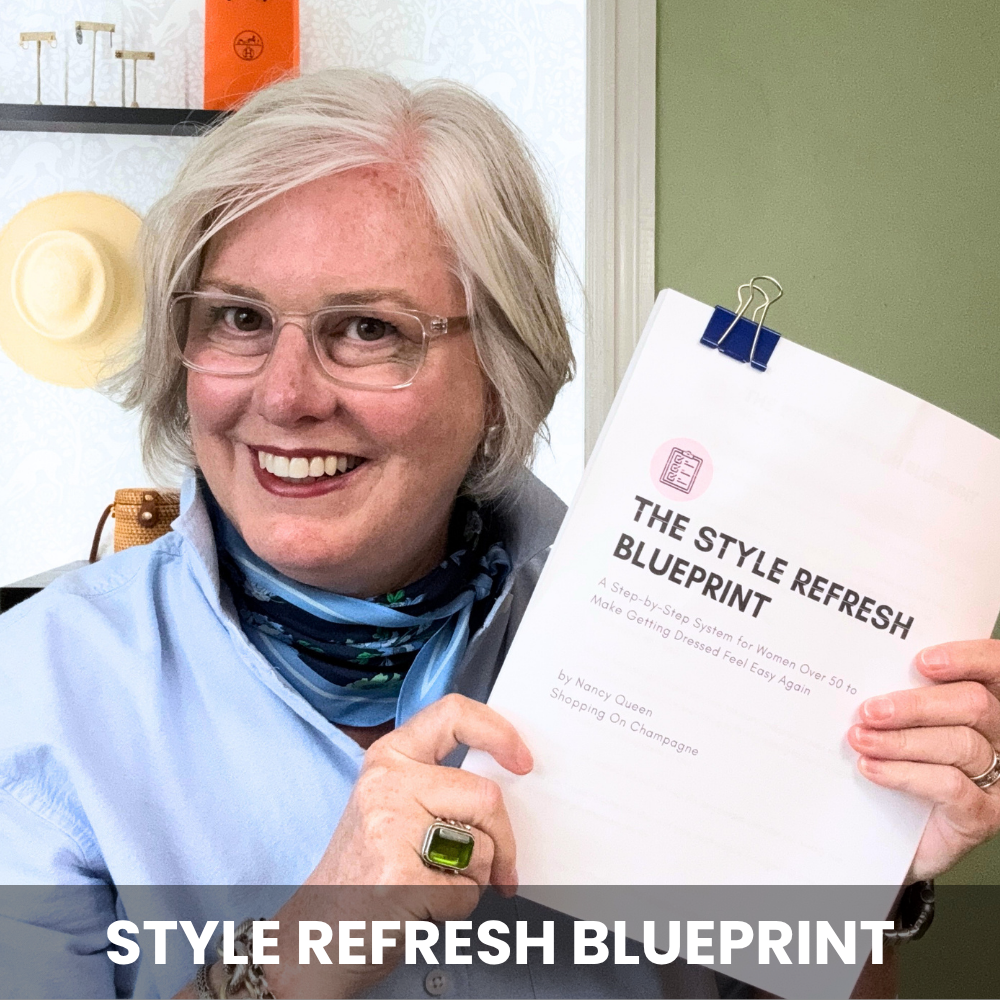
If you are ready to stop guessing and start making real progress, I have tools that will walk you through every step of this journey. Whether you are just getting started, ready to build a wardrobe that truly works for your life, or want a fully personalized experience, I have something for you at every level.
You can find all of them linked below.👇
The bottom line
Silhouette organizing is a simple tweak that makes a category closet work better.
You keep the calm.
You keep the tidy.
You keep the freedom to mix and match.
You just make your closet speak the same language your outfits do.
Tell me which category you want to try this on first, tops or pants? Let me know in the comments, you know I love hearing from you. Stay gorgeous!
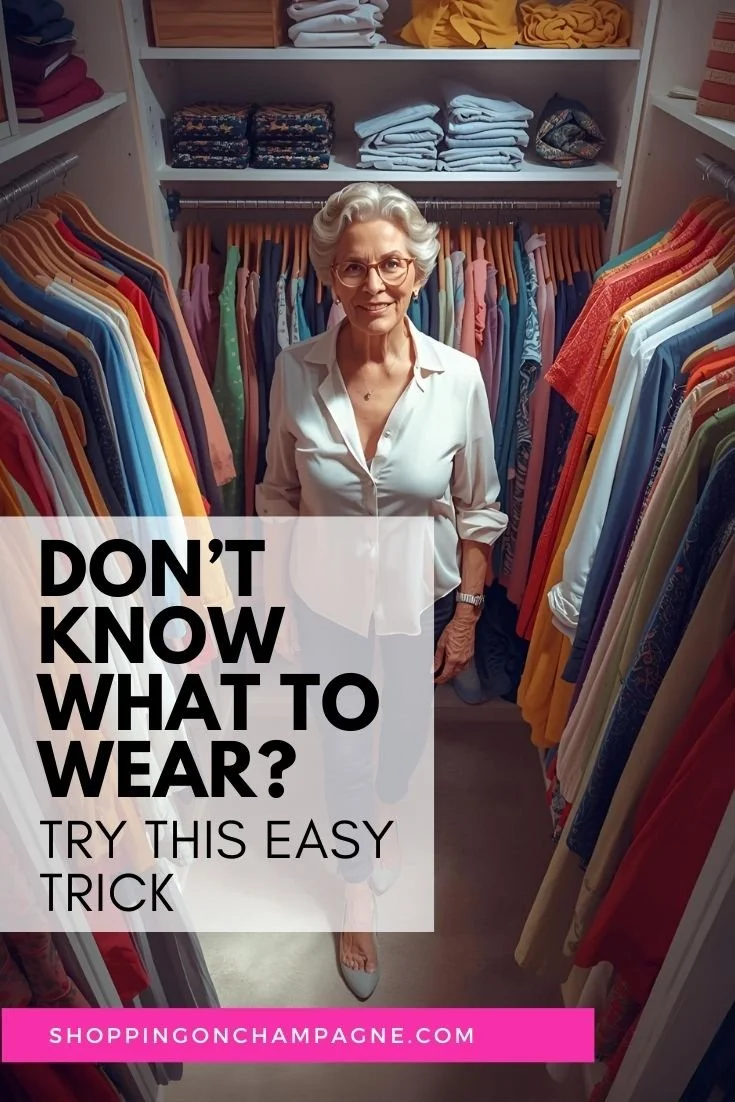

You have a closet full of clothes and still nothing to wear.
You're holding onto pieces that don't fit, don't flatter, and honestly don't even feel like you anymore. Some still have the tags on. Some belong to a job, a body, or a chapter you've already closed.
👉🏻 You're not alone, and you don't need a total overhaul to feel better about getting dressed.
The Closet Detox is your step-by-step reset. Work through every item with 18 honest questions, a decision guide for the hard ones, and a clear action plan for what comes next.
💌 What's Inside:
✅ 18 questions to ask about every single item in your closet with honest, practical guidance on what to do with each answer
✅ A decision guide for the six hardest pieces to let go of
✅ A What Comes Next action plan - three things to do before you bring in a single new thing, so you never end up back where you started
✅ Live links to the Style Refresh Blueprint and the Champagne Edit - two ways to keep the momentum going
👗 This is for you if...
You have a full closet, but nothing to wear
You've been holding onto things out of guilt, sentiment, or "just in case."
You're done dressing for a body, a job, or a life you no longer have
You're ready to open your closet and actually feel good about what's in there
💡 Why It Works:
Every question is designed to cut through the noise and help you make a clear, confident decision about every single item without second-guessing yourself the whole way through.
Your closet should feel like you. This is where that starts.
This is a digital download. You will receive a PDF immediately after purchase.